

Acer is heading into IFA 2026 with a notably broad device push, covering gaming handhelds, thin-and-light laptops, AI-focused desktops, creator displays, tablets, and mobile accessories. The announcements, set to debut around the company’s next@acer showcase, highlight Acer’s familiar spread-across-every-category strategy, but with some sharper themes this year, namely portability, repairability, AI workloads, and very fast screens.
Predator Atlas 7 Brings Acer Into Premium Gaming Handheld Territory

Among the more eye-catching launches is the Predator Atlas 7, a 7-inch gaming handheld aimed at players who want PC-class gaming in a more portable format. Acer says the device can be configured with up to an Intel Arc G3 Extreme processor and up to Intel Arc B390 graphics, pairing that silicon with a 120 Hz FHD touchscreen that reaches 500 nits of brightness.
Acer is also leaning into control quality, which matters quite a bit when thumb drama is involved. The Predator Atlas 7 offers joysticks with an optional tunneling magnetoresistance, or TMR, setup for precision and anti-drift performance, along with Hall-effect analog triggers for finer input control. Dual Thunderbolt 4 ports and an 80 Wh battery round out the package, while a dual-fan cooling system is designed to keep performance steady during longer sessions.
Acer Vero 16 Doubles Down On Repairability And Lower-Impact Materials

The new Acer Vero 16 continues the company’s sustainability-minded laptop line and appears to put just as much emphasis on serviceability as on materials. Acer says this fourth-generation Vero model uses 50 percent post-industrial recycled aluminum and 50 percent low-carbon aluminum on the top and palm-rest covers, while the bottom cover uses 60 percent post-consumer recycled plastic.
User access is a major part of the pitch. The bottom access latch allows tool-free entry, and both the battery and SSD are replaceable. Acer also says the hinge is detachable to simplify repairs, and removable I/O port covers are meant to make servicing easier. On the performance side, the Vero 16 is a Copilot+ PC with up to an Intel Core Ultra X9 processor 388H, up to 180 platform TOPS, and up to a 16-inch 3K OLED WQXGA+ display.
Swift Blade 14 And Swift Air 16 Target Portable Productivity


Acer is also introducing two new Swift models, including the first Swift Blade 14, a new sub-brand within the Swift family. The laptop weighs 799 grams and measures 12.9 mm thin, using a magnesium-aluminum alloy and carbon fiber chassis. It can be configured with up to an Intel Core 7 processor 350 and up to a 3K OLED display, positioning it as a compact premium notebook for mobile productivity and visually focused work.
The Swift Air 16 takes a slightly larger-screen approach without straying too far from portability. Acer says the 16-inch laptop weighs 1.5 kg, measures 13.3 mm thin, and combines a 3K OLED display with quad-speaker audio. It is powered by up to an Intel Core 7 processor 350 with up to 40 platform TOPS.
Acer notes that North American availability is not listed for the Swift Blade 14 in the release, though it is slated for Q1 2027.
Acer Pushes Hard On AI PCs, Displays, And Niche Productivity Gear


Beyond laptops, Acer’s IFA slate stretches into AI desktops and specialty hardware. The compact Veriton RI 110 AI Mini Workstation is built for local and hybrid AI workloads, with support for up to 120 billion parameter AI models, an Intel Core Ultra X7 processor 358H, Intel Arc B390 graphics, and up to 96 GB of LPDDR5X memory. Acer is also showcasing an RTX Spark compact desktop design based on NVIDIA’s next-generation RTX Spark superchip.
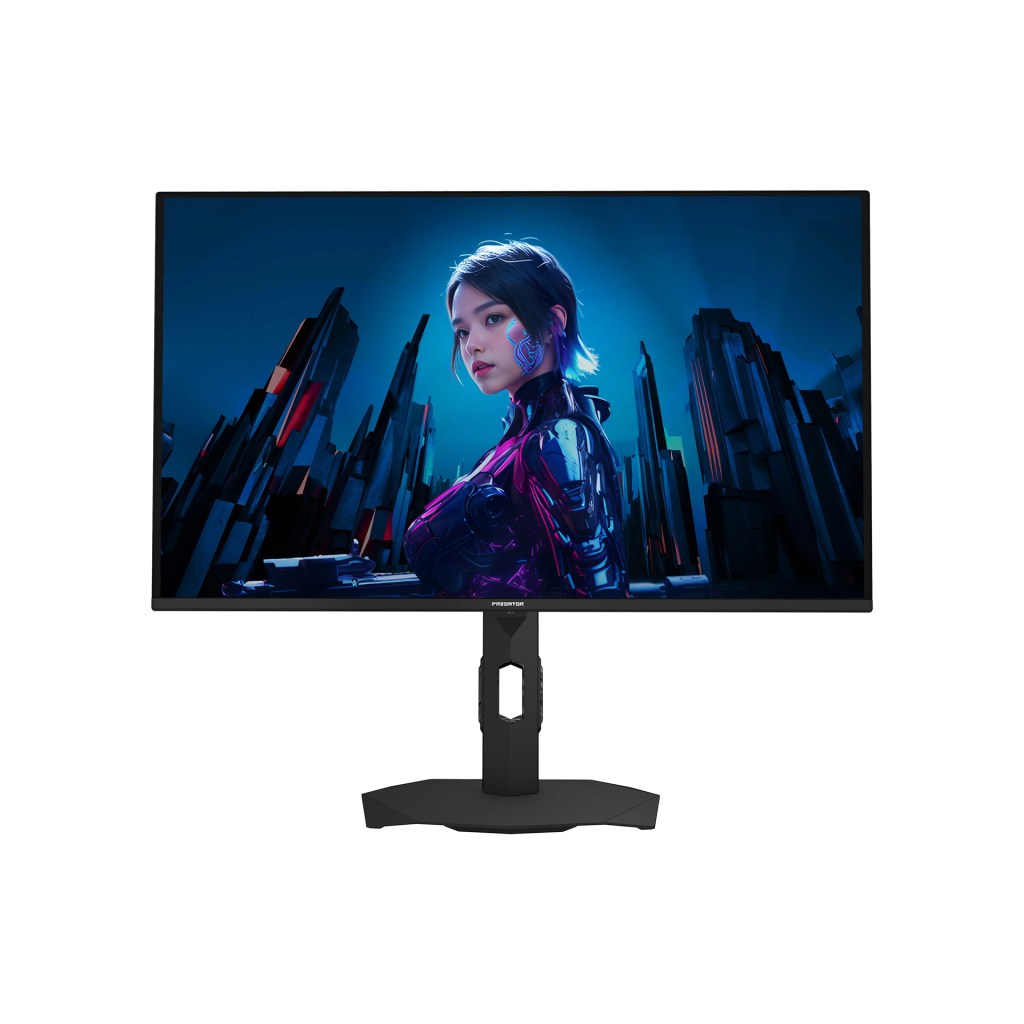
Displays are another major pillar. Acer’s new Predator and Nitro monitors range from a 24.5-inch Predator XB253Q U1 with a 1000 Hz refresh rate to larger QD-OLED, Mini LED, and dual-frame-rate models built for both esports and high-fidelity gaming. Creator users are also getting attention with the ProDesigner PE270X P, a 27-inch 5K monitor with wide-gamut color coverage and factory calibration.
The broader mobile and consumer mix includes new Iconia tablets, the EP130K ePaper monitor, the PD163Q P3 triple-screen extender, the Connect D5P 5G dongle, and the Aspire G 3D 16 laptop, which uses eye-tracking cameras to render standard 2D content in 3D without requiring native 3D material or a discrete GPU.


