

iRobot has unveiled one of the most ambitious robot vacuum concepts in years. At IFA 2026 in Berlin, the company introduced the Roomba Duo, a coordinated two-robot system that works as a single intelligent unit rather than a conventional vacuum-mop combo.
The breakthrough feature is a tall main robot that carries a smaller companion robot on its back, then uses a mechanical arm to lower it into tight spaces the main unit cannot reach.
Dual-Unit Architecture: One System, Two Specialized Robots
The Roomba Duo’s core innovation is a capability no other consumer robot vacuum currently offers: one robot physically deploying another.
The main robot features a cylindrical body that maximizes internal space for wet-dry cleaning hardware, including high-capacity water tanks, a powerful motor, and a large battery. Standing approximately 60 cm tall and weighing around 30 kg, it carries the companion unit on its top-mounted mechanical arm, which keeps its end level while moving to stabilize the smaller robot during transport.
The companion robot, based on the Roomba Plus 575 Combo launched earlier in 2026, measures just 8.35 cm tall and 29.8 cm wide. This ultra-slim profile allows it to slide beneath beds, sofas, TV cabinets, and between dining chairs where larger robots cannot go.
Both units share a home map through the Roomba Home App and communicate in real time, using AI to divide cleaning tasks intelligently.
Deep Wet-Dry Cleaning Without Manual Scrubbing
The main robot breaks free from the physical limits of conventional robot vacuums, bringing true floor-washing power to autonomous cleaning.
Its PowerSpin Max Roller Mop features a 60mm-diameter roller that applies 46N (roughly 4.7 kg) of downward pressure, scrubbing floors as thoroughly as hand cleaning—a significant jump from the 12–14N typical of standard robot mops. An internal heater generates controlled steam distributed across targeted areas to loosen tough, dried-on grime like pasta sauce or cooking grease without excessive heat exposure. A hot-air drying component behind the self-cleaning roller helps protect wooden floors from prolonged moisture while continuously washing away loosened dirt and sticky spills.
Reaching the Unreachable: Low Furniture and Tight Corners
The companion robot tackles the blind spots that frustrate most robot vacuum owners.
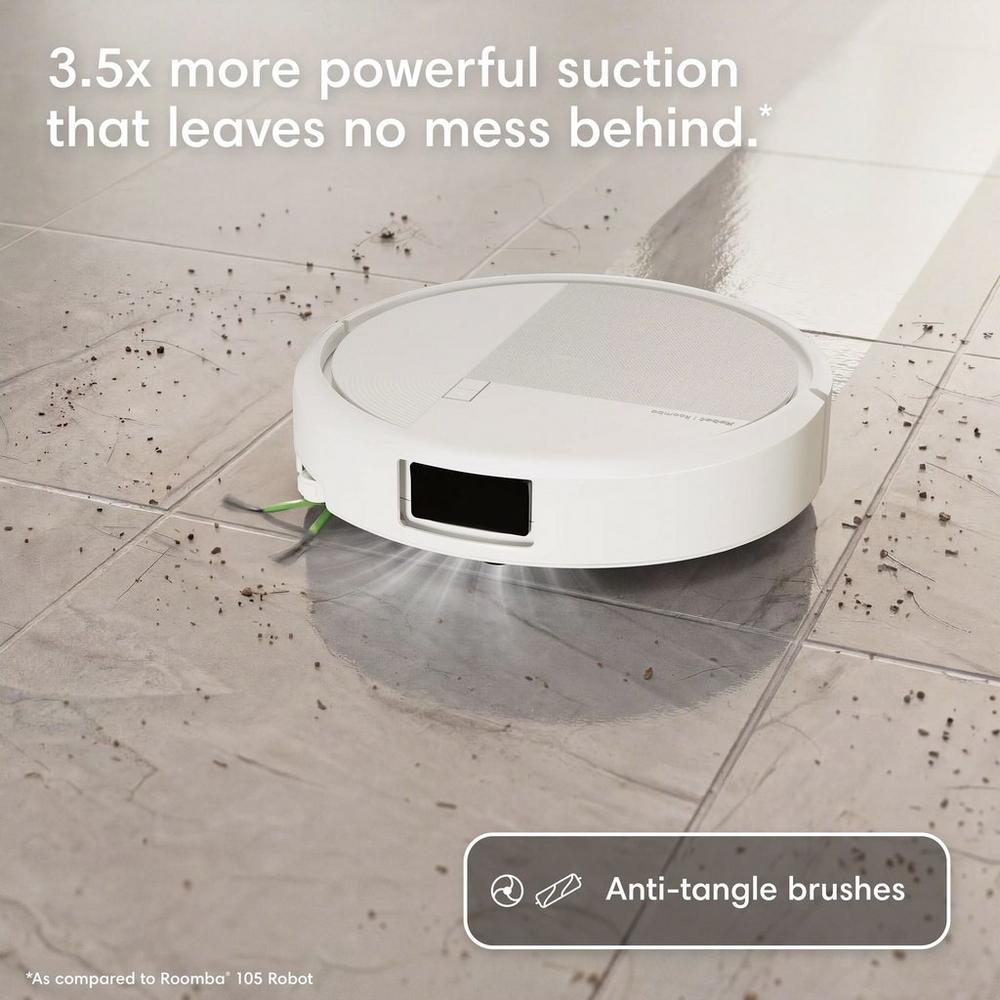
Its PerfectEdge mop pad extends up to 31mm outward to reach corners, walls, and baseboards, while an extended edge-sweeping side brush cleans automatically along irregular edges. Air-lift omni-wheels enable the unit to climb thresholds up to 3.5 cm without getting stuck, continuing cleaning across multiple rooms in a single mission.
Advanced Navigation and Autonomous Maintenance
The Roomba Duo is built to understand your home, navigate everyday obstacles, and minimize routine maintenance through a unified system.
Both units are equipped with ClearView Pro dual-line LiDAR for precise mapping and PrecisionVision AI to detect and avoid common household objects like cables, shoes, and pet accidents. The main unit adds top-mounted AI cameras for a wider, elevated view of rooms and furniture layouts, enabling more detailed maps across large, multi-room homes and identification of stain-prone areas for targeted cleaning.
Large 17 cm wheels powered by hub motors give the main robot stability while carrying the companion unit. The shared AutoWash dock handles all maintenance in one place, automatically washing and drying both mops after cleaning while emptying collected dust into a large bag for months of hands-off use.
What This Means for Home Cleaning
The Roomba Duo addresses a long-standing compromise in robotic floor care: wet-dry vacuums delivered powerful cleaning but lacked autonomous navigation, while robot vacuums offered convenience without deep-cleaning power.

By splitting the workload between two specialized robots that coordinate as one system, iRobot expands cleaning coverage within a single mission. The main unit handles open areas with heavy-duty vacuuming and steam mopping, while the companion reaches beneath furniture and into narrow gaps that conventional robots miss.
Hao Li, CEO at iRobot, framed the Duo as foundational to the company’s vision of a fully autonomous home.
“Instead of asking one robot to do everything, we’ve built specialized robots that work together as a single intelligent system—because that’s what it takes to truly transform life at home.”
Availability and Pricing
As of the IFA 2026 unveiling, the Roomba Duo remains a prototype concept.
No consumer release date, pricing information, or preorder details have been announced. iRobot showcased the system to test consumer reaction and demonstrate the technical feasibility of dual-unit architecture, but a retail version—if it reaches production—would likely arrive in a future product cycle.
Bottom line: The Roomba Duo reimagines what a robot vacuum can do by literally deploying a second robot where it’s needed most. If iRobot brings this to market, it could set a new benchmark for comprehensive automated floor care—especially for homes with low furniture, tight corners, and tough, dried-on messes.


