Home Blog Page 8

JBL Refreshes the Live Series with New Design and Long Battery Life

0

JBL is updating its Live series headphones with a redesigned lineup aimed at all-day listening, whether that means commuting, working, or tuning out distractions at home. The new models focus on comfort, battery longevity, and a cleaner aesthetic, with a few thoughtful upgrades under the hood.

The refreshed range includes two models: the over-ear JBL Live 780NC, priced at $249.95, and the on-ear JBL Live 680NC at $159.95. Both arrive with new color options such as green, blue, and champagne, paired with a metallic finish that leans more premium than previous iterations.

Comfort appears to be a priority this time around. JBL is using ultra-soft silicone ear cushions and a fully foldable design, making the headphones easier to wear for extended periods and simpler to stash in a bag. It’s the kind of detail that matters more after hour three of a playlist than minute three.

Shared Features Keep the Experience Consistent

JBL is keeping the core experience aligned across both models. Each supports JBL Signature Sound with Hi-Res Audio in both wired and wireless modes, along with multi-point connectivity for switching between devices without juggling Bluetooth menus.

Battery life is one of the headline features. Both the Live 780NC and Live 680NC are rated for up to 80 hours of playback, supported by Speed Charge for quick top-ups. That kind of endurance shifts these from “charge every few days” to “wait, when did I last plug these in?”

Noise cancellation is handled through JBL’s True Adaptive Noise Cancelling 2.0. The 780NC uses a six-microphone setup, while the 680NC employs four microphones. Both models include a two-mic system for calls, designed to keep voices clear during conversations.

JBL Brings AI into the Party with EasySing

JBL is not stopping at personal listening. The company is introducing a new AI-powered karaoke feature set under the EasySing name, targeting its PartyBox lineup and a new set of microphones.

The idea is straightforward: make karaoke less intimidating and more fun. EasySing uses vocal separation to lower the original artist’s voice while boosting the user’s vocals. Features like Voice Boost help users hit higher notes, and built-in reverb adds a bit of polish to the performance. The result leans closer to “karaoke confidence mode” than raw mic input.

PartyBox On-The-Go 2 Plus Expands the Portable Speaker Line

Leading the new entertainment push is the JBL PartyBox On-The-Go 2 Plus, priced at $419.95. It’s a portable party speaker designed to balance power and portability, delivering 100W of output through dual silk-dome tweeters and a 5.25-inch woofer.

A portable JBL speaker with colorful LED lights and a wireless microphone beside it.

JBL is pairing the speaker with its EasySing microphones and AI features, turning it into a self-contained karaoke system. The unit includes a carrying strap for easier transport and JBL’s signature lighting effects, which tend to turn even a quiet gathering into something a bit more animated.

New EasySing Microphones Target Karaoke and Content Creation

JBL is introducing two microphone options to complement the new feature set. The JBL EasySing Mics, priced at $199.95, are designed for use with compatible PartyBox speakers. They feature AI Voice Removal to reduce background noise and sharpen vocals, along with Voice Boost and customizable EQ and effects through an app.

For more portable use, the JBL EasySing Mics Mini come in at $179.95. These are compact, clip-on microphones aimed at both karaoke and casual content creation. They connect via a dongle to compatible speakers and are positioned as a quick way to capture cleaner audio without carrying a full setup.

The standard EasySing Mics offer a wireless range of up to 30 meters and up to 10 hours of battery life, giving them enough endurance for extended sessions without constant recharging.

A Broader Push Across Listening and Entertainment

This latest batch of announcements shows JBL working across two fronts: refining everyday headphones and expanding into more interactive audio experiences. The updated Live series leans into comfort and battery life, while EasySing introduces a more playful, social angle to the brand’s speaker lineup.

Mophie Expands Beyond Power With Premium Soft Goods for Apple Devices

0

Mophie is best known for keeping batteries topped off, but its latest release leans into something a bit more tactile. The ZAGG-owned brand has introduced a new collection of premium “soft goods” accessories designed for Apple devices, including cases for iPhone, folios for iPad, AirTag accessories, and protective shells for MacBook.

The lineup focuses on materials and finish as much as protection, aiming to match the polished feel of the hardware it wraps around. It’s a natural extension for a brand that has long balanced utility with design, now shifting some attention from what powers devices to what protects them.

iPhone Cases With Texture and Precision Details

At the center of the collection are several iPhone cases built for the iPhone 17 lineup. The Check Case and Optical Check Case, priced at $59.95, introduce a patterned look that adds some visual depth without going overboard. Both feature a soft-touch exterior paired with a microsuede interior for cushioning.

Mophie includes raised camera rings to help guard against scratches, along with MagSafe compatibility for use with chargers and accessories. A sapphire glass camera control button is built in, designed to maintain responsiveness for photography without the usual mushy feel that some case buttons introduce.

A third option, the Fabric Knit Case, leans more into texture. It uses a material called AeroKnit for durability, paired with metallic accents and the same microsuede lining. This version is exclusive to Mophie’s own website, which gives it a bit of “you had to be there” energy for anyone browsing retail shelves.

iPad Folios That Double as Stands

For tablet users, Mophie is offering Knit Folio Tablet Cases for iPad Air and iPad Pro, each priced at $74.95. These folios combine a fabric exterior with a transparent backplate, letting the iPad’s design show through while adding protection.

The folding cover converts into a stand for viewing or typing, a familiar feature that still earns its keep in daily use. A magnetic closure secures the case and holds an Apple Pencil in place, with support for charging. It’s a practical setup that keeps everything in one place, which is often half the battle with tablet accessories.

AirTag Accessories Add a Bit of Personality

Mophie’s take on AirTag accessories includes the Knit Loop Case and Knit Puck Case, priced at $14.95 and $18.95, respectively. Both are designed to protect Apple’s small tracker while making it easier to identify at a glance.

The Knit Loop Case uses a twist-and-lock mechanism and includes an integrated lanyard loop, making it suitable for keys or bags. The Knit Puck Case opts for a screw-lock design for a more secure fit. Each includes interchangeable colored ID bands, which is a simple but effective way to avoid playing “which AirTag is this?” with multiple trackers in circulation.

Both options are available in multi-packs, a nod to how AirTags tend to multiply once they prove useful.

Lightweight Protection for MacBook

Rounding out the collection is a Slim Hardshell Case for MacBook, priced at $49.95. It’s a two-piece snap-on design compatible with a range of MacBook Air and MacBook Pro models across multiple chip generations.

A modern laptop with a sleek design, displaying a vibrant blue patterned screen, positioned above a transparent base.

The case keeps things minimal with a transparent finish, preserving the look of the device while adding a layer of protection against everyday wear. Rubberized feet and a no-slip grip help keep the laptop steady on desks and other surfaces, and full port access means no compromises on connectivity.

A Design-First Approach to Everyday Accessories

Mophie’s new soft goods collection reflects a broader shift in mobile accessories. As smartphones, tablets, and laptops have settled into refined, premium designs, the accessories around them are expected to follow suit. Materials, textures, and subtle details now carry more weight than flashy add-ons.

That mindset applies just as easily to Android users, even if this particular lineup is tailored to Apple hardware. The same emphasis on MagSafe-style ecosystems, fabric finishes, and slim protection has been showing up across the wider accessory market.

The collection is available now through Apple retail stores, Apple.com, and Mophie.com, with the Fabric Knit Case offered exclusively through Mophie’s website. Each product includes a two-year warranty.

Marshall Expands Its Party Speaker Lineup with the Bromley 450

0

Marshall is adding a new option to its growing party speaker portfolio with the Bromley 450, a more compact sibling to the larger Bromley 750. The new model brings the brand’s familiar design language into a slightly more manageable form factor, pairing bold aesthetics with features aimed at social gatherings, outdoor use, and the occasional impromptu performance.

Positioned as a portable Bluetooth party speaker, the Bromley 450 leans into long battery life, room-filling sound, and a built-in light show that borrows a bit of flair from vintage stage setups.

A Smaller Take on a Big Sound Concept

At the core of the Bromley 450 is Marshall’s “True Stereophonic” 360-degree sound design, which aims to distribute audio evenly in all directions. Instead of a front-facing listening experience, the speaker is designed to sit in the middle of the action, projecting sound outward so everyone in the room or backyard gets a similar experience.

Close-up of a Marshall guitar amplifier featuring control knobs and a textured grille, against a dark background with falling particles.

Under the hood, the system includes dual 90W amplifiers for the woofers and four 55W amplifiers for full-range drivers, paired with passive radiators to help reinforce low-end performance. Marshall describes the sound profile as fast and punchy in the bass, balanced by clean mids and detailed highs. The overall approach suggests a speaker built for energy and volume without turning into a muddy wall of noise when pushed.

Built for Long Nights and Moving Crowds

Battery life is one of the Bromley 450’s headline features, rated at more than 40 hours of playback. That kind of endurance places it closer to a weekend companion than a single-evening device. A quick charge option provides up to six hours of playback from a 20-minute top-up, which is a practical safety net when the playlist outlasts the planning.

The speaker uses a replaceable lithium iron phosphate (LFP) battery, a choice that aligns with durability and longevity. Marshall has also made the battery interchangeable with the Bromley 750, which could appeal to users already invested in the ecosystem.

Stage-Inspired Design with Practical Durability

Visually, the Bromley 450 sticks closely to Marshall’s established identity, with a black-and-brass color scheme, a stamped metal grille, and a leather-like wrap. The materials include a water-based PU covering and reinforced corner caps designed to handle bumps and transport.

A black Marshall guitar amplifier with illuminated knobs and a textured speaker grille, set against a dark background.

Integrated stage lights sit behind the grille, offering three lighting modes. One leans toward ambient illumination, while the others react dynamically to music, giving the speaker a built-in light show that shifts with the energy of the room. It’s not subtle, and that’s clearly the point.

With an IP55 rating, the Bromley 450 is built to tolerate dust and light splashes, making it suitable for backyard gatherings, parks, or festival settings. A built-in handle makes it easier to carry, though at 12.2 kg, this is still more “portable with intent” than something you casually toss in a tote.

More Than Just a Bluetooth Speaker

Marshall is positioning the Bromley 450 as more than a playback device. It includes two combo XLR/6.3 mm inputs for microphones or instruments, opening the door for karaoke sessions, DJ-style setups, or live performances. It’s a small detail that nudges the speaker from passive listening into active participation.

Close-up of a hand connecting a cable to the back of a Marshall speaker, showcasing input ports.

Connectivity includes Bluetooth 5.3 with multipoint support and Auracast compatibility, along with wired options such as AUX, RCA, and USB-C. The wireless range is rated at over 70 meters in open environments, which should cover most real-world use cases without tethering the device too closely to a source.

Availability and Pricing

The Marshall Bromley 450 is available starting today through Marshall’s website, priced at $799.99. Broader retail availability is scheduled for March 31.

Marshall is tying the release into its Amplify loyalty program, which directs a portion of member purchases toward supporting independent music venues. More details on the speaker and the program can be found on the company’s official website.

Looking for the Most Compact 3kWh Portable Power Station? BLUETTI’s Elite 300 Might Be It

0

Portable power stations keep getting bigger—but not necessarily smarter. BLUETTI’s new Elite 300 aims to change that, delivering a substantial 3,014Wh capacity and 2,400W output within a chassis closer to what you’d expect from a 2kWh power station. According to BLUETTI, it’s the smallest 3kWh power station currently available.

Launched March 8, the Elite 300 targets homeowners, RV travelers, and outdoor enthusiasts who need serious backup power without hauling around an oversized unit.

Massive Power, Less Bulk

At its core, the Elite 300 portable power station packs a substantial 3,014.4Wh capacity paired with a 2,400W rated output, giving it enough muscle to handle everything from kitchen appliances to power tools. When extra headroom is needed, BLUETTI’s 4,800W Power Lifting mode helps support higher-demand devices without requiring a larger, heavier unit.

A Bluetti portable power station, model Elite300, displayed on a kitchen counter with various cooking ingredients and a mixer in the background.

The station features 11 output ports, including a TT-30R outlet for RV users and a 12V/30A DC port for more specialized setups. For home users, the built-in 10ms UPS function ensures sensitive electronics stay powered during sudden outages, while AC and solar dual fast charging brings the battery from 0 to 80% in just 70 minutes—minimizing downtime between uses.

That combination makes it capable of running everything from refrigerators and CPAP machines to power tools and essential home electronics during outages.

Despite its capacity, BLUETTI designed the Elite 300 to remain compact enough for RV compartments and vehicle storage—a key advantage for travelers who want high capacity without sacrificing mobility.

Built for Instant Backup

Rather than being positioned strictly for storm preparedness, the Elite 300 feels aimed at everyday resilience.

For homeowners, the built-in UPS functionality helps keep critical devices online during unexpected blackouts. For RV users, the integrated TT-30R outlet allows for plug-and-play convenience without adapters. 

A portable power station with multiple outlets and a digital display, positioned next to a cooler and a stack of firewood in the back of a truck.

And for camping, boondocking, and more off-grid road trips, the Elite 300 can be paired with the Charger 2—an alternator and solar dual charger combined to capture 1,200W on-the-go charging. This input is 13 times faster than a standard cigarette lighter port, ensuring even short commutes yield significant energy gains. With a full 3kWh charge achievable in about three hours of driving, the Elite 300 stands ready for immediate use upon arrival—powering camp lights, cooking appliances, or RV essentials without the typical wait for a recharge.

Launch Promotion: Up to 60% Off

The Elite 300 is priced at $1,099 (50% off) through May 31, with an additional 8% off available using code BLUETTI8OFF on the BLUETTI Store and Amazon. And for early buyers, BLUETTI is offering up to 60% off during the debut promotion, including savings on select accessories and bundles.

TESSAN 65W Cat Desktop Charging Station Blends Speed, Style, and Charm

0

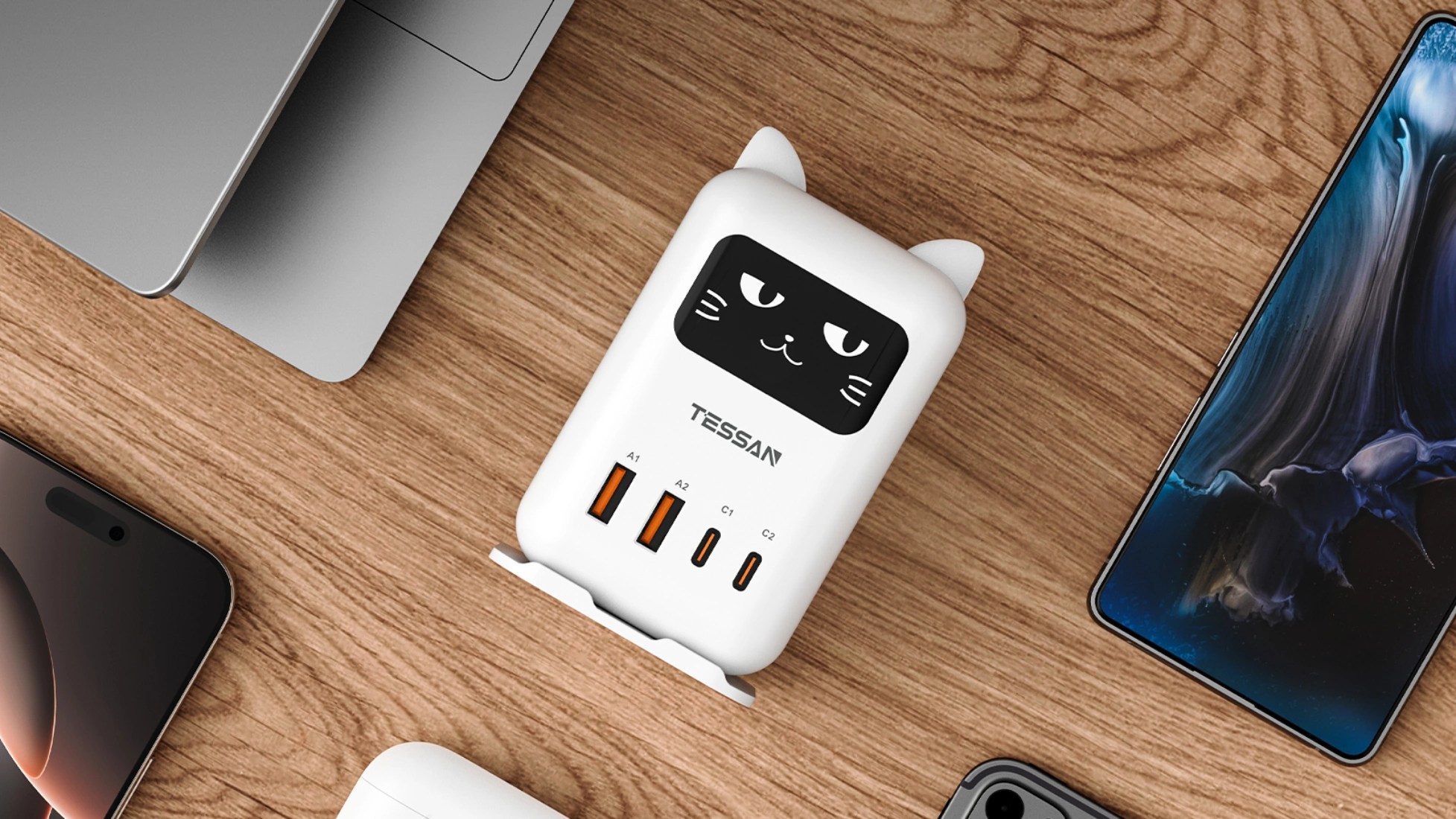
TESSAN, a prominent developer of global power solutions, has officially announced the release of the 65W Cat Desktop Charging Station. This innovative multi-device hub integrates high-speed Gallium Nitride (GaN) technology with a unique, character-driven design, specifically engineered to enhance the aesthetics and efficiency of modern workspaces.

High-Performance Power Delivery

The charging station is anchored by advanced GaN (Gallium Nitride) technology, enabling a total output of 65W. This allows for the rapid charging of high-demand hardware, including laptops, alongside mobile peripherals. The device features a versatile four-port configuration:

  • Two USB-C ports for modern high-speed requirements.
  • Two USB-A ports for legacy device compatibility.

By consolidating power delivery into a single wall outlet, the station significantly reduces cable clutter, facilitating a more organized and productive environment.

Interactive User Interface

Distinguishing itself from standard industrial hardware, the station features an animated cat interface. This integrated screen displays various facial expressions that change during the charging process, providing a sense of companionship and visual feedback. This tech-pet concept is designed to soften the clinical feel of home offices, dormitories, and creative studios.

Ergonomic and Secure Design

The station utilizes a vertical tower architecture to minimize its physical footprint on crowded surfaces. For added versatility, the unit includes an anti-slip base that supports both vertical and horizontal orientations. To further assist with cable management, TESSAN includes dedicated cable ties with every unit.

Safety remains a primary focus, with integrated Smart Charging Technology. This system autonomously identifies the power requirements of connected devices to optimize delivery while providing rigorous protection against:

  • Over-current and short circuits.
  • Thermal overheating.
  • Voltage fluctuations.

CEO’s Vision

TESSAN CEO Jordan Cohen highlights how the 65W Cat Desktop Charging Station fuses high-performance GaN tech with playful, emotional design to add joy to everyday work routines.

“At TESSAN, we believe that functional technology should not be devoid of character,” said Jordan Cohen, CEO and co-founder of TESSAN.

“The 65W Cat Desktop Charging Station represents our commitment to merging top-tier GaN performance with emotional design. We wanted to create a product that doesn’t just power a user’s career, but also brings a brief moment of joy to their workday.”

Technical Specifications Snapshot

FeatureSpecification
Charging Technology65W GaN (Gallium Nitride)
Port Configuration4 Ports (2x USB-C, 2x USB-A)
Simultaneous ChargingUp to 4 devices
DisplayAnimated LED cat interface
Safety SuiteSmart device detection, Overheat & Short-circuit protection
CompatibilityLaptops (MacBook/PC), Tablets, Smartphones, and Wearables

TESSAN 65W Pricing

The unit is currently available for purchase on Amazon US at a retail price (RRP) of $39.99.

Free Solar Savings Report vs DIY Solar Installation: A Critical Decision Factor

0

Deciding between obtaining a free solar savings report and undertaking a DIY solar installation is a significant choice for homeowners considering solar energy. While a detailed report can offer insights into potential savings, a self-installation project may promise more hands-on control and upfront cost savings. Establishing which path serves the homeowner’s interests best can be a challenging yet essential task.

Understanding the benefits and drawbacks of both options is crucial for making an informed decision. Consequently, homeowners must weigh the financial implications, the complexities involved, and the long-term effects on energy independence. In this article, we delve into these critical factors and provide guidance for homeowners.

Assessing the Pros and Cons of Free Solar Savings Reports

A person in a suit stands on solar panels, looking out towards the horizon with a bright sky and clouds in the background.

A free solar savings report provides a comprehensive analysis of how much money a homeowner can save by switching to solar. These reports typically offer an estimate of energy savings over time, taking into account the specific geographic location, local utility rates, and potential government incentives.

However, these reports can sometimes oversimplify the costs and benefits, leading to misinformed expectations. They may not take into account specific household consumption patterns or the nuances of different solar panel brands and configurations. This is why it’s important to cross-reference a free report with an independent assessment or additional trusted resources.

For actionable guidance, homeowners should consider getting multiple reports from different providers to compare results. Furthermore, consulting with a solar energy professional can provide a personalized and more accurate financial outlook, complementing the free reports.

Navigating the Complexities of DIY Solar Installation

DIY solar installations offer homeowners the opportunity to save on labor costs and gain detailed knowledge about their solar energy system. Many find the prospect of self-installation both challenging and rewarding, as it provides a hands-on approach to achieving energy independence.

But the process isn’t without complexity. Permits, electrical codes, roof analysis, and the physical installation of solar panels have steep learning curves and potential safety risks. Mistakes in installation can lead to less efficient systems and might void warranties or fail to comply with local regulations. To tackle these complexities, homeowners need ample preparation and research before starting.

Actionable guidance for those considering DIY includes taking online courses or workshops on solar installation, familiarizing oneself with local building codes, and possibly consulting with an electrician for the electrical components. These steps can help ensure a successful DIY solar project.

Making the Financial Comparison: Free Reports and Self-Installation Costs

When considering financial savings, it’s important to perform a thorough comparison between the projected savings from a free solar savings report and the actual costs of a DIY installation. While the former offers an estimate, the latter involves real expenses such as purchasing solar panels, inverters, mounting systems, and potentially, auxiliary equipment.

Material costs can vary significantly depending on the quality and efficiency of solar equipment chosen for the DIY project. Additionally, potential hidden costs such as tools, safety gear, and unforeseen structural upgrades can increase the budget. For some, the time investment of a DIY project also represents an opportunity cost that should be considered.

Before embarking on a DIY venture, homeowners should create a detailed budget that includes all possible expenses and compare it to the estimated savings from the free solar reports. This side-by-side analysis can spotlight the most cost-effective choice for their circumstances.

Evaluating Long-Term Implications for Homeowners’ Energy Independence

A group of four professionals engaged in a business meeting around a modern conference table, with laptops and documents visible, in a well-lit office space with large windows.

The decision to go solar involves not only immediate costs and benefits but also long-term implications for a homeowner’s energy independence. Harnessing solar power can substantially reduce reliance on traditional energy sources, leading to long-lasting environmental and financial benefits.

While free solar savings reports can project long-term savings, these estimates may not fully account for potential increases in utility rates or additional benefits of being less reliant on the grid such as resilience during power outages. On the other hand, a DIY installation can provide more flexibility to expand the system or adapt to new solar innovations over time.

To evaluate the long-term implications, homeowners should consider the lifespan of solar panels, maintenance costs, and the potential for increased property value. Additionally, staying informed about evolving solar technologies and energy policies can help homeowners make the most of their solar investments for years to come.

Ultimately, the choice between leveraging a free solar savings report and pursuing a DIY solar installation hinges on a variety of factors, including cost, skill level, long-term goals, and personal preferences. By considering the intricacies of both options and their impact on long-term energy independence and financial savings, homeowners can make a decision that aligns with their values and circumstances. The key lies in thorough research, careful planning, and an honest assessment of one’s capabilities and objectives.

EDITOR NOTE: This is a promoted post and should not be considered an editorial endorsement

ASUS ROG Cetra Open Wireless Earbuds Launch

0

ASUS Republic of Gamers (ROG) has officially announced the United States market release of the ROG Cetra Open Wireless earbuds. This latest addition to the ROG audio portfolio is engineered to bridge the gap between high-fidelity gaming audio and environmental transparency, catering to users who require situational awareness during active use.

Advanced Acoustic Engineering and Dual-Mode Connectivity

The ROG Cetra Open Wireless features an open-ear architecture designed to keep users connected to their physical surroundings. At the core of the device are 14.2mm drivers coated in diamond-like carbon (DLC). This specialized diaphragm construction is intended to provide high-resolution audio with minimal distortion, offering a wide soundstage suitable for both competitive gaming and media consumption.

The earbuds utilize ROG SpeedNova 2.4GHz wireless technology, providing ultra-low latency connections for precise audio-to-video synchronization. Additionally, the device supports standard Bluetooth for mobile versatility. A notable hardware inclusion is the USB-C 2.4GHz dongle, which features integrated pass-through charging—a first for the ROG lineup—allowing users to charge their primary device while maintaining a wireless connection.

Ergonomics and Durability for Active Use

Designed for long-term comfort, the earbuds are equipped with liquid silicone ear hooks and a detachable reflective neck strap for added security during physical activity. To ensure reliability in various environments, the device carries an IPX5 water-resistance rating, protecting against perspiration and light rain.

Unlike many contemporary competitors that rely on touch gestures, the Cetra Open Wireless utilizes physical tactile buttons. This design choice aims to eliminate accidental inputs and ensure responsive control during intense workouts or inclement weather.

“With the launch of the ROG Cetra Open Wireless, we are addressing the growing demand for versatile audio solutions that don’t isolate the user from their environment,” said S.Y. Hsu, Co-CEO of ASUS.

“By integrating our proprietary SpeedNova technology into an open-ear form factor, we are providing gamers and active professionals with a premium audio experience that balances high-performance gaming needs with real-world safety and comfort.”

Battery Life and Customization

The earbuds offer a comprehensive suite of software enhancements, including:

  • Phantom Bass: An algorithm-driven mode that boosts low-end frequencies.
  • Immersion Mode: A setting designed to optimize focus by managing ambient sound profiles.

In terms of endurance, the device provides up to 16 hours of playback via Bluetooth; with lighting and specialized sound modes disabled. A 15-minute rapid charge provides an additional three hours of utility, ensuring minimal downtime for the user.

Pricing and Market Availability

The ROG Cetra Open Wireless is currently available for purchase at a suggested retail price of $229.99. Consumers can find the product at the ASUS eStore and major third-party retailers, including Amazon, Micro Center, and Newegg.

Soundcore AeroFit 2 Pro Review

0

If you have ever struggled to choose between the safety of open-ear headphones and the immersion of noise-canceling buds, the Soundcore Aerofit 2 Pro is designed to end that debate. Launched by Anker at CES 2026, these earbuds introduce a “transforming” hybrid design that aims to provide the best of both worlds for fitness enthusiasts and commuters alike. Priced at $179.99, they represent a bold step forward in wearable tech, offering a level of versatility rarely seen in the audio market.

Design

The centerpiece of the Aerofit 2 Pro is its innovative adjustable ear hook, which features five different positions. By moving the driver housing, you can choose to have the earbuds hover over your ear for total situational awareness or sit right at the ear canal for a more traditional, “closed” fit. While the design is a bit heavier than competitors at 11g per bud, the setup is easy to adjust even mid-run. 

The buds come in various stylish finishes, including matte black, gloss white, and matte purple, and they feature a satisfying physical button that “clicks” to confirm your commands. The package is completed by a wireless charging case that includes a helpful LED power bar to track your battery levels.

The unique hybrid design of the AeroFit 2 Pro has been hit or miss for me. I love that Anker is trying to conquer two problems in one, but for my ears, I never quite got the open-ear fit to work as well as a dedicated model like previous AeroFits. 

The positioning that was the most natural for me always led to the buds being fully in my ears. Thankfully, Soundcore is offering extended return windows if you find this not to be to your liking, with the AeroFit 2 Pro allowing for a full 30 days of testing.

With its innovative five-position adjustable hook and Adaptive ANC 3.0, the AeroFit 2 Pro represents a bold step forward in versatile wearable tech for the modern commuter and athlete.

Performance and Sound

Performance is driven by a suite of high-end features, including Bluetooth 6.1 and an IP55 rating for water and dust resistance. The earbuds utilize Adaptive ANC 3.0, which employs a six-microphone array to adjust noise cancellation up to 180 times per second based on your surroundings. This is particularly useful for dampening consistent background hums, like office AC or airplane noise. 

Equipped with an 11.8mm driver, the Aerofit 2 Pro delivers a surprisingly detailed audio experience with excellent spacing between instruments. For those who prioritize high-fidelity audio, the buds support LDAC and are Hi-Res Audio Wireless certified. 

While the default “Soundcore Signature” EQ might feel a bit treble-heavy for some, the Soundcore app allows for in-depth customization through various presets and an eight-band manual equalizer. The “Balanced” preset is highly recommended for a more even sound, and a special “Volume Booster” mode provides the extra punch needed to cut through the noise of a busy gym or street.

Battery Life

Battery life is solid for the category, offering 7 hours of playback in open-ear mode and roughly 5 hours when the active noise cancellation is engaged. To ensure a seamless experience, internal sensors detect which mode you are using and automatically recalibrate the EQ to maintain a consistent sound.

I would have liked to see this be a little longer with the size of each earbud. The overall package of the AeroFit 2 Pro can be a little bulky, and I’d guess most of that is the power bank. The same is true for the included charging case. In comparison to AirPods, this thing is massive but does include both wired and wireless charging for a combined 34 hours of maximum runtime.

Final Thoughts

The Soundcore Aerofit 2 Pro is a premium option for those who value flexibility above all else. It is a “two-in-one” solution that excels during outdoor activities where staying aware of your environment is a safety priority, yet it can still pivot to a focused listening mode when you need to buckle down. While the noise cancellation is not as powerful as high-end, tip-based earbuds, the novelty of the transforming design and the inclusion of features like wireless charging make it a compelling choice for tech-forward buyers.

If you are looking for a single pair of earbuds that can handle a bike ride, a gym session, and a quiet office, the Aerofit 2 Pro is a valiant and innovative contender. The launch price from March 9th to the end of the month will be just $150 from Soundcore directly. If you miss this window of savings, prefer Amazon, they’ll be available there as well.

Purchase the Soundcore AeroFit 2 Pro from Soundcore

Purchase the Soundcore AeroFit 2 Pro from Amazon

Hisense Introduces 2026 ULED MiniLED TVs With Focus on Big Screens and Accessible Performance

0

Hisense has introduced its 2026 ULED MiniLED television lineup, highlighting the latest additions to the company’s U6 and U7 Series. The new models aim to make large-screen home entertainment more accessible, blending MiniLED display technology with gaming features, immersive audio, and flexible smart TV platforms.

The rollout begins with the U7 Series, which is available now, with the U6 Series scheduled to follow at retailers in the coming weeks. Hisense positions both lines as part of its broader ULED category, designed to offer strong performance without pushing into ultra-premium pricing tiers. The company’s upcoming RGB MiniLED lineup will represent the higher-end tier above ULED.

The announcement arrives as anticipation builds for the FIFA World Cup 2026, set to take place in the United States, Canada, and Mexico. Hisense is framing the new TVs as living-room centerpieces built for shared viewing moments, from sports watch parties to movie nights.

According to James Fishler, Chief Commercial Officer at Hisense USA, the trend toward larger screens is shaping how the company approaches product design. He notes that consumers increasingly gather around bigger displays for entertainment, sports, and gaming, and the goal with the 2026 lineup is to bring key viewing features across a wider range of price points rather than reserving them for flagship models.

U7 Series Focuses on Sports, Gaming, and Large Screens

Hisense MiniLED U7 television featuring the FIFA World Cup trophy with an official sponsor logo

The U7 Series leads the 2026 lineup and is designed with sports viewing and fast-paced content in mind. Hisense says the series combines high brightness, strong motion handling, and immersive sound to create a viewing experience suited for large gatherings.

One of the headline features is screen size availability reaching up to 116 inches on the U7SG model. That scale reflects a broader industry shift toward oversized living room displays, turning TVs into focal points for shared entertainment.

Under the hood, the U7 Series uses Hi-QLED MiniLED Pro technology paired with Full Array Local Dimming. Thousands of MiniLED backlights work with the company’s Hi-View AI Engine Pro to maintain strong contrast and clarity across a variety of content types, including live sports, movies, and streaming shows.

Motion performance is another area of emphasis. The U7 Series includes a native 165Hz refresh rate and motion processing designed to keep fast action smooth and clear. That capability is particularly useful for sports broadcasts and modern gaming systems that push high frame rates.

Audio receives attention as well. The TVs feature a 50-watt multi-channel audio system in a 2.1.2 configuration, supporting both Dolby Atmos and DTS Virtual:X formats. The goal is to provide fuller sound without immediately requiring an external sound system.

Hisense offers the U7 Series with two different smart TV platforms depending on the model and retailer. The U7SG runs Google TV, while the U7SF uses Amazon’s Fire TV interface, allowing buyers to choose the ecosystem that best fits their streaming setup.

U6 Series Aims to Bring MiniLED to More Homes

A basketball court featuring a hoop in the background with a large television screen displaying a basketball game. The screen highlights the MiniLED ULED technology with an athlete making a dunk.

The U6 Series continues Hisense’s effort to push MiniLED technology into more accessible price tiers. The lineup is led by the U6SF Pro model and includes an additional entry-level MiniLED option called the U6SF.

Across the series, Hisense emphasizes features that enhance everyday viewing. The TVs combine Hi-QLED MiniLED technology with Full Array Local Dimming and Quantum Dot color, producing improved brightness and color performance compared with traditional LED displays.

Artificial intelligence plays a role in picture processing as well. The TVs use AI-driven optimization to adjust picture settings automatically based on the type of content being viewed. The intent is to deliver consistent picture quality without requiring manual adjustments.

Sound also receives a boost in the U6 lineup. An integrated subwoofer adds extra depth to the audio experience, and Dolby Atmos support provides a more dimensional soundstage for movies, sports broadcasts, and streaming content.

Screen sizes for the U6 Series range from 55 inches up to 100 inches, giving buyers a wide selection depending on room size and budget. All models in the lineup use Fire TV as their smart TV platform.

Availability and Pricing

The 2026 Hisense ULED MiniLED lineup will be offered through major retail partners in a variety of configurations. Model availability, screen sizes, and smart TV platforms may vary by retailer.

The U7 Series is available now, starting at $1,299 MSRP through Best Buy, with additional models expected to arrive at Amazon soon. The U6 Series will begin appearing at retailers in the weeks ahead.

More information about the new lineup and other upcoming Hisense products can be found on the company’s website.

AmazFit’s Best Feature Is The Zepp App

0

The general public probably recognizes three names in the fitness wearable market: Garmin, Fitbit, and Apple. I’m here today to tell you about how an upstart has become the daily driver on my wrist. This includes step counting, food logging, and general fitness recording.

The devices are from AmazFit, but the real compelling feature is the companion Zepp Health app.

Consistent Metric Tracking

You can’t have a good fitness watch experience without reliable data. Thankfully, AmazFit has nailed this in my usage over the last six months. I’ve found the heart rate sensor and basic biometric logging of their devices to be on par with anything from Garmin, Coros, or Suunto.

Even more nuanced measurements like BioCharge have been consistent for me and add value. Taking the combined sleep, heart rate variability metric, and my excretion from the last 24 hours, the Zepp Health app gives me a combined score. The goal is to give you a numeric value on how you “should feel” at the start of your day.

AI-Used Well Food Logging

Another feature that I didn’t think I needed was food logging inside the Zepp app. I recently found out my total BMI is a little high for my height, weight, and age. The same is true of my slightly elevated blood pressure. A quick talk with my doctor led to altering my diet and workout routines to drop a few pounds to lower both issues.

Again, AmazFit and the Zepp Health app have a robust food journaling system that uses OpenAI. This allows you to quickly log meals with text, voice, or snapping a picture. The LLM then takes this data and estimates the nutritional metrics and calories. I’ve found this to be pretty accurate overall and a huge win to quickly log my food.

Not only does it log the dietary information, but it also takes out the calories you’ve burned. I need a small calorie deficit to reach my goals, but I also don’t want to burn too many and be unhealthy. Zepp knows how active you’ve been and adjusts your daily calorie meter accordingly to make sure you’re reaching your goal but still taking in what you need as well.

PAI is a Feature and Not a Gimmick

This might be the feature of the Zepp Health app I dismissed the most on first use, and now I can’t live without it. PAI stands for “personal activity intelligence,” and I get it; this sounds like some more AI-age gimmicks. But after using it, I think it’s one of the most motivating metrics you can find on any fitness platform.

Using just your heart rate data, PAI gives you a score. When you first get the watch, it slowly starts building this metric off your activities and heart rate. You’ll find it’s learning you and will often undershoot the score the first few weeks. If you have a very hard workout at the same time, it may shoot up significantly, but as it builds more data, it begins to “settle in” and find a more realistic value.

The research papers behind the PAI score indicate that people who have a weekly exertion rating of over 100 live an average of eight years longer than others. I still have my reservations on how true that is in a statistical study, but I have found the PAI has checked a box for motivating me to stay active on a weekly basis. Better yet, the study was founded using data from 39,000 participants and a data set that ranges over 20 years.

Since the PAI is based on a 7-day rolling scale, if you have too many days of inactivity, the score drops off on the 8th day each morning, and you’ll see your score plummet. After I consistently saw this in the 100s while being active on my new journey, it really shook me when I took a few “lazy days” and it dropped back to a score of 64 PAI.

Often, the fitness watch market leans too heavily into advanced metrics and acronyms that are overwhelming for the average person just trying to be active at the gym. That data is still here with AmazFit devices in the Zepp app, but something the PAI can be a game-changer. Keeping that simple algorithm is something anyone can learn and keep as their benchmark to healthier habits.

Multiple Devices are Aggregated if Needed

The other killer feature for me is the flexibility to use different devices, and they all feed back seamlessly to the Zepp app. I can bounce from wearing the Helio Ring, Helio Strap, or Balance 2 with ease, and my metrics sync to the Zepp app in aggregate.

This gives you the opportunity to truly specialize your fitness and health logging in a way that just doesn’t exist in other apps. Want to wear the Balance 2 (or other AmazFit watch) as your daily driver but don’t want to sleep in it? Cool, then you can tag team the watch with either the Helio Strap or Ring. 

You can even wear the Helio Strap as a traditional heart rate monitor and pair it with most of the watches. Here you can find a more consistent reading using a chest or bicep strap with the Helio and push the heart rate metrics to the Balance 2, for instance. I’ve found this extremely useful while doing something like kettlebell workouts, where a wrist position isn’t ideal while the bells are crashing down on my wrist with certain movements.

The fact that you can cherry pick from each device to work specifically for different environments is fantastic. The Zepp app does a fluid job of “just knowing” which one you are using and adjusting the algorithms accordingly. This allows all the devices to sync back into metrics like calories, sleep, and even BioCharge.

One of the Most Well-Rounded Fitness Apps on the Market

The Zepp app is phenomenal and captures metrics that work for the layman or an advanced athlete. If you’re in the market for a new fitness tracker or smartwatch, I can’t recommend them enough. The device lineup offers price points for almost anyone, and the Zepp app is available for all of them to elevate your experience to new levels. 

Hit the links below to check out the current AmazFit lineup. I don’t think any of them will disappoint. I’d link to the Helio Strap, but it seems to be sold out across the market.

Purchase the AmazFit Balance 2 $299

Purchase the AmazFit T-Rex 3 Pro $399