

Google is reshaping its health and wellness platform with a major overhaul that folds Fitbit deeper into the broader Google ecosystem. The company announced that the Fitbit app will become the new Google Health app, a centralized hub designed to bring together fitness tracking, sleep insights, medical records, and AI-powered wellness guidance in one place.
The update represents one of the biggest shifts for Fitbit since Google acquired the wearable brand. Fitbit hardware is still very much part of the strategy, though the software experience is now carrying a distinctly Google-sized identity.

The Google Health app begins rolling out on May 19, with existing Fitbit users receiving the update automatically. Google Fit users will be invited to migrate into the new platform later this year.
A More Unified Health Experience
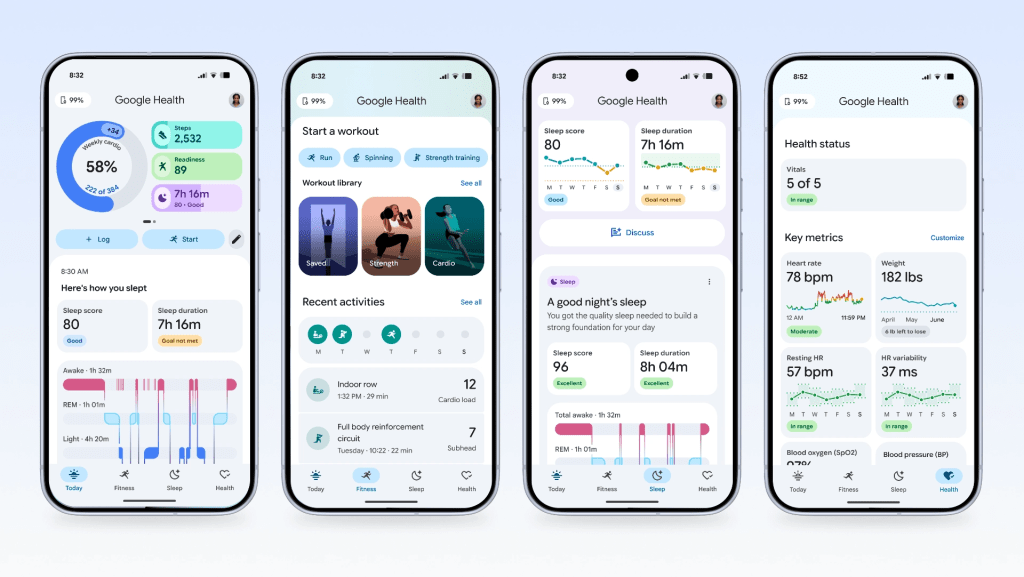
Google says the new app is designed to provide a more comprehensive view of personal wellness by combining data from Fitbit devices, Pixel Watch models, Health Connect integrations, Apple Health, and supported medical records.
The redesigned interface centers around four primary tabs: Today, Fitness, Sleep, and Health. Users will be able to customize dashboards, track trends over time, and sync data from connected services like Peloton and MyFitnessPal.
Medical record integration is one of the more ambitious additions. In the U.S., users can sync lab results, medications, vitals, and other healthcare information directly into the app. Google says the experience is designed to help people see how daily habits and long-term health metrics connect over time.
The company is leaning hard into the “everything in one place” philosophy here. Fitness tracker, sleep log, workout planner, health dashboard, medical summary tool. The app is starting to resemble the Swiss Army knife of wellness platforms, minus the tiny scissors nobody actually uses.
Google Health Coach Expands Globally
Google also announced the broader launch of Google Health Coach, a Gemini-powered assistant built to provide personalized health and wellness guidance. The feature first appeared in Public Preview last year and is now moving into a wider rollout as part of Google Health Premium, the rebranded version of Fitbit Premium.
Google Health Premium will cost $9.99 per month or $99 annually. Subscribers to Google AI Pro and Google AI Ultra plans will receive the service as part of their membership.
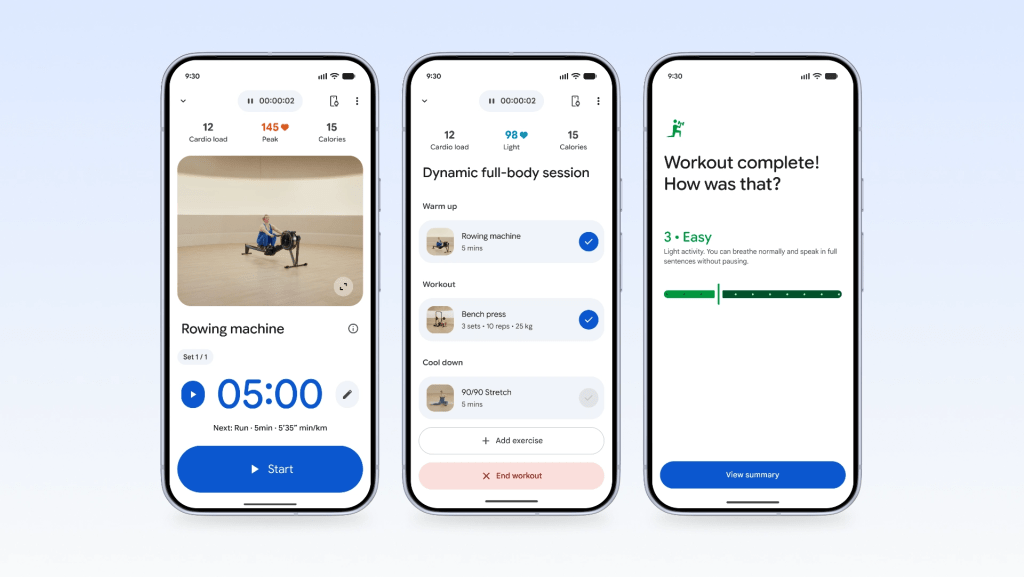
The coach is designed to function as a fitness trainer, sleep coach, wellness advisor, and recovery assistant all rolled into one conversational experience. During setup, users can share goals, injuries, workout preferences, equipment access, schedules, and lifestyle details. The system then adapts recommendations over time based on that context.
Google says the coach can generate workout suggestions, help structure weekly fitness plans, provide sleep consistency insights, and surface wellness recommendations based on factors like activity history, nutrition logging, weather conditions, and cycle tracking.
The company is also adding more flexible ways to log information. Users can upload photos of meals for nutritional analysis, snap pictures of gym whiteboards to record workouts, or upload PDFs and medical documents for summaries and guidance.
Fitbit Air Focuses on Lightweight Tracking
Alongside the app changes, Google introduced Fitbit Air, a new screenless fitness tracker aimed at users who want continuous health tracking without the bulk or distractions of a smartwatch.
Google describes Fitbit Air as its thinnest tracker yet, built for all-day and overnight wear. The device pairs directly with the Google Health app and is designed to work closely with Google Health Coach for more personalized recommendations.
A Stephen Curry special edition version is planned as well, giving the device a little extra athlete-approved polish. Somewhere in Silicon Valley, a slide deck probably described this as “recovery-core.”
Fitbit Air will support both Android and iOS devices.
Privacy Commitments Remain in Place
Google reiterated that Fitbit and Google Health wellness data will not be used for Google Ads. Users will retain controls over what information is stored, shared, or deleted within the app.
The Google Health app begins rolling out May 19, with Fitbit Air expected to reach store shelves later in the month.


