Home Blog Page 17

TerraMaster D1 SSD Pro: 80Gbps Thunderbolt 5 NVMe Enclosure

0

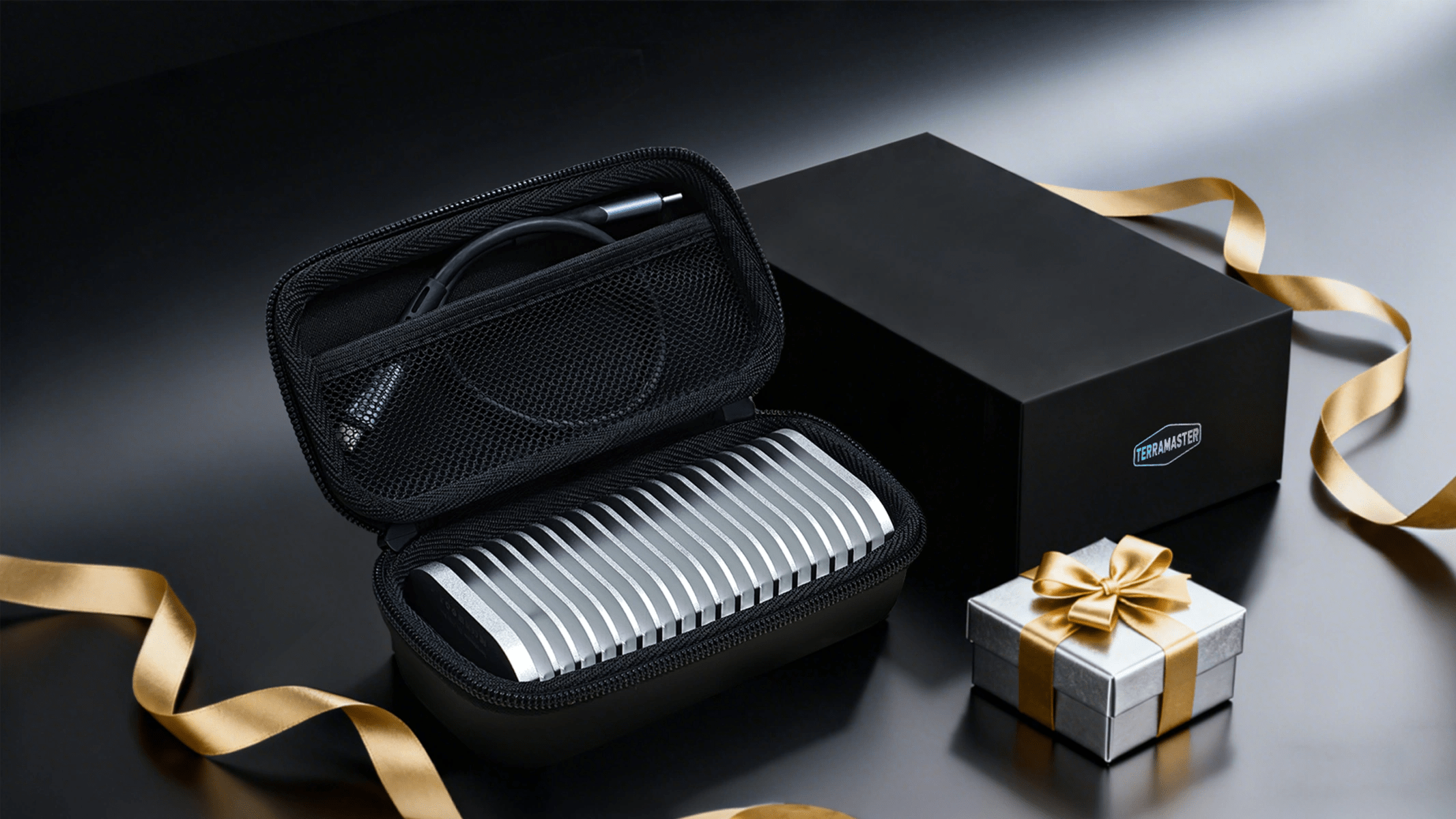
TerraMaster, a global specialist in professional storage solutions, announced the launch of the D1 SSD Pro, a groundbreaking M.2 NVMe enclosure engineered for the next generation of data transfer. As one of the first portable Direct Attached Storage (DAS) devices to utilize Thunderbolt 5 technology, the D1 SSD Pro achieves unprecedented real-world read speeds of up to 7,061 MB/s.

Designed for high-end cinematography, 8K video production, and massive data migrations, the enclosure allows users to transfer a 6GB file in approximately one second, effectively doubling the efficiency of previous-generation 40Gbps hardware.

Setting a New Benchmark for Speed

In a statement regarding the release, Li Wenpu, CEO of TerraMaster, emphasized the company’s dedication to empowering the creative community with desktop-class performance in a mobile format.

“The launch of the D1 SSD Pro marks a pivotal moment for professional workflows,” said Li. “By marrying Intel’s certified Thunderbolt 5 architecture with our advanced passive thermal engineering, we have created a tool that removes the bandwidth bottleneck for creators.”

Next-Generation Architecture and Universal Compatibility

The D1 SSD Pro is built upon an Intel-certified dual-chip framework, pairing the Intel JHL9480 Thunderbolt controller with a JMS583 USB bridge. This sophisticated internal design ensures that while the device is optimized for 80Gbps Thunderbolt 5, it remains fully compatible with:

  • Thunderbolt 4 and 3
  • USB4
  • USB 3.x standards

This makes the enclosure a versatile asset for users operating across diverse ecosystems, including the latest Apple M4 Pro/Max systems and Windows laptops powered by Intel Core Ultra 200 processors.

Silent Thermal Management and Rugged Design

Crafted from a single block of aerospace-grade aluminum via precision CNC machining, the D1 SSD Pro weighs just 300 grams. TerraMaster has utilized a fanless design that leverages an expanded surface area for passive cooling. This “True Zero-Noise” approach is specifically tailored for noise-sensitive environments like recording studios and edit suites, where active cooling fans can be a distraction.

Technical Specifications and Scalability

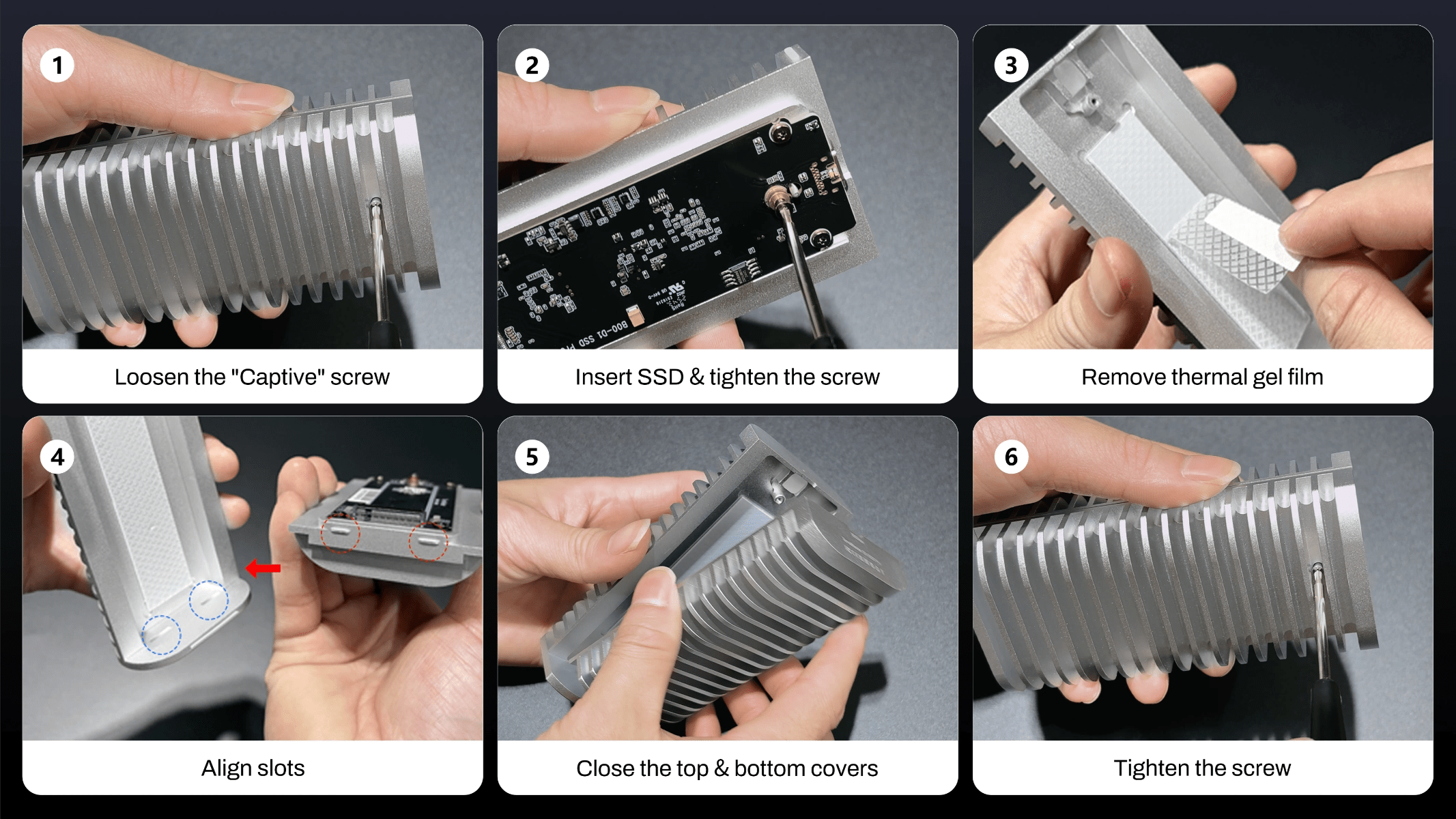
The enclosure supports a single M.2 2280 NVMe slot compatible with PCIe 3.0, 4.0, and 5.0 drives. When equipped with a high-performance SSD, such as the Samsung 990 Pro, the device delivers sustained write speeds of 6,816 MB/s.

FeatureSpecification
InterfaceThunderbolt 5 (80Gbps)
Max Capacity8TB
Max Read Speed7,061 MB/s
CoolingFanless Aluminum Passive
OS SupportmacOS, Windows 11 (24H2+)
Weight300g

Pricing, Availability, and Launch Promotion

The TerraMaster D1 SSD Pro is available immediately through the official TerraMaster website and major retailers. The device is priced at $249.99 in the United States and £203.99 in the United Kingdom.

To celebrate the product’s debut, TerraMaster is offering a 15 percent launch discount valid until February 2, 2026, across all official sales channels.

Infinix NOTE Edge Launched with 3D Curved Screen, Dimensity 7100 5G

0

Infinix has officially unveiled the NOTE Edge, a premium smartphone engineered to redefine the mid-range segment through a sophisticated 3D curved design and high-capacity battery engineering. Aimed at mobile professionals and tech-conscious enthusiasts, the device integrates several industry-first technologies within an ultra-slim, 7.2mm chassis.

The NOTE Edge enters the market with a competitive starting price of approximately $200 (varying by region), positioning it as a high-value contender for users seeking luxury aesthetics alongside long-term hardware reliability.

Revolutionary Power Management and Endurance

The hallmark of the NOTE Edge is its massive 6500mAh battery, the largest ever integrated into an Infinix device. Despite this high capacity, the handset maintains a lightweight profile of 185g. According to internal benchmarks, the battery supports up to 26 hours of continuous navigation or 22 hours of video playback.

To address long-term battery health, Infinix introduced a pioneering self-repairing battery system. This technology utilizes a low-current recrystallization process to mend micro-fractures within the battery cells during low-power cycles. This innovation ensures the device retains over 80 percent of its original capacity after 2,000 cycles—equivalent to roughly six years of standard use. For rapid recovery, a 45W Hyper Mode charging system can replenish the battery to 50 percent in 27 minutes.

Global Premiere of the MediaTek Dimensity 7100

The NOTE Edge serves as the global launch platform for the MediaTek Dimensity 7100 5G chipset. This 6nm-class platform is optimized for thermal efficiency and sustained performance, achieving AnTuTu V11 scores exceeding 810,000.

Connectivity is bolstered by the Ultra Powerful Signal (UPS) 3.0 AI technology. This system dynamically optimizes signal penetration in challenging environments, such as underground parking structures and high-speed transit. Real-world testing indicates a 33 percent improvement in call success rates within high-interference industrial zones compared to previous generations.

Immersive 1.5K Visuals and Pearl Light Design

The device features a cinema-grade 1.5K resolution 3D curved display protected by Corning Gorilla Glass 7i. With symmetrical 1.87mm bezels and a peak brightness of 4,500 nits, the screen provides exceptional clarity under direct sunlight. The visual experience is complemented by dual stereo speakers professionally tuned by JBL.

Infinix has introduced a new Pearl Light Ripple Shadow aesthetic, offering four distinct colorways:

  • Silk Green: Features a water-wave brushed texture that mimics the tactile feel of silk leather.
  • Lunar Titanium, Stellar Blue, and Shadow Black: Utilize high-strength composites with cat’s-eye gemstone effects for a shifting, matte finish.

AI-Enhanced Utility and Imaging

For photography, the NOTE Edge utilizes a customized 50MP main sensor. A notable addition is the “Live Photo” mode, which captures three-second synchronized audio-visual clips.

The smartphone debuts XOS 16 (based on Android 16), featuring the FOLAX AI assistant. A dedicated “One-Tap Button” allows users to invoke AI for real-time screen translation, document outline, and cloud-based photo editing. Furthermore, Infinix has committed to an industry-leading support lifecycle, promising three major Android OS upgrades and five years of security patches.

Benjamin Jiang, CEO of Infinix Mobility, highlighted the device’s role in the company’s broader strategy to deliver flagship-tier innovation at accessible price points.

“With the NOTE Edge, we are continuing our mission to democratize technology by bringing a true 5G experience to a broader audience,” said Jiang. “By being the first to adopt the MediaTek Dimensity 7100 platform and debuting our Android 16-based XOS 16, we are ensuring that this device represents a major expansion of our commitment to delivering power and elegance without compromise.”

Pricing and Availability

The Infinix NOTE Edge is available in select global markets, including the United States with a rollout in Malaysia scheduled for February 4, 2026.

The device is priced competitively starting at approximately $200 for the 8GB RAM and 128GB storage variant. The smartphone is backed by a commitment to three major Android OS upgrades and five years of security patches.

CUKTECH 15 Air: Slim 65W Power Bank for Laptops & Phones

0

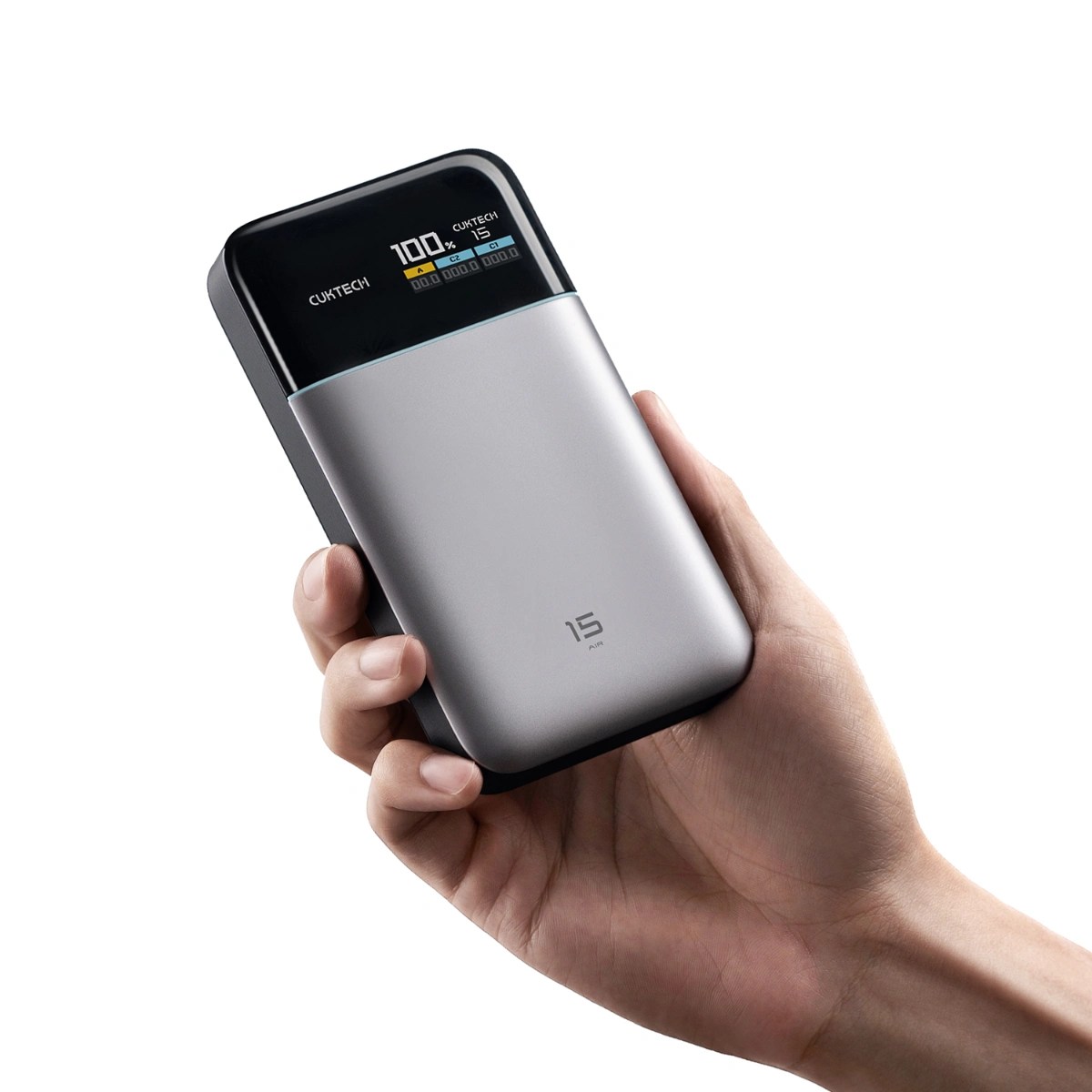
CUKTECH, a prominent developer of advanced charging hardware, has officially announced the global release of the CUKTECH 15 Air Power Bank. Engineered specifically for the demands of modern commuters and international travelers, the device prioritizes a high energy-to-weight ratio to provide laptop-grade power in a pocket-sized format.

High-Output Performance in a Slimline Chassis

Distinguished by its industrial design, the 15 Air measures less than one inch in thickness and weighs approximately 10.8 ounces. Despite its lightweight profile—which rivals many lower-capacity 10,000mAh units—it houses a substantial 15,000mAh battery. This capacity is sufficient to replenish a Samsung S25 Ultra over two times, ensuring reliability for users away from stationary power sources.

The device features a 65W USB-C output, capable of sustaining high-performance hardware such as the MacBook Air, Dell XPS, and Lenovo productivity laptops. Benchmarks indicate the 15 Air can charge a MacBook Air M3 to 48 percent and an iPhone 17 Pro Max to 67 percent within a 30-minute window.

Technical Specifications at a Glance

FeatureSpecification
Capacity15,000mAh
Max Single Output65W (USB-C)
Total Multi-Port Output100W
Weight10.8 oz
TechnologyGaN + Silicon-Carbon Cells
SafetyCCC Certified / TSA Compliant

Advanced Thermal Management and Multi-Device Support

At the heart of the 15 Air is a combination of Gallium Nitride (GaN) and silicon-carbon cell technology. This integration allows for superior efficiency and heat dissipation, facilitating a total intelligent power distribution of up to 100W when charging three devices simultaneously.

  • Real-Time Monitoring: A built-in TFT color display showing wattage, remaining percentage, and recharge estimates.
  • Rapid Recharging: When utilizing a 100W PD charger, the unit can recover nearly a quarter of its capacity in just 10 minutes.
  • Safety Compliance: The device is CCC certified and falls well within the 100Wh limit mandated by major airlines for carry-on luggage.

Availability and Pricing

The unit is currently retailing for $79.99 in the United States via Amazon. In the United Kingdom, the device is listed at £69.00, though a limited-time promotional coupon on Amazon UK currently reduces the price to £39.99.

Hands On: JOYROOM PODIX 140W 5-Port Desktop GaN Charger

0

The JOYROOM PODIX 140W 5-Port Desktop GaN Charger represents a fresh approach to desktop charging, combining substantial power output with thoughtful design elements that address real workspace challenges. This isn’t just another multi-port charger. Instead, it’s more of a charging station that brings built-in cable management and real-time power monitoring to your desk.

Power That Matches Modern Demands

At the heart of the PODIX lies a 140W total power output distributed across five ports: one high-power USB-C port capable of delivering the full 140W, two additional USB-C ports (up to 100W each), and two USB-A ports (30W each). This configuration handles everything from power-hungry laptops to smaller devices like earbuds and smartwatches.

The JOYROOM PODIX 140W 5-Port Desktop GaN Charger cuts desk clutter with built-in retractable cables and real-time power monitoring, delivering fast, intelligent charging for all your devices in one compact, organized hub.

The charger uses GaN (Gallium Nitride) technology, which allows for this level of power delivery in a surprisingly compact form factor. The unit measures just 2.96″ × 3.24″ × 3.00″, making it roughly the size of a baseball or Rubik’s Cube but with considerably more utility.

A close-up of a black GaN Ultra 140W charger with a USB-C port, being held in a hand, on a textured surface.

Built-in Cable Management That Works

The PODIX’s standout feature is its dual retractable USB-C cables. Each cable extends up to 31.5 inches and retracts automatically when released, eliminating the typical cable clutter that plagues most desk setups. These aren’t afterthought additions – they’re integrated into the design and tested for over 10,000 pull cycles.

The JOYROOM PODIX also features a tri-magnetic base system that keeps the unit stable during cable deployment. The charger can be positioned upright or rotated 180 degrees while maintaining its grip on the magnetic base.

A close-up view of a hand holding a USB-C cable labeled '100W' against a blurred background with various objects on shelves.

Real-Time Power Monitoring

The 1.54-inch LCD display provides real-time power consumption data across all ports. A single tap cycles through different display modes: total power output, individual port consumption, and animated emoji displays. The interface includes practical controls – double-tap to change emoji animations, triple-tap to rotate the display orientation, and a long press to power down the unit.

Intelligent Power Distribution

The PODIX automatically distributes power based on connected device needs. When charging a MacBook Pro 16″ alone, it can deliver the full 140W for rapid charging (50% in approximately 25 minutes). When multiple devices are connected, the charger intelligently allocates power – for example, when using all five ports simultaneously, it provides 20W+20W+80W+(15W shared between USB-A ports).

A black charging station with a digital display showing '19%' battery level, featuring multiple USB ports labeled for charging.

Build Quality and Design Considerations

The unit weighs 466g and features PC plastic construction with UL94 V-0 certified flame-retardant materials. The magnetic base uses a 4.33-inch diameter silicone pad that provides stability without marking surfaces. The charger supports 100-240V input, making it suitable for international use.

The design includes eight layers of safety protection and maintains relatively cool operation thanks to the GaN technology. The retractable cables are permanently integrated – they cannot be replaced if damaged, but their robust construction suggests this shouldn’t be a frequent concern.

A close-up view of a hand holding a device with multiple USB ports labeled with power specifications: two 30W ports (A1, A2) and one 140W port (C1), alongside a digital display showing power output.

Practical Performance

In real-world use, the PODIX handles mixed device charging effectively. The retractable cables work smoothly for phones and tablets, while the front-facing ports accommodate larger devices. The power distribution works as advertised – connecting a laptop doesn’t significantly impact charging speeds for smaller devices when total draw stays within the 140W limit.

The display proves useful for monitoring power consumption, particularly when trying to understand which devices are drawing the most power. The emoji animations, while perhaps unnecessary, add a touch of personality without being distracting.

A compact black charging station featuring multiple USB ports and a digital display showing a smiling face icon, set on a flat surface with a blurred background of shelves and decorations.

The JOYROOM PODIX 140W 5-Port Desktop GaN Charger delivers on its core promise: reducing cable clutter while providing substantial charging power in a compact package. For users dealing with multiple devices and limited desk space, it offers a practical solution that combines power, organization, and monitoring in one well-designed unit. At $109.99, it represents solid value for those prioritizing both functionality and workspace aesthetics.

Ready to simplify your charging setup? The PODIX is available now with worldwide shipping and comes backed by JOYROOM’s one-year warranty.

Meet the Fitnexa SomniPods 3: Sleep Earbuds Designed for Side Sleepers

0

If you have ever tried sleeping with earbuds in, you already know the problem. The moment you roll onto your side, comfort disappears. What started as a solution to snoring, street noise, or a restless partner quickly turns into sore ears, constant readjusting, or giving up altogether. Most earbuds are built for waking hours, not eight hours pressed into a pillow.

The Fitnexa SomniPods 3 exist to fix that exact mismatch. They are designed from the ground up for sleep first, not as repurposed audio gear, pairing an ultra-thin profile with active noise cancellation and sleep tracking that works without getting in the way of rest.

The Fitnexa SomniPods 3 represent a focused approach to sleep technology, combining AI-powered sleep tracking with hybrid active noise cancellation in a design specifically engineered for comfort during sleep. These earbuds address the common challenge faced by side sleepers who struggle with traditional earbuds that create pressure points against pillows.

Ultra-Thin Design for All-Night Comfort

At just 3.3 grams per earbud and measuring under 9.9 millimeters thin, the SomniPods 3 achieve a profile that allows side sleepers to rest naturally without pressure or discomfort. The earbuds come with ten pairs of ear tips in two distinct shapes and five sizes each, plus four sizes of ear wings for additional stability options.

Designed for side sleepers, the SomniPods 3 combine ultra-thin comfort with powerful noise cancellation and smart sleep tracking. You can finally enjoy restful, uninterrupted nights again.

Hybrid Active Noise Cancellation

The dual-microphone hybrid ANC system reduces external noise by up to 42 decibels, effectively silencing snores, traffic sounds, and other background distractions. This noise cancellation capability blocks 99% of ambient noise, creating a controlled sound environment for better sleep quality.

AI-Powered Sleep Monitoring

Built-in sensors track sleep duration and provide sleep-stage and posture estimates with at least 85% accuracy compared to professional sleep monitoring equipment. The system delivers a clear Sleep Score each morning, offering insights into sleep patterns and quality.

Extended Battery Performance

The SomniPods 3 offer up to 48 hours of total battery life with the charging case. A 10-minute fast charge provides 1.5 hours of use with ANC enabled, while the earbuds support both USB-C and wireless charging options. The earbuds feature IPX4 water resistance for protection against moisture and sweat.

Technical Specifications

The earbuds incorporate a 3-axis sensor system for accurate sleep monitoring and include multiple connectivity options. The charging case provides extended battery life while maintaining a compact form factor suitable for travel.

The Fitnexa SomniPods 3 deliver a practical solution for anyone seeking uninterrupted sleep in noisy environments. Their combination of comfort-focused design, effective noise cancellation, and sleep tracking capabilities makes them a solid choice for improving sleep quality. Ready to experience better sleep? Learn more about the SomniPods 3 and see how they can transform your nights.

Beatbot AquaSense X Takes Automated Pool Cleaning a Step Further

0

Skimmers, brushes, vacuums, and robotic cleaners already exist in abundance. Pool cleaning usually involves more than just the cleaning run. It also means setup, supervision, and cleanup afterward.

Beatbot AquaSense X self-emptying pool robot changes that equation by focusing on what prevents people from cleaning often enough. The core idea is not simply to clean harder. The shift is to clean more consistently, with fewer interruptions, and with dramatically less post-cleanup work. When a cleaner runs more frequently, debris has less time to settle, stain, and become stubborn. As a result, pool maintenance becomes lighter, less reactive, and noticeably more predictable.

Higher Cleaning Frequency Without Higher Effort

A pool can look excellent for a day or two, then slowly drift toward dull water, a dirty waterline, and accumulating debris on steps and ledges. It is the slow build of fine particles, oils, and leaves that gather in corners and along surfaces.  When buildup takes hold, hand scrubbing follows, and maintenance starts to pile up.

More frequent cleaning prevents accumulation. Prevention means fewer “deep clean” moments, fewer hours spent brushing, and fewer weekends sacrificed to catch-up. 

AquaSense X supports frequent cleaning by cutting down the cleanup work after each run.

A top view of a black robotic vacuum cleaner with control buttons and a sleek design, positioned on a light-colored tiled floor.

Removing the Step People Avoid

The defining advantage of AquaSense X is the AstroRinse self-cleaning station paired with a high-capacity debris system. After a cleaning run, AquaSense X returns to its station and initiates an automated backflush rinse that takes roughly three minutes. The station rinses the filter and empties collected debris without requiring the owner to open the robot, carry a dripping bin to the trash, or rinse filters by hand.

The station’s debris basket holds 22 liters, a capacity designed for real-world leaf loads rather than light dust. Beatbot positions that volume as enough to handle substantial debris collection, including large quantities of leaves, while extending the time between manual emptying. A disposable debris bag further reduces direct contact with dirty waste.

Wireless Charging and Continuous Readiness

Instead of plugging in cables after every use, the robot docks and charges wirelessly. Beatbot also highlights high-power charging performance, supporting faster turnaround between cycles. The practical impact is simple: cleaning does not pause for long recoveries, and owners do not need to manage cords, ports, or repeated setup steps.

By combining docking, rinsing, emptying, and charging into one station-based workflow, AquaSense X behaves less like a standalone device and more like a maintenance system. 

Coverage Across Floors, Walls, and Waterline

Consistency only works when the robot covers the areas where dirt actually accumulates. Pools collect debris in predictable places: on the floor, along walls, at the waterline, on steps, and across shallow ledges and platforms where circulation slows and fine particles settle.

AquaSense X is built as an all-in-one cleaner that targets multiple zones rather than focusing solely on the floor. It is designed to clean the pool floor and walls, address the waterline, and handle surface debris management. Beatbot also promotes multi-platform climbing that supports cleaning raised areas such as shallow platforms, a feature aimed at pools with tanning ledges and multi-level designs.  

A robotic pool cleaner navigating through clear blue water in a swimming pool.

Smarter Navigation for More Consistent Cleaning

Pool robots often advertise intelligence, yet owners typically care about outcomes: fewer missed spots, fewer repeated passes in the wrong places, and fewer moments where a robot behaves unpredictably. AquaSense X centers its navigation around a sensor-rich approach. Beatbot describes a HybridSense system combining multiple sensor types, including an AI camera, alongside a large sensor suite intended to improve mapping and decision-making. Dual front LED lights support visibility in low-light conditions, allowing the camera system to remain effective during evening or shaded cleaning.

Beatbot also positions the system as capable of recognizing a wide variety of debris types and returning to areas that need more attention. The robot can prioritize, revisit, and adapt. More importantly, it can do that repeatedly, supporting the higher-frequency cleaning pattern that keeps pools from drifting into neglect.

Rather than guessing its way through the pool, AquaSense X relies on a debris recognition system trained to identify more than 40 different debris types. That level of detail allows it to adapt its cleaning behavior instead of repeating a fixed pattern, which is exactly what supports higher cleaning frequency without wasted time.

For smaller messes, quick mode saves time. It helps keep the pool under control in windy conditions and during leaf season.

Battery Endurance That Supports Real Maintenance Cycles

AquaSense X can run long enough to complete a full cleaning cycle in a single session. Beatbot lists up to 10 hours of continuous surface skimming, which helps keep leaves and floating debris from piling up between cycles.

For deeper cleaning, the same platform is rated for up to 5 hours of continuous cleaning on the pool floor, walls, and along the waterline, which covers the zones where grime tends to settle and stick over time. Beatbot also states a coverage of up to 3,875 square feet per charge, a practical indicator that the robot can handle larger pools without needing repeated stops and restarts.

Easier Retrieval and Daily Practicality

Another barrier to frequent use is the annoyance of pulling a waterlogged robot from the pool. AquaSense X addresses this with features designed to make retrieval less strenuous. Beatbot describes smart water-surface parking, allowing the unit to position itself for easier pickup, and an automatic draining capability that reduces the weight of water retained during removal. Smart surface parking and automatic draining make AquaSense X easier to lift out of the pool.

Water Clarity Support as a Complement to Cleaning

Physical debris removal is only part of what makes a pool look and feel clean. Fine particles and haze can persist, especially when heavy use, wind, or nearby landscaping introduce constant micro-debris. Beatbot also offers a ClearWater option that helps improve water clarity. It uses a natural clarifier made from recycled crab shells to help fine particles clump together and clear more quickly. Used alongside regular cleaning, it helps reduce haze and keeps the water clear for longer.

A child diving into a swimming pool while another child sits at the edge, splashing water. A man lounges nearby, and a blue pool toy is visible in the foreground.

Made to Hold Up Outdoors Over Time

AquaSense X and its charging station are made for continuous outdoor use, with materials selected to handle sun exposure, pool chemicals, and changing temperatures. The station includes cold-weather protection, and the robot’s exterior is designed to resist heat, wear, and UV exposure.

Beatbot backs the system with a three-year warranty that covers long-term use, reinforcing its role as a cleaner meant to run regularly rather than a short-term device.

Why This Changes the Traditional Way People Clean Pools

AquaSense X changes pool cleaning by targeting the behavior that actually keeps pools clean: consistent, repeated maintenance. Self-emptying and self-rinsing remove that friction. Wireless charging and station-based automation keep the robot ready. Smarter navigation and multi-zone coverage support reliability across the surfaces that matter. Easier retrieval reduces the excuses that lead to skipped cycles.

The outcome is straightforward. When the cleaner runs more often, debris does not get time to become stubborn. The waterline stays cleaner. Fine sediment accumulates less. Manual maintenance shrinks. The pool remains in a cleaner steady state rather than bouncing between “acceptable” and “needs work.”

Pool cleaning stops being an occasional task. It becomes a background process that protects water quality and appearance through frequency, continuity, and automation. Beatbot AquaSense X does not merely clean a pool. It makes it easier for a pool to stay clean.

UREVO Launches AI-Powered Wireless Recovery Boots for Athletes

0

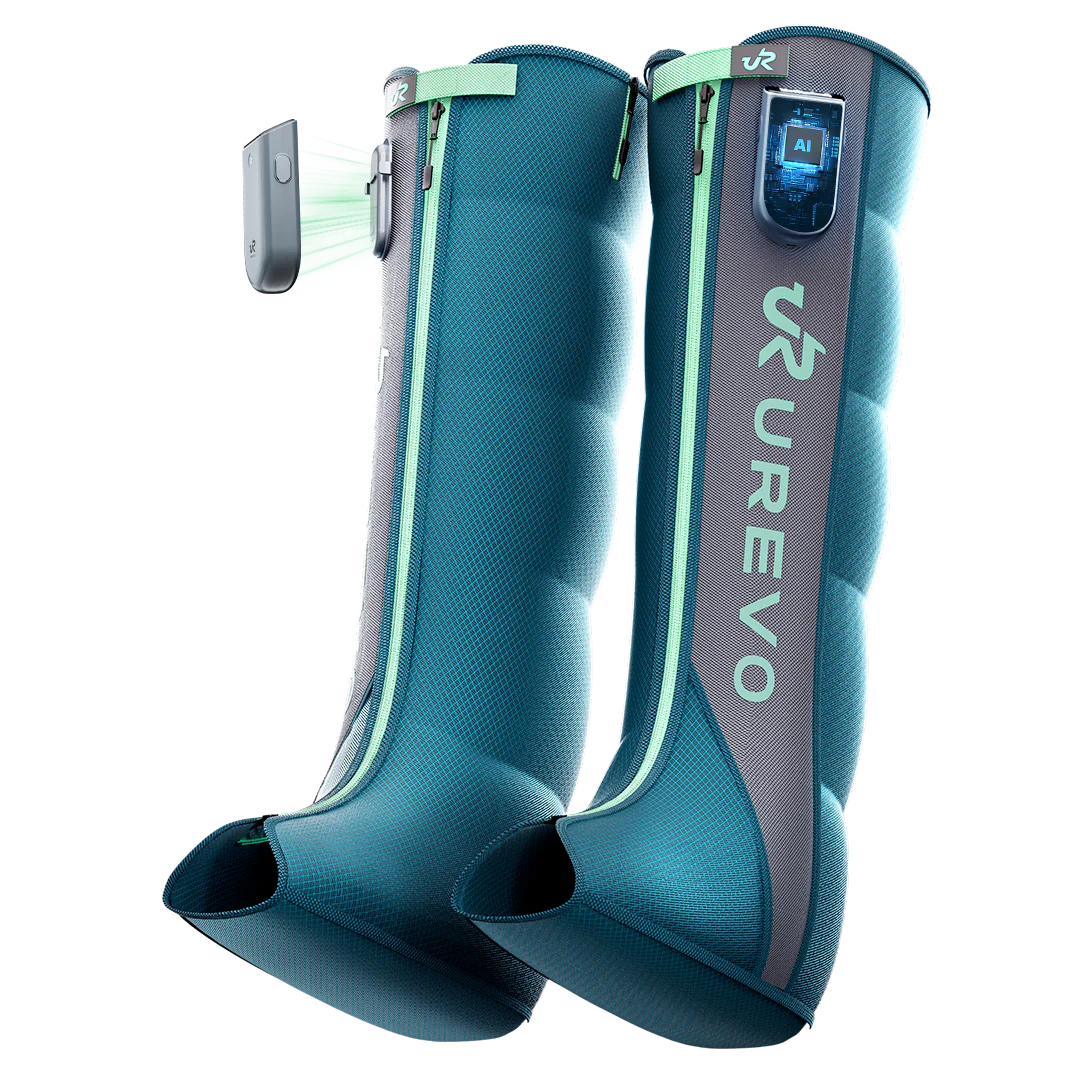
UREVO, a global leader in smart fitness technology, has officially announced the global launch of its AI-Powered Wireless Recovery Boots. This pioneering system represents the world’s first AI-driven leg recovery solution, designed to provide elite-level sports therapy to athletes ranging from weekend warriors to professional champions.

Bridging the Gap Between Clinic and Home

Traditionally, high-end pneumatic compression therapy has been reserved for professional training facilities, with systems often exceeding $10,000. UREVO aims to disrupt this market by offering a self-adjusting solution that mirrors the expertise of a physical therapist at a fraction of the cost.

“Our mission has always been to democratize high-performance fitness technology,” said Davis Huang the co-founder and CEO of UREVO.

“With the launch of these recovery boots, we are removing the barriers of expensive clinic visits and bulky equipment, allowing athletes to access sophisticated, data-driven recovery whenever and wherever they need it.”

Technical Specifications and Key Features

The system is built on a foundation of proprietary AI Smart Massage technology, which analyzes muscle condition in real-time to optimize pressure dynamically.

FeatureSpecification
TechnologyAI Smart Massage with 32 Intelligent Modes
Pressure Range80–180 mmHg (Activation to Deep Recovery)
Heat TherapyThree levels: 38°C, 43°C, 48°C
Massage Nodes8 customizable deep-massage nodes via matrix airbag
Battery Life5,000 mAh (4+ hours runtime; <3 hours charge)
FitmentMulti-zipper design for heights 160 cm to 200 cm
ConnectivityBluetooth App Control with OTA updates
PortabilityDetachable wireless controller; Weight: 4.2 kg
Noise LevelQuiet operation (<65 dB)

Targeted Relief Through Intelligent Design

The boots feature a specialized matrix airbag system designed to flush lactic acid and reduce muscle stiffness. Through the companion app, users can utilize Smart Area Massage to focus on specific muscle groups—such as the calves or thighs—while bypassing sensitive or injured zones.

The integrated AI doesn’t just apply static pressure; it visualizes muscle tension in real-time, allowing users to track their physical improvement across every session. The hardware is equally versatile, featuring a multi-zipper adjustment system that ensures a single pair can be shared between teammates or family members of varying heights.

Portability and Power

Engineered for the athlete on the move, the boots include a detachable wireless controller that significantly reduces the system’s storage footprint. The high-capacity 5,000mAh battery is not only capable of powering a week’s worth of recovery sessions but can also serve as a power bank to recharge mobile devices simultaneously.

Pricing and Availability

The UREVO AI-Powered Wireless Recovery Boots are available now for purchase through the official UREVO US and Europe websites. The system is priced at $799.99 / £799.99, positioning it as a competitive alternative to traditional, non-intelligent recovery systems.

From Headphones to Living Spaces: MorningBlues’ Bigger Plan

0

CES has a way of training your eyes to look for scale. The bigger the booth, the louder the messaging, the more confident you’re supposed to be that you’re looking at something important. But that logic doesn’t always hold up, especially in places like Eureka Park, where ambition often shows up before polish and ideas matter more than square footage.

For those who are not familiar, Eureka Park is the intimate, if not ordinary, place at CES where brands test ideas and concepts. Booths are much smaller and you often get face time with the founders, designers, and engineers of products. And to be sure, not all of the things shown here ever see the light of day, let alone retail success.

That’s where I spent time with MorningBlues, a brand I already had some familiarity with going into the show, but one that became far more interesting once I saw how they framed themselves in person.

Why MorningBlues Makes Sense at CES

At a glance, MorningBlues fits comfortably into CES. They make audio products, after all. But the real reason they belong here has less to do with competing on sound specs and more to do with exploring how audio fits into modern living spaces.

MorningBlues isn’t chasing the traditional audiophile crowd, and it isn’t trying to win people over with charts or jargon. Their pitch is about experience, atmosphere, and expression. CES is one of the few environments where that kind of positioning doesn’t feel awkward or premature. It’s a place where brands can float ideas before they harden into categories.

Close-up of sleek, modern headphones with illuminated controls showing a checkmark and circular design.

Coming in With Some History

This wasn’t my first exposure to MorningBlues. Prior to CES, I had already spent time with their headphones, and I came away liking them more than I expected to. They weren’t trying to be everything to everyone, and that restraint was refreshing. It was clear there was a specific demographic in mind, one that values personal expression and visual identity as much as sound quality.

So when CES rolled around, I was curious to see how the brand would present itself beyond a single product. Would the headphones feel like a one-off experiment, or part of something broader?

A Small Booth That Encouraged Conversation

MorningBlues’ presence in Eureka Park was modest, and that worked entirely in their favor. The booth felt approachable, unhurried, and staffed by people who were eager to talk through ideas rather than rush through a rehearsed pitch. It felt less like a demo station and more like a design studio open house.

That environment made it easier to understand not just what they’re building, but how they’re thinking.

An interactive display featuring a circular screen with text about the Pink Pony Club, alongside gears in the background and a modern black cabinet nearby.
Record R1

The Lineup, Seen All at Once

Beyond the headphones, the team walked me through the rest of their lineup, and that’s where the broader vision started to come into focus. Products like the Gallery T2 and Record R1 reinforced the idea that MorningBlues sees audio as something that should live comfortably in a room, not be hidden or minimized.

The Gallery T2, with its framed, art-forward presentation, feels designed to blend into a space while still making a statement. The Record R1 leans more heavily into nostalgia and visual storytelling, offering a more playful take on how music can be displayed as well as heard.

They also showed me the Nightstand S1, which underscored how seriously the brand thinks about placement and context. This isn’t audio gear designed in isolation. It’s designed with furniture, lighting, and everyday routines in mind.

Concepts and Signals of Where They’re Headed

A colorful multimedia station featuring large reel-to-reel tape player elements, orange and black design, buttons, and display screen showcasing 'Cinema Cabinet PI'.
Cinema Cabinet P1

One of the more interesting moments came when they shared a concept product that isn’t on shelves yet. The idea was essentially a cabinet or piece of art that hides a television, with the screen rising out of it when needed. It felt intentionally domestic, almost old-world in its sensibility, but reimagined through a modern lens.

It wasn’t presented as a finalized product, but as a direction. A signal that MorningBlues is thinking beyond individual devices and toward integrated living experiences. Audio, visuals, and furniture all treated as part of the same conversation.

Another product that I learned of, the Cinema Cabinet P1, looked as if it could have been designed in the 60’s, 90’s or today. It was bold, and begged for attention. For something that’s centered around audio, it certainly wants to be a topic of discussion. The concept is one part soundbar, one part short throw digital projector, and one part flashy, moveable furniture.

Revisiting the Headphones, With New Context

Coming back to the headphones after seeing the rest of the lineup gave me additional appreciation for what MorningBlues is trying to do. The visual elements, including the detachable displays, feel less like novelty once you see them as part of a consistent design language across the brand.

I also got a sneak peek at an upcoming change to the headphone line, one focused on making them more user- and wearer-friendly. While details were understandably limited, the emphasis was on comfort, usability, and day-to-day wear rather than radical reinvention.

That matters. It suggests the brand is listening, iterating, and refining rather than chasing attention for attention’s sake.

A framed portrait of a historical figure, featuring a plump person dressed in rich clothing with a red and blue ensemble, adorned with intricate lace details.
Gallery T2

Design-Led, But Not Careless

One concern with visually driven audio products is that form can overwhelm function. What reassured me during this visit was how measured the design philosophy felt. Nothing seemed gratuitous. There was a clear sense that MorningBlues understands the balance it has to strike between expression and practicality.

They’re not trying to convert traditional audiophiles overnight. They’re building for a different kind of listener, one who sees music as mood, identity, and environment rather than purely technical performance.

The Small Booth Felt Honest

There was something refreshing about the scale of the operation on display. The small booth, the focused lineup, and the straightforward conversations all reinforced the sense that MorningBlues is still in a growth phase, but one guided by intention rather than urgency.

It’s easy to imagine the brand taking up more space at future CES events. Not because they need to, but because their ideas are naturally expanding outward.

What CES Gets Right in Moments Like This

CES can feel overwhelming, but moments like this are what make it worthwhile. It’s not always about discovering the next mass-market hit. Sometimes it’s about spotting a company that’s still shaping its identity, still refining its voice, and still figuring out how big it actually wants to be.

MorningBlues benefited from being in an environment where curiosity mattered more than recognition.

A modern black and green storage cabinet with a circular knob, illuminated from below, accompanied by a banana and green boxes labeled 'MorningBlues'.
Nightstand S1 (bananas for scale)

One I’m Watching With Interest

I left Eureka Park with a clearer sense of where MorningBlues is headed and more confidence in the path they’re on. I liked the headphones before CES. I appreciated them more after seeing the ecosystem they’re meant to live within.

This feels like a brand that will grow into its presence rather than explode into it. And if a larger CES footprint is in its future, it will likely feel earned, not inflated.

For now, MorningBlues lives in that space between discovery and momentum. That’s often the most interesting place to be, and it’s exactly why they stood out to me at CES.

Why International Shows Are Becoming Global Blockbusters

0

The new year has arrived, and with it comes the familiar scramble for attention across every streaming platform.

Television now asks audiences to look up from a six-inch screen and commit to an hour of continuous storytelling on something only marginally larger.

For decades, the silver screen has always competed for viewers, but in 2026, the battle feels different. It’s not just other networks or other shows. It’s Instagram, it’s TikTok recipes, it’s whatever Elon Musk said on X this morning, it’s the spinning roulette wheel or the jangly music from online casinos now played on a phone. That’s a harder sell than it sounds.

The medium survives because the best shows still win that fight, and increasingly, the shows winning are coming from everywhere except Hollywood.

Competition is healthy. If anything, there’s too much good television right now. Stranger Things closed out its decade-long run over Christmas on Netflix to decidedly mixed fan reactions. Apple TV+ had a strong 2025, stacking Ted Lasso, Slow Horses, Severance and Vince Gilligan’s Pluribus in the same year.

Add Disney+, Prime, Hulu, Peacock, and Discovery into the mix, and you’re looking at a content library built like Thanos’ Infinity Gauntlet. One that feels genuinely overwhelming.

Subscribers are forced to choose carefully. Too many services drain the bank account and dilute interest. The best catalogue wins. But when that catalogue increasingly includes content from Madrid, Seoul, Tokyo, and Dubai, the landscape starts to look different.

Person sitting on the floor in a library, reading manga volumes while surrounded by shelves filled with DVDs and books.

Squid Game drew nearly 600 million viewers worldwide. Money Heist, Lupin, and La Palma delivered stories from across Europe that felt urgent and specific. Fauda made Middle Eastern political conflict digestible without softening its edges. All this makes the growing appetite for stories from elsewhere harder to dismiss as novelty.

This raises an obvious question. With the United States and the United Kingdom already producing such a high volume of acclaimed television, why are audiences looking even further afield? Here’s why international series are no longer just travelling well, but becoming familiar fixtures in homes around the world.

A different culture

Travel has become expensive and unpredictable, which makes cultural escapism more valuable than ever. Netflix saw a 71% increase in non-English language viewership in the US, with 97% of American subscribers trying at least one foreign-language title within a year. Audiences are clearly seeking stories that feel culturally distinct rather than merely tolerating them.

Love Is Blind: Habibi delivers a slice of wealth and social negotiation that feels familiar yet foreign. Money Heist makes you want to rebel in the heat of Madrid. Alice in Borderland offers dystopian stakes across Japan.

For audiences raised on anime, global gaming, and online fandoms, crossing borders in storytelling feels natural, not a travel brochure.

Accessibility

The success of international television is also a story about infrastructure finally doing its job. Streaming platforms have removed many of the practical barriers that once limited the reach of local-language series.

Netflix alone produces content in roughly 40 countries and offers subtitles in over 30 languages, with dubbing available in a similar range. Viewers can toggle between dubbed English audio, native-language audio with subtitles, or both simultaneously. That flexibility lowers the barrier considerably.

This is less about dumbing down than about choice. Audiences can decide how immersive they want the experience to be.Squid Game can play in Korean with Gi-hun’s original performance or in English with Greg Chun’s dub. The important thing is that the choice is there, and the choice matters

Risk, imperfection, and stakes

Perhaps the most provocative argument for international television’s rise is that it has retained that perfect imperfection that  American prestige TV seems increasingly reluctant to embrace.

Squid Game is brutal, high-concept and formally audacious. It won major awards, including an Emmy for directing, while delivering violence and consequence. People die. There’s genuine unpredictability.

The finale of Stranger Things, by contrast, felt carefully managed. Risk felt present in theory but absent in practice. All the major cast members survived, often in familiar ways. The sense that anything could happen had quietly receded. The show had become so sleek that spectacle and an aestheticised, all-star ensemble completed the Duffers’ full Marvelification of a series that built its following on feeling dark, dingy, and desolate.

International shows often work with smaller budgets and less entrenched intellectual property, which appears to free them creatively. Handheld camerawork, location-heavy shoots and less airbrushed casting making them feel more authentic.

Algorithms and Adaptation

International shows do not succeed on quality alone. They succeed because streaming platforms have become exceptionally good at making foreign content feel local.

Localization in 2026 goes far beyond translation. It includes tailored artwork, adapted trailers, rewritten taglines and genre labels designed to match what specific markets respond to.

Amazon might position a Korean thriller as a family drama in one country and a violent crime series in another, depending on where the data suggests it will perform.

Algorithms quietly do the rest. Once a series performs well in its home territory, platforms test it with similar audiences elsewhere. A single recommendation can introduce viewers to an entire strand of international content. By the time a show dominates global charts, its rise can feel sudden, but it is usually the result of careful exposure.

The rise of international television does not signal a rejection of American or British storytelling. It reflects a change in audience confidence. Viewers in 2026 are comfortable navigating different languages, styles, and cultural perspectives

Hollywood still produces exceptional work, but it no longer holds a monopoly on what qualifies as unmissable television. The competition has become global, and the best content is coming from everywhere at once.

Built for the Cold Snap: Dreo’s MC706 and MC714 Take on Winter Indoors

0

As January bleeds into February and winter tightens its grip, this is the stretch of the season when home heating stops being a background concern and becomes a daily negotiation. Cold mornings, drafty rooms, uneven temperatures between floors. Central HVAC can struggle to keep up, and space heaters quickly reveal their limitations. Dreo’s latest lineup tackles that reality from two different angles, depending on how and where you need warmth most.

The Dreo MC706 and MC714 are built around the same core philosophy: fast, efficient heat with smart controls and serious safety considerations. Where they differ is in scale, placement, and how broadly they’re meant to influence a room.

Dreo MC706: One Tower That Handles Winter Without Fuss

The MC706 is built for households that want reliable heat during a cold snap, without committing floor space to a single-season appliance. This tall, 42-inch tower combines a high-output heater and a powerful fan in one unit, using Dreo’s auto-shift PTC system to physically move the heating element in and out of the airflow path. When heat is needed, it’s there almost instantly. When conditions change, the unit adapts without manual swapping or storage hassles.

A sleek, modern tower heater with a digital display showing the temperature, featuring a black and silver design.

In heating mode, the 1500W Hyperamics system reaches target temperatures in about two seconds and maintains warmth steadily instead of cycling aggressively. That consistency matters during prolonged cold spells, especially in living rooms, basements, or open layouts where temperatures can fluctuate. Wide 120-degree oscillation helps distribute heat evenly across the room, reducing those cold pockets near windows or exterior walls.

The MC706 also leaves headroom for warmer months, pushing air at up to 29.2 ft/s in fan mode with a high-efficiency DC motor. Controls are flexible but intuitive, offering 12 fan speeds, five heat levels, ECO mode, and a 12-hour timer. A rear-mounted remote storage slot keeps everything within reach, and safety features like tip-over protection, child lock, overheat monitoring, and a cool-touch exterior make it suitable for shared spaces.

For winter, the MC706 works as a dependable primary room heater. Over the year, it quietly earns its keep by replacing multiple seasonal devices with one slim tower.

Dreo MC714: Targeted Warmth for the Coldest Rooms

While the MC706 plays the long game, the MC714 is laser-focused on getting through winter comfortably. This compact whole-room heater is designed for fast, even heating during cold weather, especially in bedrooms, offices, or smaller living spaces that struggle to stay warm when temperatures plunge.

The 1500W Hyperamics heating system reaches full output in seconds, making it ideal for mornings, late nights, or quick warm-ups after coming in from the cold. What sets the MC714 apart is its 3D oscillation system. With 90 degrees of horizontal movement and 60 degrees vertically, the heater distributes warmth throughout the room instead of blasting it in a single direction. That motion helps eliminate cold corners and creates a more balanced, ambient feel.

A sleek black fan with a circular design and a digital display, featuring remote control and temperature settings.

Noise levels stay impressively low. In quieter modes, the MC714 operates around 34dB, making it a solid option for overnight use or work-from-home setups where background noise matters. Temperature control ranges from 41°F to 95°F, paired with three heat levels, ECO mode, and a 12-hour timer. All settings are visible on the digital display and adjustable via the included remote.

Safety is a clear priority, with an eight-layer protection system that includes tilt detection, overheat protection, cool-touch housing, and a child lock. Its compact size makes it easy to place near desks, beds, or seating areas without dominating the room.

For households dealing with uneven heating during a cold snap, the MC714 feels like a precision tool rather than a stopgap.

Built for Winter, Designed Beyond It

Taken together, the MC706 and MC714 reflect two practical responses to the kind of cold weather much of the U.S. sees this time of year. The MC706 suits larger shared spaces and users who want one appliance that can shoulder winter heating duties and stay relevant year-round. The MC714 focuses on immediate comfort, delivering quiet, even warmth to the rooms that need it most when temperatures refuse to cooperate.

Both devices emphasize controlled airflow, quick response, and strong safety fundamentals rather than unnecessary complexity. In the middle of a harsh January, that kind of thoughtful design can make a noticeable difference in how comfortable home actually feels.