

Nyrius is expanding its wireless video lineup with the Phoenix Prime 4K30 Wireless HDMI Series, a new pair of transmitters and receivers designed to send Ultra HD video from compatible devices to an HDMI-equipped display without relying on Wi-Fi, apps, or computer drivers.
The new series is available in two configurations. The Phoenix Prime TDD30 connects traditional HDMI source devices, while the TDD31 is designed for newer USB-C devices that support DisplayPort Alt Mode.
Both systems are designed around a plug-and-play setup, giving users a way to eliminate long HDMI cables when connecting computers, mobile devices, A/V equipment, TVs, and projectors.
Two Models for Different Video Sources
Nyrius is offering the Phoenix Prime in two versions based on the type of device being connected.
The Phoenix Prime TDD30 features HDMI input and HDMI output. It is intended for devices such as laptops, desktop computers, A/V receivers, cable boxes, and satellite boxes.
The Phoenix Prime TDD31 replaces the HDMI input with USB-C, making it suitable for compatible smartphones, tablets, laptops, and desktops that support USB-C DisplayPort Alt Mode for video output.
Both systems transmit video wirelessly to an HDMI-equipped television or projector.
4K30 Video Without Wi-Fi
One of the biggest differences between Phoenix Prime and conventional wireless display solutions is that the system doesn’t require a Wi-Fi network.
Instead, the transmitter and receiver communicate using Nyrius’ wireless technology across the 5.1GHz to 5.8GHz range.
The system automatically switches between nine available wireless channels to identify a clearer connection. That is designed to reduce interference from nearby wireless equipment and help maintain a stable video connection.
Nyrius rates the wireless range at up to 50 feet through walls, floors, and ceilings, while clear line-of-sight operation can extend to approximately 150 feet when obstacles aren’t present.
90ms System Latency
The Phoenix Prime systems have a listed system latency of 90 milliseconds.
That’s an important specification for anyone considering the system for applications where timing matters, such as presentations, video playback, or interactive content.
The system uses H.264 compression and supports PCM audio.
However, the supplied specifications indicate that the Phoenix Prime isn’t designed as a zero-latency solution, meaning users should consider the 90ms figure when deciding whether it’s appropriate for gaming or other timing-sensitive applications.
Phoenix Prime TDD30: HDMI-to-HDMI
The TDD30 is aimed at traditional HDMI-equipped source devices.
The transmitter connects to an HDMI output on a laptop, desktop, A/V receiver, cable box, or similar device, while the receiver connects to the HDMI input on the television or projector.
The setup is intended to be straightforward: connect both units, power them, and begin transmitting video without installing software.

The TDD30 supports television resolutions including 4K, 1080p, 1080i, 720p, 576p, and 480p.
For compatible PC sources, supported resolutions include 3840 x 2160 as well as several lower-resolution formats.
The transmitter and receiver each measure approximately 6.68 x 1.57 x 0.67 inches.
The transmitter weighs about 1.73 ounces, while the receiver weighs approximately 1.45 ounces.
Phoenix Prime TDD31: USB-C-to-HDMI
The TDD31 is designed for the growing number of devices that use USB-C for video output.
It can transmit video from compatible smartphones, tablets, laptops, and desktop computers that support DisplayPort Alt Mode through USB-C.
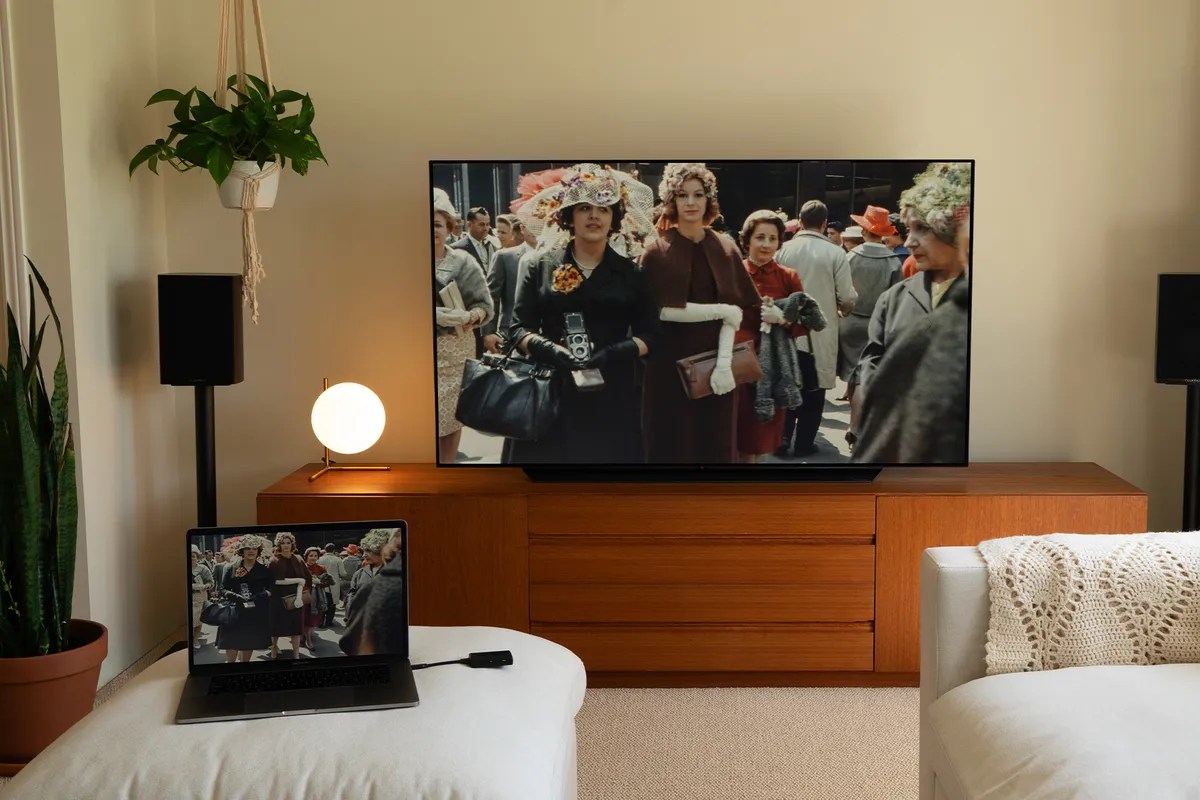
This distinction is important because not every USB-C port supports video output. A device must specifically support the required Alt Mode functionality for the TDD31 to work as intended.
The receiver connects to an HDMI-equipped TV or projector.
Like the TDD30, the TDD31 supports resolutions up to 2160p for compatible displays and provides a cable-free connection without requiring an app or Wi-Fi network.
Designed for Homes, Offices and Classrooms
Nyrius is positioning Phoenix Prime as a flexible solution for several environments.
At home, the system could eliminate the need to run a long HDMI cable from a laptop or other source device to a television.
In an office, it could provide a way to send presentation content to a conference-room display without requiring a physical video cable stretched across a room.

Classrooms could also benefit from the ability to position a computer away from a projector or display while maintaining a wireless video connection.
The lack of an app or driver requirement is another practical advantage, particularly in environments where users need to connect different devices quickly.
Phoenix Prime TDD30 Specifications
| Specification | TDD30 |
|---|---|
| Video input | HDMI |
| Video output | HDMI |
| Wireless range | Up to 50 feet through walls; up to 150 feet line of sight |
| Wireless technology | Nyrius Phoenix Technology |
| Frequency | 5.1–5.8GHz |
| Channels | 9, automatic switching |
| Latency | 90ms |
| Compression | H.264 |
| Audio | PCM |
| 3D | No |
| Loop-through | No |
| Protocol | HDMI 1.4, HDCP 1.2 |
| Bandwidth | 180MHz |
| Antenna | Integrated |
| Transmitter size | 6.68 x 1.57 x 0.67 inches |
| Receiver size | 6.68 x 1.57 x 0.67 inches |
| Transmitter weight | 1.73oz |
| Receiver weight | 1.45oz |
Phoenix Prime TDD31 Specifications
| Specification | TDD31 |
|---|---|
| Video input | USB-C |
| Video output | HDMI |
| Wireless range | Up to 50 feet through walls; up to 150 feet line of sight |
| Wireless technology | Nyrius Phoenix Technology |
| Frequency | 5.1–5.8GHz |
| Channels | 9, automatic switching |
| Latency | 90ms |
| Compression | H.264 |
| Audio | PCM |
| 3D | No |
| Loop-through | No |
| Protocol | HDMI 1.4, HDCP 1.2 |
| Bandwidth | 180MHz |
| Antenna | Integrated |
| Transmitter size | 6.68 x 1.57 x 0.67 inches |
| Receiver size | 6.68 x 1.57 x 0.67 inches |
| Transmitter weight | 1.73oz |
| Receiver weight | 1.45oz |
Power and Environmental Requirements
Both Phoenix Prime configurations use USB-C power.
The transmitter and receiver each require a 5V, 1A USB-C power input.
The devices are rated for operating temperatures between 32°F and 104°F (0°C to 40°C). Storage temperatures range from 14°F to 131°F (-10°C to 55°C).
The specified relative humidity range is 15% to 80%.
Compatibility Considerations
The TDD30 is designed for HDMI-equipped source devices and HDMI displays.
The TDD31 is more dependent on the source device’s capabilities because USB-C does not automatically mean video output is supported.
For the USB-C version, the source device must support DisplayPort Alt Mode.
Nyrius lists compatibility with devices from manufacturers including Apple, Acer, Asus, Dell, Google, HP, Lenovo, and Samsung, although individual device compatibility can depend on the specific model and USB-C implementation.
The company also says HDMI-to-mini HDMI, micro HDMI, DisplayPort, and Lightning adapters can be used, while it does not recommend digital-to-analog adapters.
Pricing and Availability
Both the Nyrius Phoenix Prime 4K30 Wireless HDMI-to-HDMI TDD30 and Phoenix Prime 4K30 Wireless USB-C-to-HDMI TDD31 are priced at $99.99.
Both models are available through Nyrius and Amazon. Each system includes lifetime customer support and a one-year manufacturer’s warranty.


