

Every days or so packages arrive here at the office. Bubble wrap gets peeled back and film mailers get torn open. ANd because we’re hybrid workers and spend a lot of time at home, we see the same things happen for common household stuff.
Snack bags, bread bags, dry cleaning sleeves, and other things around the home… they all accumulate in a drawer or in that bag of bags in the garage (we know you have one), waiting for a trip to the grocery store drop-off that never quite happens.
The Clear Drop Soft Plastic Compactor promises to fix that loop with a countertop device and a mail-in subscription. Priced $1,399, it comes with approximately one year’s worth of plastic recycling and is the first home appliance built specifically to turn soft plastic waste into a recyclable block you can actually ship.
We’ve been using it around the home and office and we’re happy to tell you more about it.
Design & Build Quality
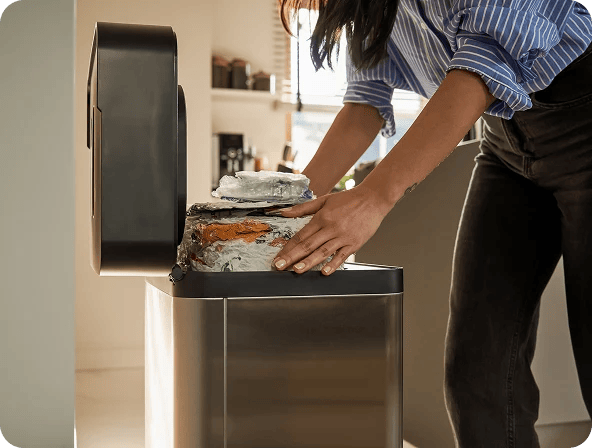
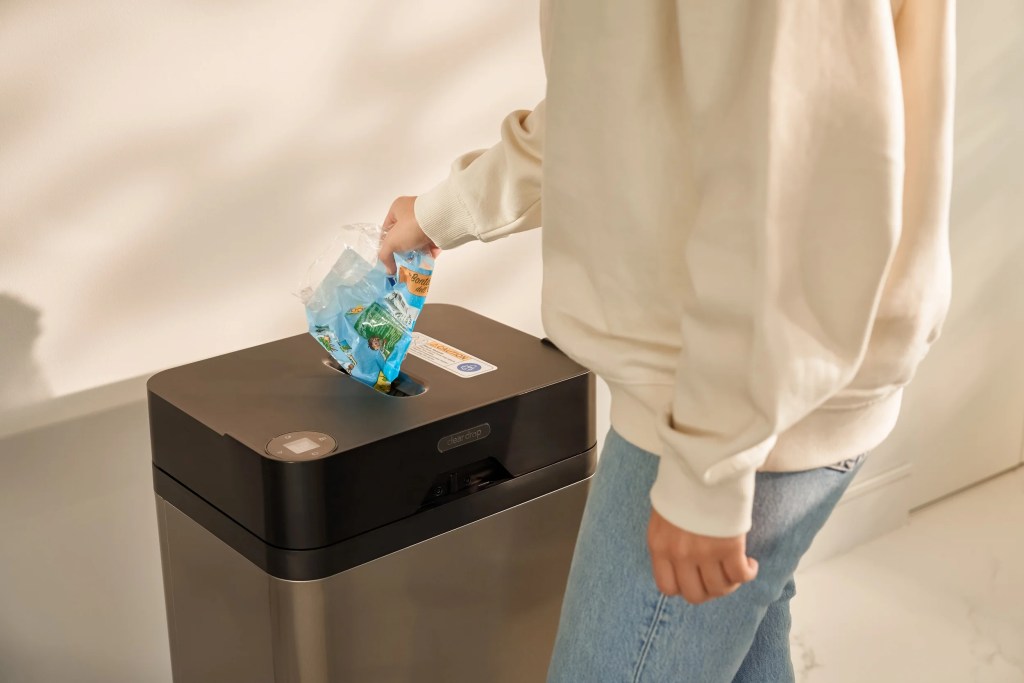
The SPC is a purposeful-looking appliance as it’s somewhere between a compact trash compactor and a kitchen gadget, and it definitely doesn’t try to hide what it is. It’s designed to sit in a utility area or on a countertop near your recycling station. The housing is solid without feeling premium, which is appropriate for a first-generation device in a genuinely new product category.
The top-mounted screen is meant to display fill level. The pinch-point around the loading opening has a clear safety warning in the manual, so take that seriously. The gap during operation can catch fingertips if you’re not careful. It’s not a dangerous device, but you’ll quickly develop a careful loading habit.
How It Works
The core mechanism is heat-based compression. Load in your soft plastics (plastic bags, bubble wrap, film packaging, poly mailers, flexible food packaging) and the SPC uses controlled heat to soften and fuse them into an increasingly dense block. To be sure, it’s not melting them at high temperatures; the process operates at a range that fuses materials without releasing harmful fumes into your home. We noticed no smell during normal operation.
Over roughly a month of typical household soft plastic waste, the device produces one full block. The system handles over 95% of soft plastic types with the main exclusions being rigid plastics and food-contaminated materials.
Compression Performance
The compression ratios are actually quite impressive. Lighter materials like bubble wrap compress to approximately 1/10 of their original volume. More rigid flexible materials, like those used for resealable pouches, compress to about 1/5. Before you know it, that drawer-full of accumulated soft plastics has turned into something that fits in a shipping box.
Monthly electricity draw is approximately 3.3 kWh, which is negligible even with the higher average US rates. Even over a full year you might be looking at $6-$8 to run it.
Fill Monitoring
The top-mounted display shows fill percentage, and this is where Clear Drop has real work to do in future iterations. In our experience, the display read near-empty for most of the device’s fill cycle and then it jumped to essentially full with very little graduated feedback between those states. You can’t use it to anticipate when you’re a week from a full block but I imagine once you’ve had this in your home a few months you’ll know how long it takes.
This isn’t necessarily a safety or functionality issue, as the compaction works correctly regardless of what the display shows. But it essentially removes what could be a truly useful feedback mechanism.
The Subscription & Mail-In Process
When a block is complete, you cool it, drop it in the mailer, and ship it. Clear Drop routes the blocks to appropriate recycling facilities. Included in the initial bundle are 20 blocks which is estimated to last typical homes on year.
The economics are worth thinking through clearly. Spread out over a year, it comes out to around $116/month, the SPC costs $1400 in the first year. Once you’ve exhausted the 20, you can order a three-pack of mailers for $45.
For households that receive regular deliveries and generate consistent soft plastic waste, this compares favorably to that grocery store drop-off routine that you intend to do, but realistically never happens. The subscription eliminates the friction and the guilt. For households that only occasionally accumulate soft plastics, the numbers are definitely harder to justify.
Smart Home & Automation?
The SPC is not a connected device. There’s no app, no Wi-Fi, no smart home integration. It operates as a standalone appliance. For some buyers, that simplicity is exactly right. For others who are already managing a connected home, the absence of even a basic notification when a block is ready feels like a missed opportunity. Again, having feedback along the way would be fantastic, and an at-a-glance view would be perfect in an app.
Warranty & Value
The $1,400 cost brings the device home and includes prepaid shipping for around one year’s worth of mailers. The value comparison is hard to figure out because the Clear Drop SPC has no direct category competitor. Customers can also choose to finance the $1,399 purchase through Affirm, starting at $88/month, a payment plan for the purchase price, not a recycling subscription.
From what I can gather, there is no other home device that turns soft plastics into recyclable blocks. The nearest alternative is driving to a drop-off location yourself or simply not recycling soft plastics. Against that baseline, the subscription model looks reasonable for high-volume households.
Clear Drop provides a two-year warranty for the SPC with a 30-day trial. It also comes with free shipping and online support.
Verdict
The Clear Drop Soft Plastic Compactor does something no other home device does: it turns the soft plastic problem into a solved routine. The compression ratios are impressive, the heat-fusion process is genuinely odor-free, and the mail-in model eliminates the biggest friction point in soft plastic recycling, that being actually getting your plastics somewhere useful.
The fill display needs work, and the pinch warning is real enough to take seriously. The value equation depends heavily on how much soft plastic your household generates. Frequent shoppers and households that receive regular deliveries will likely find the math compelling. Occasional users may struggle to justify the subscription. But for the right household, this is the most practical soft-plastic recycling solution available for home use.


