

BVIO Technology has launched Violoop, a compact artificial intelligence device designed to function as a second user on your computer. Unlike conventional AI assistants that operate within individual applications or browser tabs, Violoop is designed to interact with the entire computing environment through the keyboard, mouse, and screen.
The palm-sized device, which debuted at IFA 2026, is now available through Kickstarter, offering users a way to automate complex workflows while maintaining control over sensitive actions.
With an early-bird price of $399, Violoop aims to make AI-powered computer automation more accessible while advancing BVIO’s vision of what it calls Personal Agentic Computing.
Violoop Adds a Second AI User to Your Computer
Violoop is designed to operate a computer much like a human user. By connecting directly to a computer through HDMI and USB, the device can interpret what is displayed on the screen and interact with software using the keyboard and mouse.
This allows it to work across different applications, websites, and digital environments without requiring each application to have a dedicated AI integration.
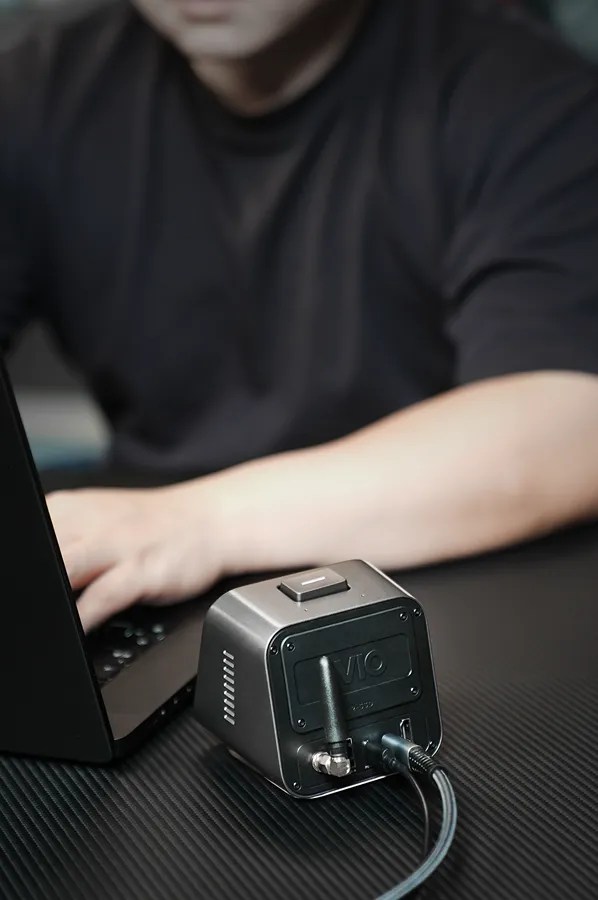
Instead of simply answering questions, Violoop is designed to help complete tasks from beginning to end. Users can provide an objective, and the system can potentially navigate software, enter information, transfer data, and coordinate multiple steps across different applications.
According to BVIO, the device can work with browsers, documents, spreadsheets, email platforms, creative software, development tools, customer relationship management systems, and legacy applications.
AI-Powered Automation Across Multiple Applications
One of Violoop’s central features is its ability to connect tasks that would normally require several applications and manual intervention.
For example, BVIO describes a potential customer-service workflow in which Violoop could read an incoming email, retrieve customer information, update a CRM system, use an appropriate AI model to draft a response, and place the completed reply back into the email application for review.
This type of workflow could reduce the need to repeatedly copy and paste information between platforms.
Because Violoop interacts directly with a computer, it is not restricted to software specifically designed for AI automation. Where APIs or scripts are available, the system can use them. For applications without those integrations, it can interact with the interface through the screen, keyboard, and mouse.
However, the actual availability and reliability of these capabilities may vary depending on the software being used and the complexity of each task.
Support for ChatGPT, Claude, Gemini, and Other AI Models
Violoop allows users to bring their own API keys and connect the device to several AI services.
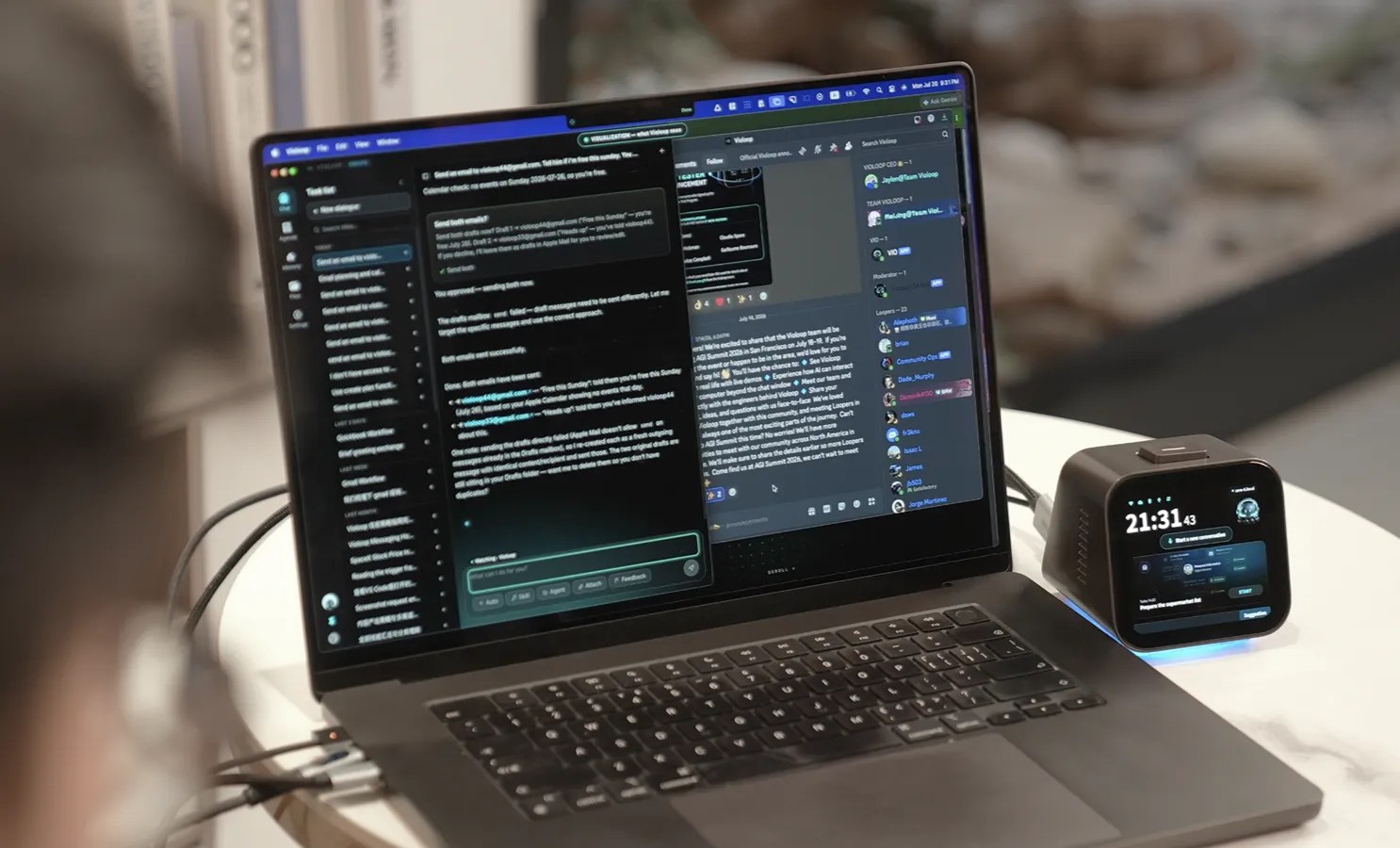
According to BVIO, supported services include:
- ChatGPT
- Claude
- Gemini
- Codex
- Other specialized AI models
The company says its routing system is designed to handle routine tasks locally while directing more specialized work to suitable AI models.
Cloud-based services are used when necessary, which BVIO says can help reduce unnecessary token consumption and associated costs.
The device is built around a vertically integrated platform that combines hardware, agent software, proprietary models, and trust and accountability systems.
BVIO also states that its system has been trained across more than 200 applications and 10,000 real-world software screens, covering areas such as research, writing, coding, design, CRM, and administrative work.
Local-First Architecture Keeps Screen Data on the Device
Privacy is a central part of Violoop’s design. BVIO says the device processes screen data locally using an 8-billion-parameter AI model and 26 TOPS of AI acceleration.
The company claims that screen data, visual context, and personal memory are not streamed to the cloud during normal operation.
When an external AI model is required, only the information necessary for the specific task is sent, according to BVIO.
This local-first approach is intended to reduce the amount of sensitive information transmitted to external services.
However, users should review the device’s privacy documentation and understand how information is handled when cloud-based models or third-party services are involved.
Human Approval Remains Central to Sensitive Actions
Violoop is designed to automate computer tasks while keeping users in control of actions that require authorization.
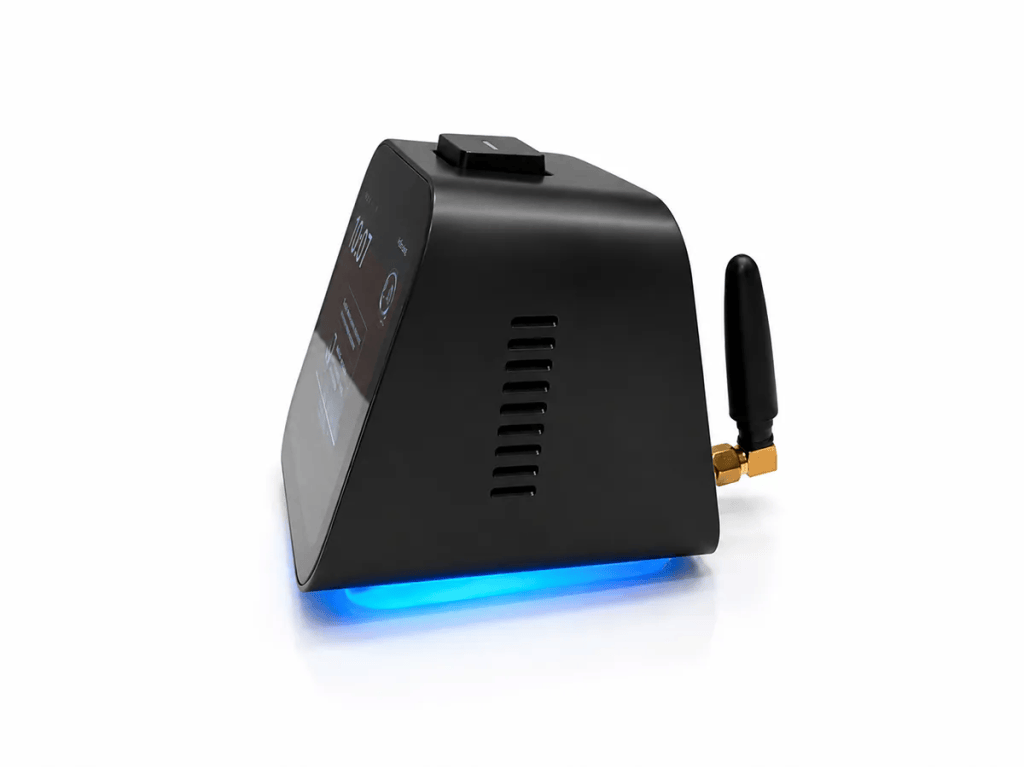
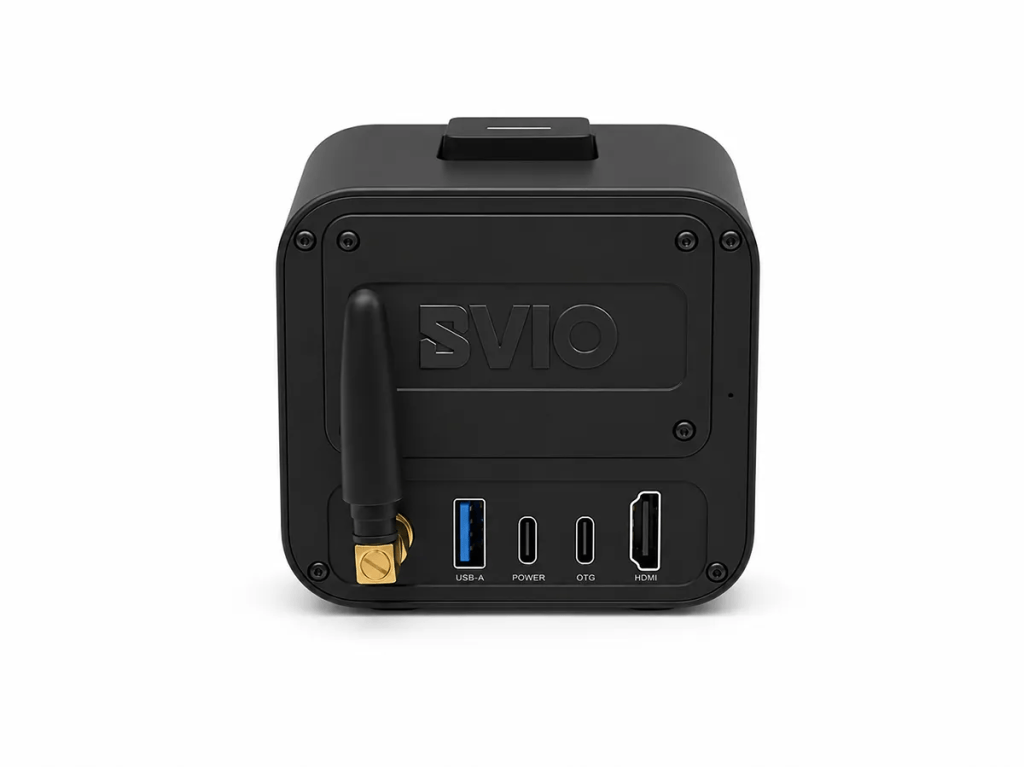
The device incorporates a dedicated STM32H563 security processor and physical approval controls intended to separate AI decision-making from authorization.
This means the AI can work on approved tasks while requiring the user to authorize certain actions before they proceed.
The company says this architecture is designed to ensure that users retain ultimate control over important operations.
The effectiveness of these safeguards will depend on how authorization rules are implemented and which actions require approval.
Away Mode Lets Users Supervise Tasks Remotely
Violoop also includes an Away Mode, which allows it to continue working on approved tasks even when the user is away from the computer.
Through a mobile application, users can monitor progress and supervise tasks remotely.
If the system encounters an action that requires authorization, it can pause the workflow and send a request to the user’s phone. The user can then approve or reject the action before the process continues.
This feature could be useful for professionals who want to monitor ongoing workflows without remaining physically present at their desks.
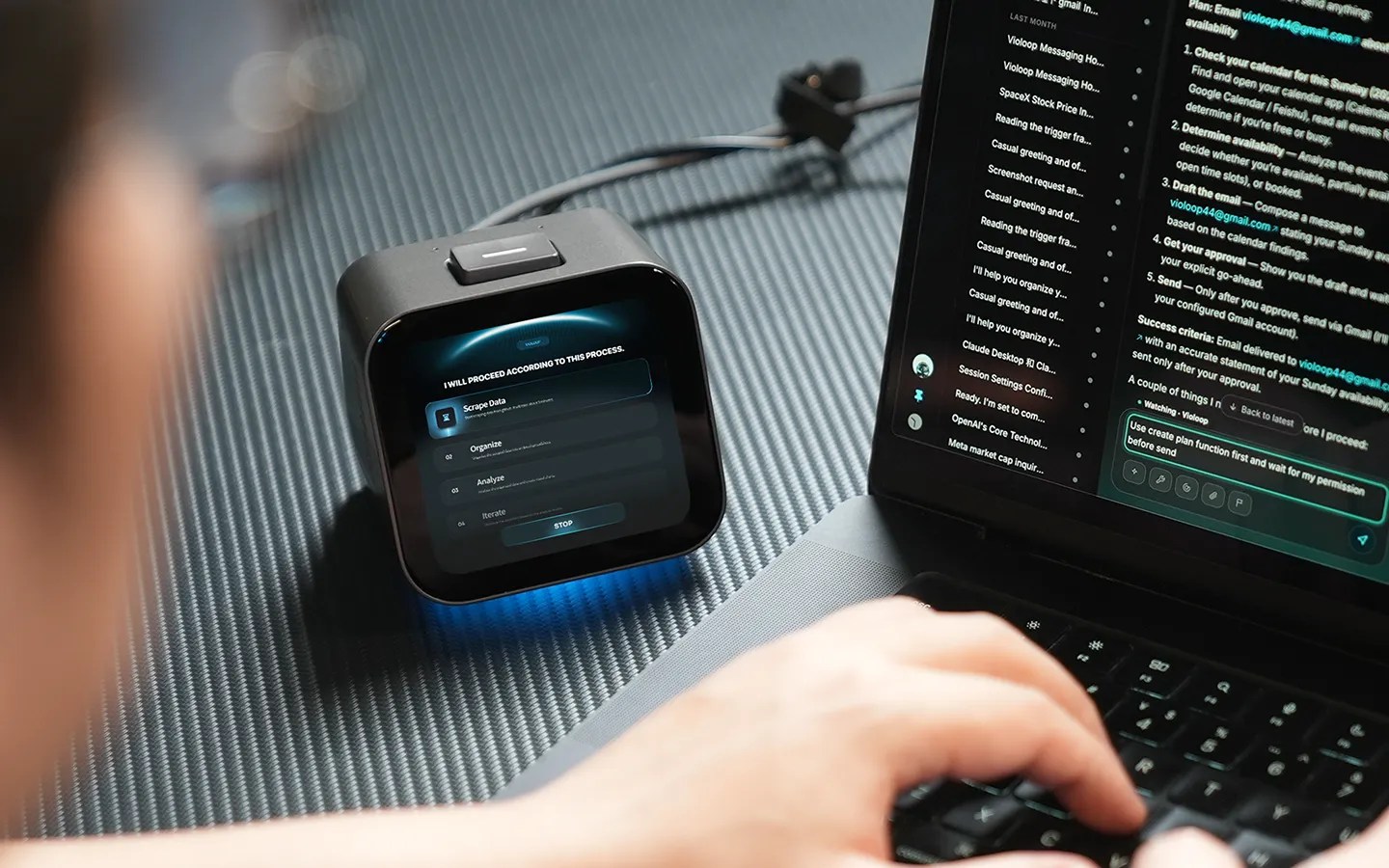
Violoop’s Hardware-First Approach to AI Automation
While many AI agents operate inside browsers or individual software platforms, Violoop takes a hardware-based approach by interacting directly with the computer environment.
This design could make it useful for businesses and individuals working with a mixture of modern applications, older software, and systems that lack conventional AI integrations.
Its ability to combine local processing, external AI models, and direct computer interaction gives it a broad range of potential applications.
At the same time, computer-control agents can face challenges involving unexpected interface changes, incorrect inputs, security permissions, and task failures. Users may need to supervise the system, particularly when handling sensitive data or irreversible actions.
Kickstarter Pricing and Availability
BVIO Technology launched the Violoop Kickstarter campaign on September 15, 2026. Early backers can reserve the device for $399, representing a $300 discount from the expected retail price of $699. The company says Violoop shipping is scheduled to begin in October 2026.
As with other crowdfunding campaigns, prospective buyers should review the campaign details, delivery conditions, and associated risks before making a purchase.


