HONOR has announced the MagicPad4, a new flagship tablet that sets out to blend ultra-slim hardware with high-end performance and AI-focused productivity tools. At just 4.8mm thick, HONOR positions the MagicPad4 as the world’s thinnest tablet, undercutting the 5.1mm profile of Apple’s iPad Pro. The device is powered by Qualcomm’s 3nm Snapdragon 8 Gen 5 and pairs that silicon with a 165Hz OLED display and a desktop-style interface designed to push tablet productivity closer to laptop territory.
The MagicPad4 is available for pre-order now, with retail sales beginning March 3, 2026.
Record-Breaking Slim Design
Measuring 4.8mm thick and weighing approximately 450g, the HONOR MagicPad4 focuses heavily on portability. The company credits its “Crescent Structure” design and aerospace-grade special fibre construction for increasing stiffness by 30 percent while reducing weight by 32 percent.
HONOR notes that when paired with its keyboard and stylus, the full setup weighs roughly 852g. That places it below the weight of a 13-inch MacBook Air, positioning the tablet as a travel-friendly mobile workstation rather than just a media companion.
Color options include Gray and White, with higher memory configurations limited to select finishes.
12.3-Inch 165Hz OLED Display
The MagicPad4 features a 12.3-inch OLED panel with a 93 percent screen-to-body ratio and slim 4mm bezels. Resolution comes in at 3000 x 1920 pixels, with peak HDR brightness rated at 2400 nits. The 165Hz refresh rate is unusually high for a tablet, suggesting smoother scrolling, stylus input, and gaming performance.
The display supports 1.07 billion colors and carries TÜV Rheinland certifications for low blue light and flicker-free performance. HONOR highlights seven eye-comfort technologies, including 5280Hz PWM dimming, AI Defocus Display processing at the chip level, and DOT Eye Comfort Technology. The emphasis here is clear: long work sessions and extended media use without eye fatigue becoming the bottleneck.
Snapdragon 8 Gen 5 and Thermal Design
At its core, the MagicPad4 runs on the 3nm Snapdragon 8 Gen 5, marking it as the first tablet to adopt the chip. The move to 3nm architecture promises improved efficiency and performance headroom for multitasking, creative workloads, and gaming.
Backing that up is a 10,100mAh battery with support for 66W HONOR SuperCharge. HONOR pairs the battery with a 13-layer 3D thermal structure and an 81,717 mm² heat dissipation area under its Ice Cooling System branding. In practical terms, that means sustained performance without aggressive throttling during heavier workloads.
Audio is handled by an eight-speaker array with HONOR Spatial Audio, targeting immersive media playback and clearer conference calls.
PC Mode and AI Productivity Tools
The MagicPad4 leans heavily into productivity with a built-in PC Mode. Once activated, the interface shifts into a desktop-style layout with file management tools, navigation bars, mouse support, and keyboard shortcuts such as Ctrl+C and Alt+Tab. Multi-window support and gesture controls aim to replicate the feel of a traditional desktop OS within a tablet environment.
On the AI side, HONOR integrates tools such as AI Memo, which can generate meeting minutes and identify speakers. Features like AI Meeting Agent, Smart Reminder, AI Summary, and AI Voiceprint Noise Cancellation are designed to streamline office workflows without requiring third-party apps.
HONOR Connect enables cross-brand integration, allowing the MagicPad4 to function as an extended display for Mac computers and to share files with iPhone, iPad, and Android devices. The company frames this as an effort to reduce ecosystem lock-in and simplify collaboration across platforms.
Pricing and Availability
The HONOR MagicPad4 starts at £599.99 (~$800 USD) for the 12GB RAM version in Gray or White. A 16GB RAM configuration is priced at £699.99 (~$940 USD)and is available in Gray. Pre-orders are open now, with general availability beginning March 3, 2026.
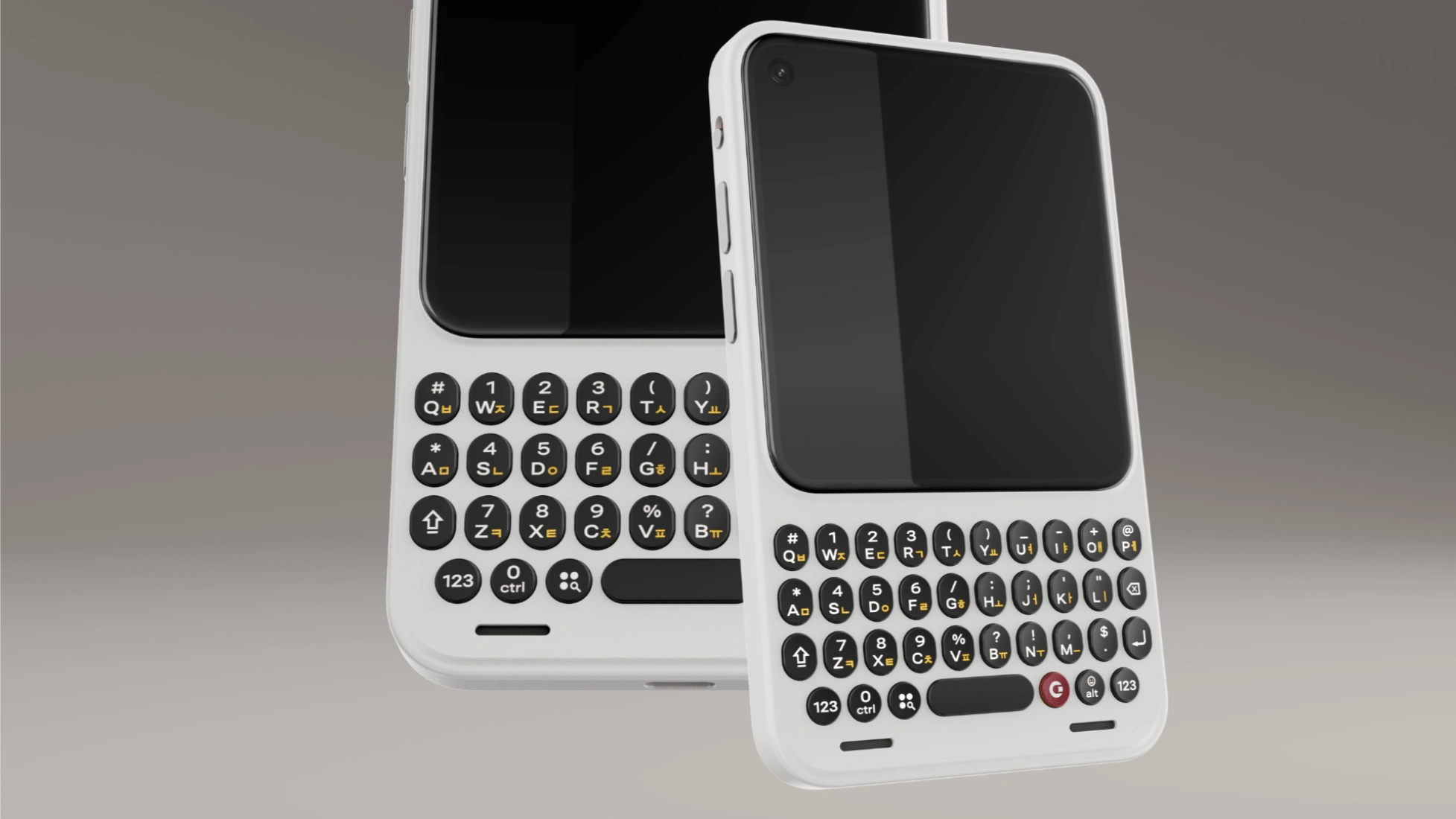
Clicks Technology has announced a significant expansion of its hardware localization, introducing four new keyboard layouts for its upcoming Android smartphone, the Clicks Communicator.
The move aims to address higher-than-anticipated international demand and reinforces the device’s position as a tool designed specifically for high-efficiency mobile communication.
Global Localization for a Diverse User Base
In an effort to better serve markets across Europe, Asia, and the Middle East, the Communicator will now be available in several regional configurations. These include:
French (AZERTY)
German (QWERTZ)
Korean
Arabic
This localized support ensures that the tactile, physical keyboard experience (the hallmark of the Clicks brand) is accessible to a broader demographic of professional and power users. To accommodate these new regions, the company has extended its early bird promotional window until March 15, allowing international customers to secure introductory pricing.
High-Performance Architecture for Action-Oriented Use
Beyond its physical interface, Clicks confirmed the Communicator will be powered by the MediaTek Dimensity 8300 (MT8883) chipset. Built on a modern 4nm architecture, the processor was selected to provide a zero-latency feel, prioritizing immediate responsiveness over the media-heavy consumption habits typical of modern smartphones.
The company emphasized that this hardware choice provides significant performance headroom, ensuring the device remains fast as software evolves. Clicks has committed to a long-term support lifecycle, including software updates through Android 20 and five years of security patches.
Strategic Vision: A Device Built for Purpose
The Communicator is marketed as a corrective to the doomscrolling culture, focusing instead on productivity and active engagement.
Adrian Li Mow Ching, CEO of Clicks made the following observation. “This global reception serves as a clear indicator that there is a significant market gap for a handset dedicated to communication and productivity. By integrating AZERTY, QWERTZ, Korean, and Arabic layouts, we are ensuring this specialized experience is available to a truly diverse audience.”
Pricing and Availability
The Clicks Communicator is offered in three distinct colorways: Smoke, Clover, and Onyx. Customers who participate in the reservation phase before the March 15 deadline can take advantage of the following tiers:
Option
Price
Benefits
Reservation Deposit
$199
Locks in a discounted total price of $399.
Paid in Full
$399
Includes two complimentary back covers (a $100 value).
Standard Retail
$499
Post-launch MSRP for the base unit.
Shipping for the Clicks Communicator is scheduled to begin later this year. Customers will be invited to select their specific keyboard layout and color preferences closer to the dispatch date.
Ultrahuman, a leader in human metabolism tracking, has announced a significant expansion of its health ecosystem with the global launch of the Ring PRO and Jade, the world’s first real-time biointelligence AI. These releases mark a shift from passive health monitoring to active, autonomous health intervention.
The Ring PRO, the company’s third-generation wearable, introduces industry-leading battery longevity and enhanced structural durability. Simultaneously, the Jade AI platform aims to bridge the gap between static data and real-time health coaching by integrating metrics across the entire Ultrahuman suite.
Ring PRO: Engineered for Endurance and Precision
The Ring PRO features a titanium uni-body architecture designed for professional-grade performance. Among its most notable technical upgrades is a redesigned heart-rate sensing architecture that significantly improves signal quality for recovery and sleep tracking.
Key Hardware Innovations:
Extended Battery Life: The device offers up to 15 days of power on a single charge, supported by a new dual-core processor that utilizes on-chip machine learning for energy efficiency.
ProRelease Technology: A safety-first design feature that allows the ring to be safely cut and removed in the event of finger injuries or swelling.
Expanded Data Storage: With enhanced onboard memory, the Ring PRO can store up to 250 days of health data offline.
The PRO Charging Case: This accessory provides an additional 45 days of mobile power and features UltraSnap magnetic charging, which reduces heat generation compared to standard wireless protocols. It also includes “Find My Case” functionality via an integrated speaker.
Jade: The Shift Toward Autonomous Health Agents
While traditional Large Language Models (LLMs) typically analyze historical data, Jade is engineered as a real-time “biointelligence” system. It synthesizes data from the Ring, Blood Vision biomarkers, and M1 CGM glucose trends to provide immediate interventions.
The system operates in two modes. Standard and Deep Research. According to the company, the AI is capable of triggering immediate actions, such as starting guided breathwork sessions or activating Atrial Fibrillation (AFib) detection when specific physiological markers are met. Future iterations are expected to integrate with smart home environments and third-party services to automate health-supportive actions.
PowerPlugs: A Modular Health Ecosystem
Alongside the hardware and AI, Ultrahuman is expanding its PowerPlugs platform. This system allows users to customize their experience with “micro-apps” tailored to specific health goals. Current and upcoming modules include:
GLP-1 Tracking: Insights for users on weight-loss medication journeys.
Respiratory Health: In-depth analysis of snoring and sleep-related breathing patterns.
Cycle & Ovulation Pro: A high-accuracy tracking tool for reproductive health.
Leadership Perspective: Redefining Health Interventions
Mohit Kumar, Founder and CEO of Ultrahuman, emphasized that these advancements represent a fundamental breakthrough in the wearable category.
“The Ring PRO is engineered to push the limits of what a health monitoring device can achieve, offering battery life that is three to four times that of our competitors,” said Mohit Kumar. “With Jade, we are moving beyond backward-looking data. It functions similarly to an autonomous driving system, as it sees, interprets, and acts in real time. This allows users to take actionable interventions toward their health more effectively than ever before.”
Pricing and Availability
The Ultrahuman Ring PRO is available in four finishes: Bionic Gold, Space Silver, Aster Black, and Raw Titanium. The retail price is $479 USD.
Global pre-orders are open now on Ultrahuman’s official store (excluding the United States for the hardware), with shipping scheduled to commence in March 2026.
Trade-in Program: Owners of previous Ultrahuman models or competing smart rings can receive a trade-in credit of up to $115 toward the purchase of a Ring PRO.
Software Availability: The Jade AI and PowerPlugs updates are available immediately to all Ultrahuman users worldwide, including those located in the United States.
GUNNAR Optiks, the long-standing pioneer in blue-light-blocking eyewear, has officially announced the release of Tindra, the latest addition to its fashion-forward Women’s Kista Collection.
Tindra marks a significant milestone as the brand’s first reader specifically inspired by feminine design aesthetics, blending high-end fashion with clinical-grade eye protection.
A Fusion of Nordic Minimalism and Ergonomics
The Tindra silhouette draws heavy inspiration from Nordic minimalism, featuring a flattering rectangular frame designed to complement a wide variety of face shapes. Moving away from the utilitarian look of traditional “drugstore readers,” GUNNAR has introduced the model in two sophisticated, elevated colorways: Smoky Quartz and Rose Latte.
The frames are engineered to serve as both a functional tool for vision correction and a premium accessory. Beyond the aesthetic appeal, the Tindra features a specialized wraparound fit. This structural design is intentional, aimed at trapping moisture around the eyes to mitigate the symptoms of dryness often exacerbated by prolonged digital screen use. Patented Technology for the Digital Age
At the core of the Tindra launch is GUNNAR’s patented lens technology. As digital eye strain becomes an increasing concern for professionals and casual users alike, Tindra provides a defense against high-energy visible (HEV) blue light. The glasses are available in two distinct lens tints:
Clear: For those who prefer a natural color balance while maintaining protection.
Amber: For maximum blue-light filtration, ideal for extended sessions of late-night reading or intensive screen work.
The lenses are further enhanced with the proprietary G-Shield coating, a multi-layered treatment that provides top-tier smudge resistance and protects against surface scratches, ensuring longevity for daily wear.
Addressing Modern Vision Needs
“With the introduction of Tindra, we are bridging the gap between sophisticated style and the essential eye health technology that GUNNAR is known for,” said Joe Croft, Co-Founder and CEO of GUNNAR Optiks. “Our goal was to create a product that supports the modern woman’s lifestyle—whether she is journaling to start her day or winding down with an e-reader at night.”
Availability, Pricing and Specifications
The Tindra is positioned as a versatile solution for those experiencing symptoms of computer vision syndrome, such as headaches, blurred vision, and eye fatigue. To accommodate varying degrees of vision correction needs, the readers are offered in a power range spanning from +1.00 to +2.50.
The Tindra is available for purchase immediately through GUNNAR’s official website and select specialty retailers; (MSRP: $49). This launch reinforces GUNNAR’s commitment to expanding its portfolio to meet the diverse needs of a global audience that is increasingly reliant on digital interfaces.
Pisen, a prominent global innovator in intelligent power technology and mobile peripherals, has formally introduced its latest versatile hardware lineup. This collection is engineered to provide seamless, high-efficiency power delivery across diverse environments, including automotive, professional workspace, and mobile travel settings.
The new suite emphasizes Pisen’s dedication to rapid charging standards, stringent safety compliance, and ergonomic industrial design.
High-Capacity and Integrated Portable Power
Pisen’s new portable energy solutions address the demands of high-intensity users and frequent travelers through two distinct models:
20,000mAh High-Capacity Station ($29.99): Engineered for extended autonomy, this unit utilizes 22.5W Power Delivery (PD) and Quick Charge (QC) technologies. It features a triple-output configuration for concurrent device charging and a high-precision LED telemetry display. Notably, the device carries comprehensive international safety certifications (CCC, CE, FCC, RoHS, and UL) and is fully compliant with aviation transport regulations.
10,000mAh Integrated Cable Series ($23.99): Designed for maximum portability, this model eliminates the need for external peripherals by incorporating built-in USB-C and Lightning connectors. Despite its 7-ounce lightweight frame, it supports four-device simultaneous charging and includes a dedicated carry lanyard for urban commutes.
Next-Generation Qi2 Wireless Ecosystem
In alignment with the latest hardware standards, Pisen has integrated Qi2-certified technology into its mounting and desktop solutions to ensure optimized magnetic alignment and thermal efficiency:
MagSafe Car Mount Charger ($29.99): This automotive solution delivers 15W of wireless power, capable of charging an iPhone 16 Pro Max to 75% within an hour. The system utilizes twenty N52 magnets, providing up to 2kg of retention force to ensure stability during high-vibration transit.
3-in-1 Wireless Charging Stand ($39.99): A sophisticated hub for the modern workspace, this station provides dedicated induction zones for a smartphone, Apple Watch, and wireless earbuds. The stand features a premium glass-mirror finish and adjustable articulation for optimized viewing angles during video conferencing or bedside us
High-Efficiency Gallium Nitride (GaN) Technology
30W USB-C GaN Wall Charger ($15.99): By leveraging Gallium Nitride (GaN) semiconductors, Pisen has achieved a significant reduction in physical footprint while improving heat dissipation. This dual-port charger (USB-C and USB-A) can boost a standard smartphone battery to 55% in approximately 30 minutes, featuring integrated circuitry to protect against voltage fluctuations and thermal overloads.
Statement from the CEO
“Our current expansion reflects a strategic shift toward a more integrated power ecosystem,” stated GuoCheng Zhao, founder and CEO of Pisen. “As consumer electronics evolve, the demand for smart power—solutions that are not only fast but also context-aware and rigorously safe—has never been higher. By securing Qi2 certifications and implementing GaN technology across our catalog, Pisen is ensuring that our users remain powered regardless of their location or device preference.”
Product Availability
The complete Pisen charging collection is currently available for purchase via the brand’s official Amazon storefront.
It is late February, which means winter is not quite finished with us yet. Across parts of the country, ice storms and heavy winds are still knocking out power with little warning. Even here, where outages are not constant, it only takes one downed line to remind you how dependent a modern home is on steady electricity. Refrigerators warm up fast, Wi-Fi disappears, and suddenly the house feels smaller and less functional.
That is the context where the Mango Power E starts to make sense. This is not a small battery meant to top off a phone or keep a lamp running for an hour. It is a 3.53 kWh power station built with the intention of carrying real household loads when the grid drops out. With a 3,000W inverter and the ability to scale into a larger modular system, it sits in the space between traditional portable stations and installed home backup solutions.
After spending time digging into its design, expansion options, and real-world capability, it becomes clear that the Mango Power E is less about convenience and more about preparedness. The question is not whether it can charge devices. The question is how well it holds up when the lights go out and you need it to act like part of the house.
The Mango Power E is less about topping off devices and more about carrying the house when the grid goes quiet.
The Mango Power E Home Backup and Portable Power Station ($1,299) is positioned as a high-capacity, modular power solution designed to bridge portable and home backup use. It is not a compact camping battery. You won’t keep this one in the trunk of a car or tucked behind the driver’s seat of your truck for fishing and lounging off the grid. On the contrary, this is a system built around long-life lithium iron phosphate cells, expandable to full home-level output with additional hardware.
The focus here is capacity, scalability, and long service life rather than ultra-light portability or app-heavy software features.
Design & Build
The Mango Power E uses a wheeled, luggage-style chassis with a telescoping pull handle and integrated side handles. At 17.8 x 13.6 x 19.4 inches and 100.1 pounds, it is firmly in the high-capacity class. The wheels and handle are not cosmetic. They are necessary.
The exterior houses a 4.3-inch color touchscreen display that provides system status, battery levels, and operational mode controls. Input and output panels are physically separated on different sides of the unit, which helps reduce cable clutter during use.
It carries an IP21 rating, offering protection against vertical condensation and light drips. That is suitable for garage or covered patio placement, but not exposure to weather. It can take a splash or two, but ideally you’re keeping it away from rain.
Overall, the build quality aligns with expectations and matches up well with other premium-tier power stations in this output class.
Battery & Longevity
At its core is a 3.53 kWh lithium iron phosphate battery built with CATL cells. LiFePO4 chemistry is known for thermal stability and long cycle life.
Key battery specifications:
3.53 kWh base capacity
Rated for 6,000 charge cycles to 70 percent capacity
Estimated service life exceeding 20 years under typical use
Operating discharge temperature range from -4°F to 113°F
From what I can gather, the cycle rating is one of the stronger durability metrics in this category.
Features & Expandability
Output Ports
The unit provides 16 output ports:
Four 20A 120V AC outlets
One 30A RV port
Two USB-C ports (65W and 100W)
Six USB-A QC 3.0 ports
Two DC5521 ports
One 12V car port
The inverter delivers 3,000W of continuous AC output with surge capacity up to 4,800W. That supports refrigerators, microwaves, window AC units, power tools, and similar appliances.
Modular Scaling
The Mango Power E is designed to scale.
Capacity can expand up to 14 kWh with additional batteries
Output can increase to 6,000W split-phase 240V with the appropriate hub
240V home integration requires separately sold accessories such as the mPanel or mSocket Pro
This modular approach allows it to function as a portable station or part of a larger home backup ecosystem.
Charging Capabilities
Charging options include:
AC charging up to 1,500W standard
Up to 3,000W AC fast charging with a separately sold 30A cable
Solar input up to 2,000W
EV charger compatibility
With 3,000W AC input, the unit can reach 80 percent in approximately one hour and full charge in roughly 1.5 hours.
Solar charging requires a minimum of 60V to initiate.
Connectivity
The Mango Power E connects to the Mango Power mobile app via Wi-Fi and Bluetooth. The app allows monitoring and selection of operational modes such as Backup, Time-Based, and Economical.
Functionality focuses on monitoring and configuration rather than deep system automation.
Notable Limitation
The unit does not support AC pass-through charging. Devices cannot draw power from the unit while it is actively charging from AC input. For some users, this may affect how it is deployed in continuous backup scenarios.
Setup & Installation
For standalone portable use, setup is straightforward. Devices plug directly into the front output ports.
Home backup integration requires additional hardware and professional installation if connecting to household circuits. Charge rate and system performance depend on cable selection and available input sources.
Solar integration similarly depends on compatible panels and proper voltage requirements.
Real-World Performance
In its 3.53 kWh configuration, the Mango Power E can support essential household loads such as:
Refrigerators
Networking equipment
Computers
Microwave ovens
Small air conditioning units
The 3,000W inverter capacity is sufficient for most single-appliance demands under standard residential use.
Cooling fans regulate internal temperature. Noise levels measure below 40 decibels at no load and below 51 decibels at full load, which places it in line with similar high-capacity systems.
via Mango Power
Target Users
The Mango Power E is clearly aimed at homeowners who want meaningful backup capacity without jumping straight into a permanently installed whole-home battery system. In its base configuration, it comfortably covers the essentials during an outage: refrigeration, lighting, networking gear, and select appliances. For households that experience seasonal storms or grid instability and want something quieter and lower maintenance than a gas generator, it fits neatly into that middle ground. It is substantial enough to matter, but still technically portable.
It also makes sense for buyers who think long term. The use of CATL LiFePO4 cells rated for 6,000 cycles, paired with a 10-year battery warranty, speaks to durability rather than short-term convenience. The modular design reinforces that mindset. Capacity can expand up to 14 kWh, and output can scale to 240V split-phase with the appropriate accessories. That makes it attractive to users who expect their power needs to grow over time and prefer to build a system gradually instead of replacing it outright.
RV owners and mobile professionals are another logical audience. The 30A RV port and strong AC output provide enough headroom to run higher-draw equipment without constant compromise. It is not lightweight, so it is better suited to larger rigs or planned deployments rather than quick, minimalist trips. Contractors, event crews, and creators who need reliable, quiet power on location will likely appreciate the fast recharge speeds and solid inverter capacity.
Who Should Avoid
Where it does not fit is just as important. It is not designed for ultralight camping, nor is it ideal for someone who expects seamless AC pass-through while permanently plugged into the grid. Buyers drawn to advanced app ecosystems may also find its software features more practical than expansive. This is a hardware-forward product built for people who treat backup power as infrastructure rather than an accessory.
Value & Positioning
The Mango Power E sits in the premium pricing tier of portable power systems. Base configurations are typically listed in the low-to-mid four-figure range, with expanded systems and home integration accessories increasing overall investment.
Value considerations include:
CATL LiFePO4 battery core
6,000-cycle rating
Modular expandability to 14 kWh
240V split-phase capability
Factors that may influence comparisons:
No AC pass-through charging
Limited mobile app functionality
Additional cost for high-amperage charging cables and home integration hardware
Buyers evaluating this system are typically looking for scalability and long-term battery durability rather than entry-level portability.
Warranty
Mango Power provides:
10-year warranty on the CATL battery cells
5-year comprehensive warranty on the power station hardware
The 10-year battery warranty is longer than what is commonly offered in this category and aligns with the system’s long-cycle design focus.
Pinnacle Selection represents our highest honor, one reserved for products that stand out in design, performance, and overall value.
Products earning this distinction exemplify excellence across the board, delivering an experience that truly rises above the rest.
When you see the badge, you’re looking at the best of what’s available in its category.
Final Take
The Mango Power E is designed for users who need substantial backup capacity with room to grow. Its 3.53 kWh baseline, 3,000W inverter, CATL LiFePO4 battery core, and modular expansion options position it closer to a home energy solution than a simple portable power bank.
Its strengths center on durability, scalability, and output flexibility. Its trade-offs are software depth, lack of AC pass-through charging, and higher total system cost once accessories are factored in.
For buyers prioritizing long service life and expandability over lightweight convenience, it presents a structured and technically solid option in the high-capacity portable power segment.
NextSense, a neurotechnology firm specializing in wearable brain-sensing hardware, has just announced the official commercial release of NextSense Smartbuds. Moving beyond the capabilities of traditional pulse- and motion-based wearables, the Smartbuds utilize clinical-grade sensors to provide real-time neurological intervention designed to enhance sleep quality.
Advancing Beyond Passive Tracking
While the global sleep economy is estimated at $585 billion, chronic sleep deprivation remains a pervasive public health crisis, affecting nearly 70 million Americans. NextSense aims to bridge the gap between diagnostic data and actionable therapy.
Unlike standard trackers that infer sleep stages through heart rate or movement, the Smartbuds are equipped with six electroencephalography (EEG) sensors. This technology allows the device to monitor neural oscillations in real-time. When the system detects specific brain wave patterns, it delivers synchronized audio stimulation—often referred to as acoustic bolstering—to lengthen the duration of deep, restorative sleep.
From Alphabet’s X to Consumer Neurotech
The concept for NextSense originated during founder Jonathan Berent’s tenure at X. After observing the high level of consumer access to cardiovascular data via smartwatches, Berent identified a significant void in accessible neurological data.
Validated Results and Clinical Data
The commercial launch follows extensive beta testing encompassing over 1,000 nights of in-ear EEG data. Internal studies reported the following outcomes:
Neurological Impact: A documented increase in slow-wave activity (SWA), the primary marker of deep sleep.
User Sentiment: Approximately 50 percent of participants reported a subjective improvement in sleep quality and morning alertness.
Hardware Performance: 69 percent of testers rated the audio fidelity as superior to standard consumer earbuds.
The device has already garnered significant industry attention, including recognition from the World Economic Forum and being named a finalist in Fast Company’s “Next Big Things in Tech.”
Specifications, Pricing and Availability
NextSense Smartbuds are engineered for integration with modern mobile ecosystems, currently requiring an iPhone 12 or newer. To ensure the EEG sensors maintain clinical-grade conductivity, the company has implemented a Fit Kit subscription model, providing users with fresh ear tips and wings on a monthly basis.
Feature
Specification
Sensor Array
6-Channel EEG
Stimulation Type
Closed-loop acoustic pulses
MSRP
$399.99 (Launch Special: $249)
Subscription
$14.99/mo (First 3 months included)
Compatibility
iOS 17 or later
NextSense Smartbuds are available for immediate order via the company’s official website.
HomerunPET, a prominent developer of automated pet-care technology, has officially announced the consumer launch of the CS106 Self-Cleaning Litter Box. Engineered specifically to accommodate large feline breeds and multi-cat environments, the CS106 serves as the brand’s flagship entry into the high-capacity smart litter market.
Industry Recognition and Design Specifications
The CS106 arrives on the market following significant critical acclaim. The system features a 106-liter interior and an 18-inch wide entry, dimensions specifically tailored for larger breeds such as Maine Coons and Ragdolls. Media outlets including WIRED and CNN have already recognized the unit, citing its whisper-quiet operation and high-volume capacity as industry-leading features.
To date, the company reports that more than 2,000 units have been distributed, signaling strong consumer demand for automated hygiene solutions that do not compromise on feline comfort.
Integrated Automation and Safety Features
At the core of the CS106 is an advanced maintenance suite designed to minimize manual intervention. Key technical specifications include:
Self-Refilling Reservoir: A 4.5-liter internal tank that automatically maintains optimal litter levels.
High-Capacity Waste Management: A 12-liter vertical bin designed for extended use in multi-cat homes.
Triple-Layer Safety System: The “zero-pinch” mechanism is supported by microwave radar proximity sensors, gravity-based entry detection, and physical anti-pinch bumpers.
Digital Monitoring: Integrated app connectivity allows owners to track pet weight, monitor usage frequency, and receive health-related alerts.
Future Integration: AI Health Monitoring
During the global launch of the CS106 Self-Cleaning Litter Box and the brand’s showcase at CES 2026, Liu and company representatives highlighted the shift from simple automation to a data-driven health ecosystem.
Following a showcase at CES 2026, HomerunPET confirmed plans to expand the CS106 ecosystem with an AI Camera add-on scheduled for release later this year. This peripheral will utilize on-device artificial intelligence to provide real-time behavioral insights and health monitoring, further transitioning the litter box from a convenience tool to a comprehensive wellness monitor.
Key Executive Perspectives
Frank Liu, the Founder and CEO of HomerunPET, has frequently emphasized that the company’s mission is rooted in his background as a precision medical device engineer and a dedicated pet parent.
On the Vision for the CS106, the Official HomerunPET Statement at CES 2026 is as follows:
“Pet parents want products that are reliable, hygienic, and truly hands-off. The CS106 was engineered to remove the stress from litter box maintenance—and the response from the market has been overwhelming. CES is the perfect stage to show how far pet tech has come.”
Availability and Pricing
The unit is currently available for purchase through the official HomerunPET website and Amazon. While the recommended retail price is set at $899, the company is offering a launch promotion reducing the cost to $699.
To support the launch of the CS106, the manufacturer is offering a 90-day trial period. The company has also committed to a robust warranty policy, stating that any technical issues that cannot be resolved through standard troubleshooting will result in a full unit replacement.
After a few weeks with the Eufy Robot Vacuum Omni C28 quietly roaming my main floor, I have a pretty clear sense of where it fits. My home is a mix of hardwood, low to medium pile area rugs, and a tiled kitchen that seems to collect crumbs no matter how careful we Tracked-in grit is almost always found near the entryway, and the occasional coffee splash in the kitchen make up the daily reality here.
I have tested a lot of robot vacuums over the years, from barebones entry models to high end machines that promise near total automation. The Omni C28 sits somewhere in the middle, but it leans toward the premium side in how it handles mopping and dock automation. The real question for me was simple. Could this actually reduce how often I pull out the upright vacuum and mop bucket?
Design & Build
The C28 is not a slim robot. The LiDAR turret on top gives it that familiar raised crown, and the body is taller than ultra low profile models designed purely for vacuuming. In my house, it slides under the couch and media console without issue, but it does not fit under a couple of older, low clearance chairs. That is a tradeoff you feel right away.
For daily upkeep on mixed flooring, it handles the kind of mess real homes produce, not just what shows up in marketing demos.
The build quality feels solid. The matte black finish hides dust well, which matters because robot vacuums inevitably become part of the visual landscape. The DuoSpiral brush system underneath replaces the traditional single roller with two counter rotating brushes. In practice, this has made a noticeable difference with long dog hair. I have not had to cut hair off the brush axle yet, and even after dog-sitting for ten days, there’s very little hands-on required for post-vacuum cleaning.
The roller mop is the other major design choice. Instead of spinning pads, the C28 uses a long roller that stays damp and continuously self rinses during mopping. The onboard clean and dirty water tanks make the robot heavier, but they are easy to remove and rinse out at the sink. Access is straightforward, and nothing feels flimsy.
The Omni Station is mid-sized when compared to other units with mopping and vacuuming. It’s not quite as tall as what you’ll see in pricier models, but overall, it’s taking up about the same floor space as most. The Station, for those, unaware, needs space for clean water, dirty water, and a sizable dust bag. In a laundry room or tucked against a wall in a hallway, it makes sense. In a small apartment, it could feel dominant. That said, it looks clean and modern, not industrial.
Setup & Mapping
Initial setup through the Eufy app on Android was smooth. Pairing over Bluetooth and connecting to WiFi took only a few minutes. The first mapping run was quick and systematic. It appeared to move about the home with purpose where most vacuums tiptoe around, looking for obstacles and walls. The LiDAR system creates a detailed map, and within one pass it had correctly divided most of my rooms.
Obstacle detection is solid but not magical. It avoided shoes, chair legs, and dog bowls reliably. Cords are still a risk if they are loosely coiled on dark flooring. I learned to tidy those up or create no go zones in the app. Room recognition worked well enough that I could label the kitchen, living room, and hallway without major edits.
One quirk during early runs was how aggressively it approached thresholds. It can handle up to 21 mm, and in my home it climbed from hardwood to a thick rug without hesitation. On one raised tile transition, it bumped once before recalculating. After a few cycles, it seemed to learn the layout and approach those spots more confidently.
Vacuum Performance
On hard floors, the C28 is strong. Everyday debris like rice, cereal crumbs, and fine dust disappear in one pass in Standard mode. Pet hair collects cleanly into the bin without forming visible clumps behind the robot.
Carpet performance is good, not class leading. On low pile rugs, it lifts embedded hair better than older Eufy models I have tested. On thicker rugs, I sometimes run a second pass on Max suction if I want a deeper clean. For weekly maintenance, it is more than sufficient. For a true deep clean before guests arrive, I still reach for a full size vacuum.
Edges and corners are handled better than most circular robots thanks to the extending side brush. It does not achieve perfect square corner cleaning, but it noticeably reduces the dusty triangle effect along baseboards. Also good news, the DuoSpiral brush has genuinely reduced hair maintenance and having to break out the little blade or scissors.
Could it replace a traditional vacuum? For day to day upkeep, yes. For seasonal deep cleaning or high pile carpets, no. That is a realistic boundary.
Mopping Performance
This is where the C28 stands out. The HydroJet roller mop applies consistent downward pressure and stays freshly rinsed during operation. In my kitchen, it removed dried coffee drips and light sauce splatters in a single session. For stickier spots, it sometimes needed two passes, but it made visible progress each time.
The constant water refresh makes a difference. With spinning pad systems, I often see streaking after a larger spill. Here, the floor looks evenly cleaned, and the dirty water tank tells the story of what it picked up.
Carpet detection works reliably. The roller lifts when crossing rugs, and I have not found damp patches left behind. Water control in the app lets me increase flow in the kitchen and reduce it in less messy areas.
It does not replace a true hands and knees scrub for heavily soiled grout. But for maintaining a clean hard floor, it is easily one of the more effective mopping systems I have used.
Docking & Automation
The five in one Omni Station handles auto emptying, mop washing, hot air drying, and water management. After a cleaning cycle, the robot returns, empties its bin, and begins washing the roller automatically.
The dust collection phase is loud. Brief, but loud enough that I would not schedule it during a late night movie. The mop washing and drying cycle is quieter and more background friendly.
Water tanks need to be emptied and refilled every few days in my roughly 1,500 square foot main floor. It is not hands off for weeks at a time, but it drastically reduces daily chores. The dust bag has lasted well over a month so far.
App Experience on Android
The Eufy app is stable and intuitive but just make sure you download the right one. I inadvertently went with the app I assumed was going to work only to run into issues locating and connecting to the vacuum. What I initially thought was related to it being a pre-launch look actually ended up being a case of installing the wrong app.
Room editing is easy, with drag and split tools that behave predictably. Creating routines, such as vacuuming the living room daily and mopping the kitchen every other day, takes only a few taps.
Firmware updates have been painless. Notifications are clear, and the robot resumes normal operation after updates without losing maps.
Google Assistant integration works for basic commands like starting a full clean or sending the robot home. It is not deeply conversational, but it is reliable. In our home we usually just ask our speaker or smart display to run, pause, or end cleaning and those commands work just fine.
Noise & Day to Day Living
In Quiet mode, I can take a work call while it cleans another room. In Max mode, it is more noticeable but not disruptive. The real noise spike comes from the dock emptying cycle. I plan around that by scheduling it mid day.
At night, I would not run a full cycle unless the house is empty. During daytime hours, it blends into normal household sound. In fact, the first few times we ran it in my home, we ended up pausing it because it was disruptive to conversations were trying to have between the kitchen and dining area. To be fair, it wasn’t so bad that we could not hear each other, but it was that breathe of relief that came with pausing. The “white noise” was just a bit too much at the time.
Now, it runs throughout the home and empties itself when done. We’ve adjusted the quiet period for emptying the vacuum out so as not to interfere with watching TV in the adjacent room. Otherwise, we’re pausing and waiting a couple of minutes.
Maintenance & Long Term Ownership
Even with the automation that comes with water tanks and self-emptying dust collectors, this is not a set it and forget it appliance. The dirty water tank needs rinsing weekly to prevent odor. The filter will likely benefit from a quick tap out or rinse every couple of weeks.
The Omni C28 makes sense for homes with a mix of hard floors and rugs, especially where mopping matters as much as vacuuming. Pet owners will appreciate the detangling brush system. Busy households that want strong automation without paying flagship prices should take a look.
If you live in a small apartment with mostly carpet and limited space for a large dock, this may be overkill. Likewise, if you expect it to replace every deep cleaning session, you will be disappointed.
Verdict
Awarded to products with an average rating of 3.75 stars or higher, the AndroidGuys Smart Pick recognizes a balance of quality, performance, and value.
Products with this distinction deserve to be on your short list of purchase candidates.
After several weeks, the Eufy Robot Vacuum Omni C28 has earned a spot in my daily routine. It does not eliminate every manual cleaning task, but it meaningfully reduces them. The roller mop system is effective, the navigation is dependable, and the automation feels practical rather than gimmicky.
It is not perfect. The dock is louder than I might like during emptying, and you still need to manage water tanks. But as a balanced, real world floor care solution, it delivers where it counts. For the right home, it is an easy recommendation.
Incredible Early Bird Savings
With a retail price of about $800 (Amazon), I’ve got no reservations suggesting the Eufy Omni C28 for families and individuals with mixed flooring types and reasonable expectations. It’s a good, respectable price for a good, respectable product.
For a limited time there’s a $250 Early Bird instant discount for its launch which brings the price down to just $550. This makes it an immediate yes for money, earning an extra half star in the process. Find one of these somewhere in the middle later on this year and you’ll be doing well for your money.
Lace up those sneakers because the journey to a stronger you just got a serious upgrade! Amazfit has officially launched the Active 3 Premium across North America and Europe, and it’s designed to be the ultimate companion for those ready to turn everyday movement into meaningful progress. The brand’s philosophy for this release is clear: progress begins with learning how to train, not how to race.
Style Meets Serious Durability
This isn’t just a fitness tracker; it’s a style statement. Boasting a vibrant 1.32-inch AMOLED display with a stunning peak brightness of up to 3,000 nits, your data and maps stay crystal clear even under direct sunlight. The watch is protected by scratch-resistant sapphire glass and encased in a sleek stainless-steel frame with a classic four-button design. Consumers can choose from three elegant colorways: Apex Silver, Atlas Blue, and Aero White (with the stylish Aero White expected to start shipping in mid-March).
Your Personal Coach on Your Wrist
Whether you’re an entry-level runner or looking to find your flow, the Zepp Coach provides adaptive, smart coaching that adjusts based on your performance and recovery. From base training to speed-focused Fartlek sessions, the watch offers structured guidance for 5K, 10K, and even full marathons. You can even track the mileage on your favorite running shoes to know exactly when it’s time for a new pair.
Go Phone-Free with Ease
Want to leave the heavy tech at home? The Active 3 Premium features built-in GPS with offline maps and turn-by-turn navigation, supported by a fast six-satellite positioning system. You can store your favorite podcasts for offline listening and even take Bluetooth calls directly from your wrist. Best of all, you won’t be tethered to a charger; the battery lasts up to 12 days with typical use.
A Brand with a Conscious
Amazfit is also making waves with its commitment to sustainability. The Active 3 Premium arrives in 100% recyclable packaging. In a smart move to reduce environmental waste, the box includes a charging base but omits the USB-C cable, assuming many users already have one at home.
Ready to trust the process? The Amazfit Active 3 Premium is available now for $169.99. It’s time to stop guessing and start growing!