If you are looking for a foldable phone that doesn’t break the bank then Motorola’s Razr Plus which was launched earlier this year available at its lowest price ever. This deal comes from Amazon, offering a hefty discount on the Razr Plus unlocked variant. Motorola’s latest foldable Razr Plus with a big cover screen is down to $800 from its retail price of $1000. You are saving $200 on a recently released foldable smartphone which is very rare to get this type of deal. The plus point is that the Moto Razr Plus is an unlocked model which means it’s compatible with any carrier, so you can choose your likes of Carrier here. Hurry up, snag this deal before it gets out of stock.
Why you should consider the Moto Razr Plus?
In our review, we praised the Moto Razr Plus foldable smartphone for its fully functioning cover screen that lets you almost every app on it flawlessly, its compact, lightweight design, and its powerful processor making it a perfect foldable smartphone in the realm of foldable markets.
You get Qualcomm’s flagship chipset in the Razr Plus smartphone, powering the smartphone with a Snapdragon 8+ Gen 1 processor coupled with ample 8GB of RAM and 256GB onboard storage. The processor is powerful enough to tackle whatever you throw at it, ensuring smooth and reliable performance.
What makes the Razr Plus even more attractive is its compact and lightweight ergonomic design which easily fits in a pocket. It sports a stunning 6.9-inch pOLED ultrasmooth display and a big 3.6-inch cover screen that lets you handle everything without unfolding the phone.
The 12MP + 13MP dual rear camera setup at the back captures pretty solid camera shots and a couple of new features such as different camera modes offer crisper and sharper shots and a Flex view allows you to take pictures from different angles. On the front, it has a 32MP selfie camera for capturing stunning selfies. It packs a 3,800mAh battery that easily lasts a day on a single charge.
Nimo Planet has released Nimo OS and Nimo Core, along with its Nimo Glass to complete its dream of offering hyper-portable spatial computing system to users around the world.
According to Nimo, these three components are meant to combine and offer personalized, multi-screen expansive workspace experience to the modern hybrid workforce.
How it works
The firm’s technology efforts is now able to equip a modern workforce with the same luxuries of a multi-monitor often setup in a desk-free form factor. Here’s what it takes, these things are involved: a pocket-size computer, and a virtual, private display.
This easily takes away the limiting factors regarding finding usability and the portability of existing smart devices. Granted, juggling devices such as smartphones, tablets, and laptops can compromise workspace and productivity.
The current solutions for mobile computing makes it hard for the average office worker to stay efficient, organized and comfortable while on the go. Nimo is changing this model by providing or deploying spatial computing in a unique and streamlined manner. It is providing enterprise-class workspace that fits the user’s pocket.
What about power users?
Power users are well covered, as this Nimo Core’s compact form system allows resource efficiency, reducing CPU and memory usage. Imagine what it takes to render up to six high-fidelity 3D screens with an entire screen that’s stereo.
That systematically optimizes performance and battery life, minimizing heat generation. During multi-tasking – something common among power-users – the device remains comfortable while generating less heat.
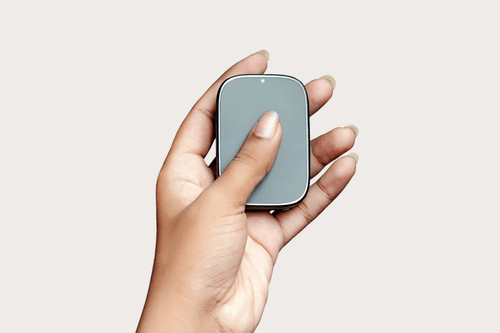
However, Nimo Core’s compact form factor is 63mm in width, 43mm in length, and 23mm in thickness. Also, it positions 2D applications in varying depths to achieve six high-fidelity 3D screens. There’s the Qualcomm XR2 processor to power the Core system.
Furthermore, the glasses are world’s first wearable computer designed for multi-screen workspace on the go. With it, Nimo seeks to revolutionize the work and offer freedom to work from anywhere faster and more efficiently.
Finally, it is good to note that Nimo OS supports Mac and Windows applications through USB-C or Remote Desktop.
DJI has updated its compact camera portfolio with the new Osmo Pocket 3 launch. DJI’s latest action camera brings impressive upgrades over its predecessor which is praiseworthy.
DJI’s new Osmo Pocket 3 has an all-new larger 1-inch sensor that ensures better image and video quality in every environment conditions. In addition to that, DJI packs a 2-inch flip touchscreen display into the Pocket 3 which easily flips horizontally or vertically sideways offering flexible movement to capture the perfect framing.
Compactness is another noticeable upgrade, the Osmo Pocket 3’s compact and lightweight ergonomics design makes it easy to hold and carry anywhere. The new 1-inch camera brings more improved camera capabilities including faster focusing, and slow motion video at a maximum of 4K/120 frames per second and a minimum of 1080p/240 frames per second.
DJI also enables wireless microphone connectivity support that takes audio recording even further with more detailed and crisp sound. What makes the Osmo Pocket 3 even more impressive is its three-axis gimbal stabilization system with advanced features including an ActiveTrack 6.0 which now offers two new modes- the Dynamic framing mode that keeps the subject always in the frame and an all-new Face-Auto detect mode.
DJI also packs a long-lasting battery in the new Osmo pocket, offering up to 166 mins of battery life on a single charge and it also supports fast charge tech, within just 16 mins of charging the Pocket 3 hits an 80% mark. The Pocket 3 did bring an impressive upgrade over the first two pockets making it a perfect choice for vloggers and adventurers who want to record more wildly.
These massive upgrades do come with a cost that bumps $170 more than its predecessor. The Osmo Pocket 3 will cost you $519 and the creator combo which includes a DJI Mic 2 transmitter, a mini tripod, and a battery handle that extends the battery life, costs $699.
EDITOR NOTE: This is a promoted post and should not be considered an editorial endorsement
When it comes to contact centers, there’s little room for error. Studies show that one bad experience can result in a customer cutting ties with a company. This is especially true for businesses that operate in sectors where consumers have many options, like wireless plan carriers, health care providers, and financial services, including banks or credit unions.
For companies that rely on large contact centers, it’s critical to provide consistent, reliable, and personalized lines of communication with customers. Contact centers often channel the only interaction customers will have with a company, making each conversation critical to business success. Applying the right technology can make the difference between winning, retaining or losing customers.
Earlier this year, Consuelo Remmert, General Manager and Head of International at Afiniti, shared her insights on how contact centers can deploy human-centered AI to deliver optimal customer experiences.
Customer experience is a business imperative
When times are good, customers aren’t always checking their phone plan to make sure it’s the right fit. Nor are they focusing on what insurance coverage they have when they’re in good health. More often than not, these issues get attention when things go wrong.
When facing challenging circumstances, the last thing customers want to deal with is a difficult or cumbersome contact center experience, which can often result in losing their business.
Afiniti, a leader in CX AI that develops contact center AI optimization technology, understands the opportunity that arises in these difficult circumstances: deliver an exceptional experience and create a loyal customer.
For nearly two decades, Afiniti has successfully connected customers with agents who are likely to deliver a solution and satisfy the customer’s needs. At Sabio Group’s annual contact center technology conference, Sabio Disrupt, Remmert outlined a typical contact center experience where a telco customer looks to cut costs by downgrading their wireless plan.
“So Dave picks up the phone and he calls his mobile company, and here is the moment of truth,” Remmert said. “He wants to downgrade his plan, but is he going to have a good customer service experience?”
As anyone who has called a provider before can attest, this experience can be negatively impacted by any combination of contact center issues like long wait times, improper routing or excessive use of chatbots, none of which will likely endear Dave, or any caller, to the current provider.
But Remmert knows this is where data and Afiniti’s patented AI technology can assist. “Dave gets put through to an agent right away, an agent that has done well in the past with customers like Dave, who are calling to downgrade their plans,” she said. The agent understands Dave’s unique needs, helps him, and retains the customer.
Remmert goes on to share that multiple studies have shown that even one negative customer service experience can result in a company losing a customer. Not only that, she said, but happy customers stay with their current providers longer and often pay more.
Risk of over automation
Remmert’s keynote also draws attention to another risk to excellent customer experience: over automation. While automation can help with productivity and simple tasks, human interaction — especially when it comes to dealing with problems — is paramount. When Dave called, like so many customers, he wanted to speak to someone who understood his situation and could help. The agent’s ability, harnessed by Afiniti’s AI technology, could not be matched by an automated response from a chatbot.
“AI is not technology that replaces humans,” Remmert said. “When used responsibly, AI can actually generate richer human interactions.” Afiniti delivers value that other technology cannot because it leverages the power of the human connection and benefits the bottom line. Using AI to connect a caller with a human agent who understands the customer and has past experience solving a similar issue, means the customer gets what they need and can leave the interaction satisfied.
Ultimately, effective and responsible AI is an enabler of, not a replacement for, human interaction.
I’m lounging on the sofa, adorned with AR glasses that project a colossal virtual screen into the air. With high resolutions and a 120Hz refresh rate, every movement is smoother, crisper, and absolutely exhilarating.
You, too, could immerse yourself in a world where your virtual and physical realities merge. Xreal’s Air 2 glasses, priced at an accessible $399, project a virtual display of up to 330 inches, encapsulating you in a cinematic experience without the hefty price tag. A recognized leader in the Augmented Reality arena, Xreal takes your experience a notch higher with its next-generation Air 2 smart glasses, a masterpiece combining innovation and affordability.
While Rokid Max, a direct competitor, is available at the same price, it pales in comparison given the plethora of features it lacks – a testament to Xreal’s ingenuity.
Yet, the journey of smart glasses is still in its infancy. Currently, they are renowned for functions like listening to music, taking calls, and capturing photos and videos (with embedded cameras). They project a virtual display that gives the illusion of a massive screen suspended mid-air, coupled with a handful of AR tricks. But that’s just scratching the surface. Meta’s Quest 3 is a beacon of evolution, intertwining mixed reality with virtual reality, setting a benchmark that could be commonplace in consumer AR glasses in the years to come.
A close inspection of Xreal’s latest Air 2 reveals a familiar exterior, bearing resemblance to its predecessor, the first-gen Xreal Air. However, don’t be deceived by the external aesthetics; the brand has undertaken a complete overhaul of the internals. The new Air 2 is equipped with a wider, high-resolution display, enhanced lenses, superior graphics, a flexible build, and intuitive controllers, promising an unparalleled augmented reality escapade.
In a market where innovation is rapid, Xreal’s Air 2 stands distinct, a confluence of affordability, quality, and cutting-edge technology. The future of augmented reality is here, and it is more accessible and mesmerizing than ever before.
Image Credit- Abhinav Fating| AndroidGuys
I’ve spent three weeks immersing myself in the world of Xreal Air 2 AR glasses, and the experience has been nothing short of marvelous. However, my expectations extended beyond the device’s mirroring capabilities. I am optimistic that future iterations will address this and expand the horizons of what these glasses can achieve. Below, I offer a detailed review of my time with the Xreal Air 2 AR glasses.
The Air 2 stands as a testament to Xreal’s commitment to continuous improvement, boasting a design that is lighter, sturdier, more compact, and flexible compared to its predecessor, the Air. Although the two generations bear a striking resemblance in overall aesthetics, nuanced enhancements in the Air 2’s design are indicative of evolution.
To delve into specifics, the Air 2 tips the scale at a mere 72 grams. This reduction in weight, compared to the Air’s 79 grams, exemplifies a meticulous refinement process aimed at enhancing user comfort. In the domain of thickness, the Air 2 triumphs once more, being 10% slimmer than the Air, which measures 19mm. These improvements, though seemingly incremental, significantly elevate the wearability and comfort, affirming the Air 2’s position as a leader in the realm of AR glasses.
Image Credit- Abhinav Fating| AndroidGuys
The integration of Sony’s new lenses in the Air 2 AR glasses epitomizes comfort and eliminates the bulkiness often associated with augmented reality eyewear. When I don these glasses, a glance in the mirror reflects back an image of me in what appears to be ordinary sunglasses. Although the inner lenses are initially visible, the inclusion of a light shield seamlessly masks them from view.
Enhancing the wearability is the innovative 3-step adjustable Rake system, coupled with refined elastic temples. These features ensure the glasses adapt automatically to the wearer’s head size, promising a bespoke fit. The inner linings, crafted from soft materials, not only amplify comfort but also exude a natural, tactile appeal.
Xreal’s meticulous attention to detail is further evidenced in the introduction of air-fit nose pads. Engineered for extended wear, these nose pads negate discomfort, ensuring day-long wearability without the slightest hint of strain. A perfect 1:1 ratio on both ends ensures optimal balance, obliterating pressure on the nose and enhancing the ergonomic fit.
Recognizing the diversity in anatomical structures, Xreal offers the Air cushion nose pads in three distinct sizes – small, medium, and large – enabling users to select according to their specific nose dimensions. My personal affinity leans towards the smaller size, a preference that extends to both the silicone tips of earbuds and glasses’ nose pads.
In the Air 2, every element is meticulously crafted, converging to create a harmony of comfort, aesthetics, and functionality. Each feature is a testament to Xreal’s unwavering commitment to delivering an unparalleled augmented reality experience without compromising on comfort.
Image Credit- Abhinav Fating| AndroidGuys
In addition to offering three distinct sizes of nose pads, Xreal has introduced a new detachable prescription lens for the Air 2 AR glasses, which is easy to install. Each pair of Air 2 AR glasses is equipped with two OLED displays (one in each lens), two open-ear speakers, and a dual microphone array, ensuring a rich visual and auditory experience. User controls are conveniently placed: a screen on/off button and a screen brightness adjustment control are located at the bottom left side of the glasses. For charging and data transfer needs, a USB Type-C port is positioned at the top of the left elastic temple, adding to the user-friendly design.
Specifications comparison
Air
Air 2
Air 2 Pro
FOV
46°
46°
46°
PPD
49
49
49
PPI
3320
4032
4032
Display
Sony 0.68 Micro-OLED
Latest Sony 0.55 Micro-OLED
Latest Sony 0.55 Micro-OLED
Electrochromic Dimming
/
/
Available
Brightness
400 nits
500 nits
500 nits
Thickness
21 mm
10% Thinner, 19 mm
8.5% , 19.2mm
Refresh Rate
Up to 120Hz after firmware update
Up to 120hHz
Up to 120hHz
Weight
79g
72g
75g
Display: Clear and crisp
Image Credit- Abhinav Fating| AndroidGuys
The Air 2 is at the forefront of next-generation AR optic technology. Xreal touts it as the world’s first AR glasses equipped with Sony’s cutting-edge OLED displays. Enhanced clarity and crispness characterize the Air 2’s visuals, a feat achieved through the integration of Sony’s Semiconductor Solutions Corporation (SSS) 0.55-inch Micro-OLED displays.
Each of the two Micro-OLED displays delivers a maximum resolution of 1920×1080, an ultra-high contrast ratio of 100,000:1, and 500 nits of peak brightness, a significant improvement from the previous 400 nits. These advancements result in content that is 25% brighter on the virtual screen, even in outdoor settings, compared to its predecessor. Users can expect an incredibly sharp, crystal clear, richly colored, and visually stunning experience.
Adding to its accolades, both models in the Xreal Air 2 series (Air 2 and Air 2 Pro) have received TUV Rheinland color accuracy certification. This ensures that users will enjoy high color performance while the glasses minimize the impact of blue light and reduce visual fatigue caused by screen flicker. The Air 2 is also graced with the Eye Comfort (AR) certification, attesting to its high-quality display that not only ensures improved eye health but also guarantees a comfortable user experience.
Image Credit- Abhinav Fating| AndroidGuys
These projectors offer capabilities beyond the ordinary; they have the ability to project an expansive 330-inch virtual screen from a distance of about 6m, guaranteeing an extraordinary entertainment experience devoid of eye strain.
The Air 2 stands alone as the world’s first AR glasses capable of projecting such a massive virtual screen. Its 46° larger field of view immerses you in an experience akin to sitting in a cinema theater. The screen operates at a base refresh rate of 60Hz, which can be amplified to 120Hz through Air casting, ensuring fluid motion and enhanced visual appeal.
One minor issue I’ve noted is that the virtual screen is slightly lower on the right side by default. This alignment obstructs the visibility of the lower right-side corner portion. However, this is not a significant concern, as users can easily adjust the screen’s positioning via the Nebula app or Xreal Beam, ensuring an optimized viewing experience.
Image Credit- Abhinav Fating| AndroidGuys
So far, I’ve observed that the Air 2’s display is significantly brighter, rendering stunning, clear, and crisp visuals that enhance the experience of gaming and movie-watching. Reading is also a pleasure, with texts appearing distinctly visible. I had the opportunity to view some immersive 3D cinematic and high-resolution videos on the Air 2, and the experience was fabulous.
My engagement didn’t stop there; I delved into first-person shooter games on my PC, including titles like CS: GO, Valorant, and NFS Payback while wearing these AR glasses. The experience was breathtaking. The responsiveness and absence of lag or ghosting during gameplay made everything feel smooth and immersive. It was evident that these glasses, supporting FHD resolution, were engineered for such interactive experiences. The video quality is impressive, to say the least.
However, as exceptional as the Air 2 is, my anticipation leans towards the incorporation of higher-resolution displays in Xreal’s future AR wearables to further elevate the visual experience.
Sound: Smooth and Loud
Xreal has completely overhauled the sound system in the Air 2 glasses. They now feature all-new dual open-ear speakers, strategically located at the bottom of the elastic temples on both sides.
Xreal has integrated a distinctive spatial wrap-around audio speaker system, providing an ambiance reminiscent of a cinema theater. These dual open-ear speakers produce an outstanding sound experience with notable bass, intricate details, and an enveloping audio quality like never experienced before.
The positioning of the speakers is impeccable, capturing every nuanced detail of the sound. During my local commutes, I was particularly impressed with the audio quality these speakers provided. Xreal’s addition of the spatial wrap sound feature is the proverbial cherry on top for the Air 2, further augmenting the immersive audio experience while on the move. However, it’s worth noting that while these compact speakers do provide respectable bass and clarity across low, high, and mid frequencies, they aren’t designed to rival larger, specialized audio systems. For those seeking an even more immersive sound experience, I’d recommend supplementing with earbuds.
Image Credit- Abhinav Fating| AndroidGuys
These smart glasses are not merely designed for entertainment such as watching movies; they are also functional for calls and meetings. During a video chat with a friend, the AR glasses performed impressively, delivering a crystal-clear audio experience without any noticeable lags or drops. This can be attributed to the EQ-calibrated beamforming microphones that capture voice with precision. Additionally, the built-in noise and echo cancellation features ensure that background sounds are filtered out, offering crisp and clear audio during calls.
Performance and Connectivity: Still needs some work here
Image Credit- Abhinav Fating| AndroidGuys
Earlier, I discussed the display and sound quality; now, let’s delve into the overall performance. To be frank, while these glasses deliver impressive visuals and an immersive sound experience, they have a significant drawback: they heat up rapidly. For instance, when you use these AR glasses, they function without issue for the initial twenty to thirty minutes. However, after that duration, they begin to heat up to a noticeable degree. Xreal must address this heat management issue. This flaw considerably marred my overall viewing experience.
Image Credit- Abhinav Fating| AndroidGuys
Setting up the Xreal Air 2 glasses is straightforward. They come with a USB Type C-to-Type C cable; simply plug it into a compatible device, and you’re set. While this process is smooth for certain devices, it can be problematic for others due to connectivity issues inherent to the Xreal Air 2 smart glasses. Xreal provides a list of devices that support direct connection. It’s worth noting that iPhones are fully compatible, so the main concern is for Android users, especially those without flagship models. If you’re considering these AR glasses, please verify your phone’s compatibility first.
The connectivity challenge extends to many Android users, but Xreal offers a solution: the Xreal Beam, which is available for purchase separately.
Nebula: Xreal’s companion app, lets you immerse in the AR world
Xreal has developed the Nebula app to optimize the AR experience, but it comes with a limitation: the app is currently available only for compatible Android devices and Macs, excluding iPhone and Windows users. Furthermore, the Air 2 features 3DoF head-tracking, enabling various AR functionalities. Unfortunately, since the Nebula app isn’t compatible with either of my devices (an Android smartphone and a Windows laptop), I can’t provide feedback on its performance. I hope Xreal addresses these compatibility issues promptly. I’ll update this review once the app becomes universally accessible.
Xreal Beam
Xreal’s Beam is an invaluable accessory for devices that aren’t directly compatible with the Xreal Air 2 AR glasses. So, what is the purpose of the Xreal Beam?
Image Credit- Abhinav Fating| AndroidGuys
Priced from $119, the Xreal Beam facilitates both wired and wireless connections via mirror casting to the Xreal Beam, allowing users to enjoy games and movies directly from their smartphones, tablets, or Nintendo Switch. Internally, the Xreal Beam boasts 4GB of RAM, 32GB of storage, and a robust 4870mAh battery, delivering up to 3.5 hours of usage on a single charge. Additionally, it supports 27W fast charging, enabling 50% battery recharge in just 30 minutes.
The Beam’s design is notably compact, comfortably fitting in my hand and easily sliding into my pocket. It features tactile buttons: a power button on top, a prominent circular dial on the front for navigation, and a central confirmation button. Directly below, there’s a combined home/back button. The right side houses a volume rocker, while the left features a mode switch button, offering three distinct modes. In terms of connectivity, the Beam includes two USB Type-C ports on the bottom – one for the glasses and another for charging or connecting other devices. An LED strip, located above the navigation buttons, indicates the Beam’s battery status.
Image Credit- Abhinav Fating| AndroidGuys
Xreal’s Beam is a key accessory for those devices not directly compatible with the Xreal Air 2 AR glasses. So, what exactly does the Xreal Beam offer?
Weighing a mere 153 grams, the Beam boasts a compact and lightweight design, making it supremely portable. Beyond compatibility, the Xreal Beam provides three distinct display modes: Body Anchor, Smooth Flow, and Side View. Additionally, users can customize their viewing experience by selecting from three virtual screen sizes, ranging from a base size of 32 inches to an expansive 320 inches, viewable from roughly 10 meters away. This ensures immersive visuals without causing eye strain.
You should buy this if…
You are looking for a new option in AR wearables
You want a massive virtual screen
You want AR glasses for gaming and streaming
You want lightweight and compact AR glasses
You shouldn’t buy this if…
Your device isn’t compatible with Air 2
You have a low-budget
Final Thoughts
Xreal has truly impressed with their Air 2 AR glasses. The company has introduced notable upgrades, solidifying the product’s position as one of the best AR glasses available. The Air 2 boasts a completely revamped cinematic sound system that delivers top-notch audio, whether you’re immersed in a game or engrossed in a movie. Paired with Sony’s latest micro-OLED displays, users can experience crystal clear visuals on a screen that can expand up to an unprecedented 330 inches—setting a new standard for AR glasses.
However, while these enhancements are praiseworthy, there are areas that require attention. Foremost is the heating issue. Xreal must address this in the Air 2 to ensure that the user experience isn’t compromised. Fortunately, it seems likely that this can be rectified with a firmware update. There’s also room for improvement regarding compatibility and the companion app.
Flaws aside, the Air 2 AR glasses remain my top pick. Their competitive pricing combined with an ergonomic, lightweight, and premium design make them a standout choice in the market.
Where to buy the Xreal Air 2 AR Glasses
Starting at $399/€399, the Air 2 is now up for pre-order in the US and UK via Xreal’s official website, with shipping set to commence in mid-November. This iteration sees Xreal adding a vibrant new color option: Carmine Red, which joins their signature Graphite Gray. To further enhance the aesthetics of the Air 2 glasses, Xreal is also offering the Kaleido Kit—a set of adhesive skins that can dramatically transform their appearance. This kit boasts six distinctive color choices: Verdigris, Royal Blue, Navy Blue, Jonquil, Dartmouth Green, and Dale Dogwood.
My journey into the wide world of iOS accessories has been refreshing. The combination of MagSafe and Apple Watch charging is flush with the competition of quality options for users. ESR Gear allowed me to test out the latest in its portfolio with the ESR 25W 3-in-1 CryoBoost charging stand.
Design
This is not my first ESR device, but the company does an exceptional job of creating a premium feel with its products. That’s immediately evident here as well. The mixture of rounded plastics and metals gives the 25W charger a pedigree that would fit right in with first-party Apple options.
The main event of this setup is the MagSafe charger capable of up to a combined 25 Watts of output. To the rear of the mount is a blue LED ring and a cooling CryoBoost fan. This helps keep your device temperature down while still allowing for the Qi2 higher charging rates.
The base of the stand makes full use of the stabilizing real estate with an AirPods (or any other Qi-capable earbuds) charging pad and another stand for your Apple Watch. Towards the middle of the base is a dedicated button to turn off the LEDs and fans.
Charging
The overall charging has been great with the ESR 25W 3-in-1. All three stations function to wirelessly charge all your gadgets in a single form factor. General performance has been fantastic whether it’s the watch, earbuds, or phone.
We have to point out the star of the show here, and it’s the combined 25-watt charging. With the dedicated fan, you get real 15W quick charging over the standard Qi five to seven watts range with the MagSafe mount. It’s a welcome upgrade to the competition when you need to top off your iPhone battery a little quicker. The same is true for the Apple Watch mount. The extra wattage of the dock allows for the official Apple quick charge rate of 5W for your timepiece.
Another welcome change is that ESR has taken into account that at night you may not want a bright blue LED and fan keeping you awake. The button in the middle of the stand toggles those elements on or off for your preference. It’s worth noting that in this “dark” mode CryoBoost is off and charging rates drop to 7.5 MagSafe standard to avoid overheating.
Conclusion
ESR Gear has produced a truly top-notch combination charger with the CryoBoost 25W 3-in-1 charging station. Providing a spot for all your Apple accessories and 15W MagSafe makes it a viable upgrade for anyone using iOS devices full-time.
Thankfully, ESR didn’t get carried away with the price of the 25W 3-in-1 charging station. At $130 it’s more than competitive with the other multi-purpose Apple chargers on the market. Hit the links below to snag one for your nightstand today.
Qualcomm on Tuesday unveiled its Snapdragon 8 Gen 3 Mobile Platform, promising a treasure trove of features aimed at redefining the mobile experience.
Here’s a peek into the announcement and what it translates to for smartphone users.
The Snapdragon 8 Gen 3 is engineered to provide a rich seam of on-device generative AI experiences. This means your smartphone will not just respond to your commands, but anticipate your needs. Be it crafting documents or generating unique digital content, the platform’s AI engine is designed to make the process smoother and more intuitive. This is a massive stride towards making smartphones truly smart.
For gamers, the new platform is nothing short of a portable gaming console. With the ability to upscale games to an eye-popping 8K without a hitch in performance or battery life, it’s about diving into an ultra-realistic gaming universe. The Snapdragon Game Super Resolution feature ensures that every gaming session is a visual feast.
The Snapdragon 8 Gen 3 is all about blazing speeds and sustainable performance. With a 30% improvement in CPU performance and a 25% boost in GPU performance and efficiency, it’s about getting things done faster and more efficiently. The Qualcomm Spectra Cognitive ISP further enhances photo and video quality, providing real-time AI-enhanced imaging that was once the domain of professional setups.
Imagine enjoying studio-quality lossless audio on the go. The Snapdragon Sound Technology Suite makes this a reality, ensuring your audio experience is unrivaled whether you are jamming to your favorite tunes or engaging in adrenaline-pumping gaming sessions.
In a world where staying connected is the norm, the Snapdragon X75 Modem-RF System ensures that your 5G operations are faster and more efficient. The FastConnect 7800 Connectivity System pushes the boundaries further with Wi-Fi 7 and Bluetooth technologies, ensuring that your connectivity is both speedy and reliable.
With on-device AI, your data stays secure with you. The robust security features ensure that your digital journey remains secure, whether you’re accessing your bank account or sharing personal moments.
The Snapdragon 8 Gen 3 Mobile Platform isn’t just about powering up your devices; it’s about redefining what’s possible in mobile devices. As Qualcomm continues to push the envelope, the mobile ecosystem is on the brink of stepping into a new era of innovation and superior user experiences. Whether you’re a gamer, a content creator, or someone who demands premium performance from your devices, the new Snapdragon platform is sure to ignite endless possibilities.
Yesterday, Qualcomm introduced its next-generation processors at the Snapdragon Summit 2023 including the Snapdragon 8 Gen 3 processor for smartphones and tablets, Snapdragon X Elite for laptops, and Snapdragon S7 and S7 Pro Gen 1 audio platforms for headphones, speakers, and earbuds.
Not even 24 hours have passed since Qualcomm announced the Snapdragon 8 Gen 3 processor and we already have a list of the smartphones that are going to feature the latest Qualcomm mobile platforms.
The first is Vivo’s subsidiary gaming brand iQOO, which has confirmed that its upcoming iQOO 12 flagship series of smartphones will feature a Snapdragon 8 Gen 3 processor. Anonymous tipster collaborated with AndroidGuys and revealed some key specifications of the upcoming iQOO 12 flagship smartphone.
According to the tipster, iQOO is launching its next generation iQOO 12 gaming smartphones on November 7 in its home turf- China and a global launch is scheduled later this year. No doubt, the iQOO 12 will be the first batch of Snapdragon 8 Gen 3-powered smartphones and the world’s first smartphone to feature Qualcoom’s newly launched mobile platform.
Processor aside, just like every year, this year also iQOO has collaborated with BMW M Motorsport company which means iQOO 12 Legend Edition inspired by BMW Motorsport is coming too. This is iQOO’s 4th consecutive year of collaboration between the brands.
Furthermore, for enhanced graphics, the iQOO 12 will feature a dedicated display processor with hardware ray tracing technology- similar to the technology that was introduced in the iPhone 15 Pro. Basically, the hardware ray tracing technology enables ultra-realistic lighting, reflections, and shadows in mobile games for a massive leap in graphics and immersion, offering an immersive gaming experience like never before.
The tipster also mentioned that the iQOO 12 will be the first gaming smartphone that will allow you to play your favorite titles like PUBG, Genshin Impact, and LOL mobile at up to 144 FPS, surpassing the native frame rate cap of 120Hz that game developers set, and it will deliver a true high frame rate mobile gaming experience.
EDITOR NOTE: This is a promoted post and should not be considered an editorial endorsement
In an era where personalization is the key to standing out, laser engravers have carved a niche for themselves. These machines, by employing laser technology, etch intricate designs onto various materials like wood, leather, and metal, transforming plain surfaces into pieces of art. They are the magic wand for crafters, DIY enthusiasts, and small business owners looking to add a personal touch to their creations.
Amidst a sea of established players, a new brand, Swiitol, has emerged with a promise to deliver affordable and efficient laser engraving solutions. Based out of California, Swiitol is on a mission to make laser engraving accessible to all. With a blend of innovative technology and user-friendly designs, the brand is fast making a name for itself in the laser engraving community. Discover more about their journey here.
Swiitol has recently launched two new products, the C18 Pro 18W Laser Engraving Machine and C24 Pro 24W Laser Engraving Machine. Both machines are DIY-friendly, making them a suitable choice for hobbyists and small business owners alike.
The C18 Pro, priced at an early bird rate of $539.99, is a compact yet powerful machine capable of precise engravings. With an 18W laser, it offers a fine balance between power and affordability.
For the Swiitol C18 Pro and C24 Pro laser engraving machines, here are some of the key features:
Swiitol C18 Pro:
Engraving size: 400*400mm
Electric power: 90W
Laser output optical power: 15-18W
Laser wavelength: 455±5nm
Laser focus: 0.08*0.08mm.
On the other hand, the C24 Pro, available at an early bird price of $699.99, comes with a more robust 24W laser, making it suitable for those in need of a bit more engraving muscle. Its power makes it a reliable companion for small businesses looking to ramp up their production.
Swiitol C24 Pro:
Engraving size: 400*400mm
Electric power: 120W
Laser output optical power: 20-24W
Laser wavelength: 455±5nm
Laser focus: 0.08*0.1mm
Both machines offer a substantial engraving size and varied power options, catering to different levels of engraving needs.
As an incentive to foster a growing community, Swiitol is offering a 5% off coupon to customers who subscribe to their store. Plus, with delivery from their USA warehouse, customers can expect their shiny new laser engraver to arrive within 3-5 business days. A quick start to a creative journey!
Pretty much everyone I know has a smart house to some degree and I suspect it would be the same for you. We all have various levels of intelligence and automation in our homes and things seem to only be improving.
As great as it might be to go all-in on an ecosystem or brand, that’s not always possible. Sometimes we have to purchase things along the way, building and adding along the way. And if you start to mix and match brands, apps, and services, it can get messy.
This fragmentation can cause inconvenience, as users have to switch between multiple apps to control various devices. Homey Pro, announced in August, addresses this issue by centralizing control, allowing users to manage and automate all their connected devices through a single interface. By doing so, it enhances the ease and efficiency of managing a smart home, promoting a more seamless user experience.
The Homey Pro is what you might term a “next-generation” smart home hub in that it boasts advanced technology that places it years ahead of competitors. It operates by consolidating numerous wireless technologies, including Wi-Fi, Bluetooth, Zigbee, and Z-Wave Plus, to enable seamless communication among smart devices within a home. Also present is Matter with support for Thread coming in 2024.
via Athom
The Homey Pro sports a sleek and modern design which would effortlessly blend into a variety of interior decors. It measures about five inches in diameter and 1.5-inches in height, making it somewhat larger than your average smart home hub.
A distinctive feature of the Homey Pro is its LED Ring, which not only enhances its aesthetic appeal but also serves a functional purpose. The LED Ring is used to visualize what the Homey Pro is doing, offering a visually stunning representation of the hub’s operational status.
The Homey Pro employs a USB-C port for power supply, which can also be utilized to connect a USB-C to Ethernet adapter if a wired connection is preferred over Wi-Fi for improved stability.
The Homey Pro operates by amalgamating various wireless technologies, thus allowing smart devices to communicate with each other seamlessly. Setting it up entails connecting the hub to your home network, followed by syncing your smart devices with the Homey Pro using its intuitive app. Once set up, you can control, automate, and monitor your smart home devices via the app, creating a centralized command center that simplifies managing your smart home ecosystem.
With support for a wide array of modern and emerging connectivity standards, the Homey Pro is designed to play nice with pretty much any and all internet-connected things.
Some of the apps for Homey Pro (via Athlon)
The target user base for the Homey Pro comprises individuals and households seeking to elevate their home automation experience. Those keen on centralizing control and enhancing interoperability among their smart devices would find Homey Pro to be a compelling choice. Its extensive connectivity options cater to a broad spectrum of smart home enthusiasts, ensuring a streamlined and intuitive smart home management experience.
If you’ve been cobbling together cameras, displays, lights, and other smart tech, you likely know how aggravating it is to do something as simple as schedule changes to the lighting in a room. Okay, so maybe you’ve got your shortcuts and know how to do it, but can you teach it to your spouse? The Homey Pro makes it so that you can simplify the process and marry ecosystems.




![[Exclusive]- iQOO 12 launching with Snapdragon 8 Gen 3, 144Hz display, and here’s everything we know so far](https://i0.wp.com/androidguys.com/wp-content/uploads/2023/10/iQOO-12-2.jpg?fit=696%2C464&ssl=1 "[Exclusive]- iQOO 12 launching with Snapdragon 8 Gen 3, 144Hz display, and here’s everything we know so far")


