For cyclists and drivers, a phone is no longer just a convenience. It plays a central role in navigation, communication, and even safety.
Whether you’re following GPS directions on a bike trail or managing hands-free calls in a car, your phone needs to stay secure, visible, and protected at all times.
Standard phone cases often fall short when it comes to handling vibration, movement, and outdoor exposure. That’s why more people are turning to purpose-built solutions like Rokform, which are designed specifically for active use on the road.
Extra-Strength Magnetic System For Secure Everyday Use
One of the most important features in a modern phone case is a reliable magnetic system. ROKFORM addresses this with an extra-strength MagSafe-compatible magnet system that enhances both security and convenience.
This system works seamlessly with all MagSafe-compatible accessories, making attachments more stable and dependable.
More importantly, it is strong enough to magnetically support the full weight of the phone on any magnetic surface.
This means users can confidently place their phone on metal surfaces without worrying about it slipping or falling.
For drivers, this makes mounting on dashboards or magnetic holders quick and effortless. For cyclists, it allows for easy transitions between mounted and handheld use without disrupting the ride.
ROKLOCK Twist Lock For Maximum Stability
When it comes to movement-heavy environments like biking or driving, stability is essential. The ROKLOCK Twist Lock system is designed to provide a secure mounting experience with minimal effort.
With a simple twist-and-lock motion, the phone attaches firmly to compatible mounts. This system works with all ROKFORM twist lock accessories and is especially effective for moto, bike, and car use cases, where vibration and sudden movements are common.
The benefit is clear: once locked in place, the phone stays secure, allowing users to focus on the road instead of constantly adjusting their device.
Military-Grade Protection
Beyond mounting and usability, protection remains a core requirement. A phone case used by cyclists and drivers must be able to handle accidental drops and impacts.
ROKFORM delivers this with military-grade drop protection, ensuring that the phone remains safe even in demanding environments. Whether it’s a sudden drop during a ride or a slip while getting out of a car, the case is built to absorb impact and protect the device.
This level of durability makes it a dependable choice for users who spend a lot of time outdoors or on the move.
Hands-Free Convenience That Fits Your Routine
Modern users expect more from their phone accessories, especially when it comes to hands-free functionality. ROKFORM integrates this seamlessly through its magnetic system.
With an integrated lower magnet and extra-strength MagSafe-compatible magnet array, the case allows users to go hands-free on a wide range of surfaces and mounts. From car dashboards to gym equipment and even metal railings, the phone can be positioned securely without additional tools.
The ROKFORM Rugged S26 Phone Case is a great example of how this functionality comes together in a single product. It combines strong magnetic performance with rugged design, making it suitable for both daily commutes and outdoor adventures.
For cyclists, this means quick access to navigation without stopping. For drivers, it offers a safer way to interact with the phone while keeping attention on the road.
Practical Details That Enhance Everyday Use
A well-designed phone case should also account for small but important details. ROKFORM includes two ROKLOCK plugs with each case: a magnetic plug and a non-magnetic plug.
The magnetic plug enhances compatibility with magnetic mounting systems, while the non-magnetic plug ensures smooth wireless charging. This gives users the flexibility to switch between functions depending on their needs, without sacrificing convenience.
These thoughtful additions reflect a design approach that prioritizes real-world usability rather than just technical features.
Final Thoughts
Choosing the right phone case in 2026 means looking beyond basic protection. For cyclists and drivers, the ideal case must combine durability, secure mounting, and hands-free convenience.
With its extra-strength magnetic system, reliable ROKLOCK Twist Lock, military-grade protection, and practical design features, ROKFORM offers a well-rounded solution that fits naturally into an active lifestyle.
If you ship sensitive products, you already know the real enemy is not just distance. It’s exposure. Sensitive products include pharmaceuticals, electronics, perishables, chemicals, and luxury goods, basically anything that can spoil, degrade, break, or “go missing” if conditions slip.
The risks are familiar: heat, cold, humidity, shock, theft, tampering, delays, and paperwork mistakes that trigger holds. Even a short wait on a hot dock can turn a good shipment into a claim.
Build protection into the shipment before it ever leaves the dock
Most shipping failures are baked in early. A box that’s “close enough,” a gel pack guess, a missing label, a rushed pallet wrap, then chaos later. Instead, treat the dock like a kitchen prep station. If you prep well, the cooking is easy.
Choose packaging that matches the real hazards, not just the box size
Start by mapping what the shipment will face: drops, vibration, crushing, moisture, light, and contamination. Then pack for those hazards, not for what “usually works.”
Use cushioning, dividers, corner protection, and tight fill so nothing shifts. Add barrier bags for moisture, and light-blocking materials for UV-sensitive goods. For electronics, anti-static bags matter, even inside a sturdy carton. For fragile glass or lab items, foam cutouts beat loose bubble wrap every time.
Control temperature and humidity with a cold chain plan you can prove
Cold chain is not a vibe, it’s a documented plan. For some businesses, that plan also depends on reliable cold storage services at transfer points or during delays, especially when products cannot tolerate even short temperature swings.
Pick insulated shippers, gel packs or phase change materials, thermal pallet covers, or reefers based on your lane and season.
Set acceptable ranges (for example, 2°C to 8°C for many pharma shipments, or 15°C to 25°C for controlled room temp). Validate packaging for the full transit time, not the best-case estimate. Delays happen, so plan a response, like re-icing at a service point. Keep temperature logs for customers, audits, and cleaner claims.
Label, separate, and document regulated or hazardous goods correctly
Chemicals, lithium batteries, and other regulated items need correct markings and paperwork, especially when shipping higher-risk consumer products like electric scooters. That reduces fines and prevents shipments getting stuck in a hold queue.
Also separate incompatible materials, use sealed inner containers, and add clear handling cues like “keep upright” or “do not stack.”
Reduce in transit risk with visibility, security, and smarter routes
Once the shipment moves, you’re managing uncertainty. Weather, congestion, facility backups, and even cyber incidents at logistics providers can create delays. In early 2026, there still aren’t clean industry-wide stats for damage or theft across every sensitive category, but the trend line is obvious: more disruption, more exceptions, and more “where is it?” moments.
So you need visibility, security, and fewer chances for a handoff to go wrong.
Use real time tracking that alerts you before a small issue becomes a loss
GPS tracking tells you where the load is. IoT sensors tell you what’s happening to it, including temperature, humidity, light exposure, and shock.
Prevent theft and tampering with layered security, not a single lock
High-risk cargo like pharmaceuticals and electronics needs layers: tamper-evident seals, serialized seals, high-security locks, and discreet outer packaging. Add chain-of-custody scans at every handoff.
On the people side, limit access, secure yards, and use cameras. Reduce stops where you can, because every stop is an opportunity.
Design routes and handoffs to minimize handling, dwell time, and surprises
Fewer transfers mean fewer drops, less dwell time, and fewer temperature swings. Favor direct routes, schedule appointments, and use team driving for time-sensitive loads when it makes sense. Keep a simple plan for rest stops, secure parking, and weather detours.
Make partners and processes part of your product protection plan
You can do everything right in-house and still lose product if partners don’t follow the same rules. That is true whether you’re moving pallets of pharmaceuticals or something more routine like shipping a monitor, because one weak handoff can still turn a protected item into a damaged claim. Way 7 is about making the first six steps stick.
Pick specialized carriers, set clear handling rules, and insure what you cannot replace
Vetting matters. Choose carriers with proven experience in cold chain, high-value freight, or hazmat, then lock expectations into SLAs (required scans, temperature reports, and exception handling). Train your team on packing and loading, and photograph conditions at pickup. In pharma, GDP-style expectations and traceability pressure are real, so document like an auditor will read it. Finally, carry the right cargo insurance for worst-case losses.
Conclusion
Protecting sensitive products during transport comes down to seven moves: hazard-matched packaging, provable temperature control, correct hazmat labeling and separation, real-time tracking with alerts, layered anti-tamper security, smarter routing with fewer handoffs, and specialized partners backed by training and insurance. Now make it practical: audit your last 10 shipments, spot the top one or two failure points, then upgrade packaging, monitoring, or carrier requirements first. Build a repeatable SOP, and review sensor data and claims monthly. Small fixes, done consistently, beat big promises.
EDITOR NOTE: This is a promoted post and should not be considered an editorial endorsement
CUKTECH, a specialist in advanced power electronics, has officially announced the release of its 100W Wall Laptop Charger. The new hardware utilizes Gallium Nitride (GaN) technology to combine high-capacity power delivery with a compact, travel-friendly form factor.
Rapid Power Delivery and Universal Compatibility
Engineered to meet the intensive energy demands of modern hardware, the charger delivers a maximum output of 100W via its primary USB-C ports. This capacity allows high-performance ultrabooks, such as the 14-inch MacBook Pro, to reach a 50 percent charge in approximately 30 minutes.
The unit is designed for broad ecosystem support, offering compatibility with the latest mobile hardware, including the iPhone 17 and 16 series, the Samsung Galaxy S26, and Google Pixel devices. By supporting both modern Type-C protocols and legacy USB-A connections, the charger aims to eliminate the need for multiple proprietary adapters.
Real-Time Monitoring and Interactive Interface
A distinguishing feature of the CUKTECH 100W charger is its 1.57-inch integrated smart display. The screen features a peak brightness of 700 nits and a 160-degree viewing angle, ensuring legibility in various environments.
Through this interface, users can access live data regarding:
Wattage: Real-time power consumption per port.
Voltage and Current: Precise electrical metrics for connected devices.
Touch Controls: Recessed interactive buttons allow users to toggle through settings and detailed charging statistics, providing a level of transparency rarely seen in consumer power bricks.
Intelligent Thermal Management and Safety
The charger is built upon an advanced GaN chipset, which optimizes energy conversion and minimizes heat generation. To ensure long-term battery health and device safety, CUKTECH has implemented a dynamic power allocation system that adjusts energy distribution based on the specific requirements of each connected device.
Safety is further bolstered by an automated temperature monitoring system that conducts 36,000 checks per hour. This is part of a broader eight-layer protection framework designed to mitigate risks associated with overvoltage, short circuits, and electrical surges.
Premium Design and Ergonomics
CUKTECH has focused on physical stability and aesthetics, incorporating an upgraded plug design to prevent the unit from slipping out of wall sockets—a common issue in high-traffic areas like hotels or transit hubs. The exterior features a high-gloss PVD vacuum coating and a semi-arc cover plate for a refined finish.
Each unit includes a future-proof 240W USB-C cable (6A rated), ensuring that users can utilize the maximum charging speeds of current and upcoming hardware without requiring additional accessory purchases.
Technical Specifications at a Glance
Maximum Output: 100W (Single port); up to 110W (Multi-port shared)
Wearable technology manufacturer Ultrahuman has officially reopened its doors to the United States market following regulatory clearance from U.S. Customs and Border Protection. The company marked its return by announcing the commencement of pre-orders for its latest flagship device, the Ring PRO, positioned as a high-performance alternative in the increasingly competitive smart ring sector.
The move signals a strategic shift for the brand, which emphasizes a no-subscription model, allowing users to access comprehensive health data without the recurring monthly fees common among its primary rivals.
Advanced Engineering and Enhanced Longevity
The Ring PRO introduces significant hardware upgrades, most notably a titanium uni-body housing a dual-core processor. This architecture supports on-chip machine learning to refine the accuracy of its biometric sensors. A primary focus of the new release is power efficiency; the ring offers a baseline battery life of up to 15 days, which can be extended to over 45 days when paired with the new PRO Charging Case.
Safety and data autonomy are also central to the device’s design. The ring features “ProRelease Technology,” a structural fail-safe allowing the device to be safely removed in medical emergencies involving finger swelling. Furthermore, the hardware can store up to 250 days of health metrics locally, reducing the necessity for frequent smartphone synchronization.
“Ring PRO represents a significant leap in maximizing hardware performance within the restricted dimensions of a wearable,” stated Mohit Kumar, CEO of Ultrahuman. “Our return to the U.S. market underscores our commitment to engineering-led solutions that prioritize user data ownership.”
Strategic Infrastructure: The PRO Charging Case
Complementing the wearable is the PRO Charging Case, a multi-functional accessory designed to preserve battery longevity. Utilizing UltraSnap magnetic charging, the system reduces heat generation compared to standard wireless methods, thereby protecting the lithium-ion cells over time. The case includes several utility features, such as:
Proximity Tracking: An integrated speaker and app-based guidance to locate misplaced cases.
Enhanced Connectivity: Direct case-to-ring links for accelerated firmware updates and system diagnostics.
Universal Compatibility: Support for Qi-standard wireless charging pads.
Medical-Grade Intelligence via PowerPlugs
While core metrics like sleep, stress, and recovery remain free, Ultrahuman is introducing an ecosystem of optional PowerPlugs. These specialized modules, developed alongside clinical partners, provide targeted medical-grade insights. Notable features include:
Atrial Fibrillation (AFib) Detection: A first-of-its-kind capability for the smart ring form factor.
Metabolic Monitoring: Safety tracking specifically designed for users on GLP-1 medications.
Specialized Health Tracking: Advanced ovulation accuracy (90 percent+), snoring analysis, and migraine insights based on FDA-cleared digital therapeutics.
Market Availability and Pricing Tiers
Ultrahuman has implemented a staggered early bird pricing strategy to incentivize early adoption. The Ring PRO is available in four finishes—Bionic Gold, Space Silver, Aster Black, and Raw Titanium—with shipping scheduled to commence on May 15.
The introductory pricing structure for the Ring PRO and PRO Charging Case bundle (MSRP $479) is as follows:
Tier
Availability
Price
Total Savings
Initial Phase
First 1,000 Orders
$349
$130
Secondary Phase
Next 2,000 Orders
$389
$90
Tertiary Phase
Next 3,000 Orders
$429
$50
Final Pre-order
Remaining Stock
$449
$30
Following the pre-order period, the Ring PRO will retail for $399 with a standard Charger Mini, while the PRO Charging Case will be available as a standalone purchase for $100.
Over the last several weeks, the Yeedi M16 Infinity has been quietly working its way through my house. For context, I live in a two-level home with a mix of tile, low-pile rugs, and a couple of thicker area rugs that love to trap pet hair or debris.
There is a dog that doesn’t shed much but destroys its toys with consistency, leaving strings, fuzz, and stuffing all over the place. Also, you’ll find three adults who come and go with varying degrees of dirt in the process. One of them is an electrician who finds himself on plenty of commercial job site with their fare share of mud and muck. Try as we might to keep things contained, the dust and debris makes its way around the home.
This is the kind of environment where robot vacuums either prove their worth or end up demoted to light-duty touch-up work. The Yeedi M16 Infinity aims higher. It might be priced like a robot vacuum for first-time buyers, but it brings more to the table
On paper, it promises strong (30,000Pa) suction, a roller-style mopping system, and a dock that handles most of the messy parts for you. After living with it for weeks, running daily cleanings and a few deeper sessions, I have a clearer sense of what it does well, where it needs babysitting, and whether it can realistically take over most of the floor care in a busy household.
Design & Build
The M16 Infinity looks modern without trying too hard. The robot itself has a matte finish with subtle accents that keep it from feeling like a generic plastic puck. It does not scream “budget,” which is important if the dock is going to sit in a visible part of the house. I particularly like the finish and its intentional textured print as it’s different from the generic whites and blacks often found in homes.
For homes with pets, mixed flooring, and constant foot traffic, the Yeedi M16 Infinity proves itself as a dependable, low-effort upgrade.
Height clearance is solid. It slides under my living room sofa and other pieces of furniture without issue, reaching the dust-heavy zones that upright vacuums often miss unless I go out of my way. If you have ultra-low furniture, you will still want to measure, but in a typical setup, it handles under-furniture cleaning well.
The brush layout is where Yeedi made a more interesting design choice. The conical main brush is meant to guide hair toward the center instead of wrapping tightly around the edges. In practice, I did notice less hair tangling compared to traditional cylindrical rollers. I still check it weekly, but I have not had to cut away thick coils of hair the way I have with earlier generation robot vacuum cleaners. I suspect long term it would be an easy case of grabbing and pulling out random pieces.
The water tank and internal components are not meant for daily access. Most of the interaction happens at the dock. The OMNI station is on the larger side, similar to other self-empty and self-washing docks I have used. It needs some wall clearance and a bit of breathing room, so this is not ideal for a cramped apartment entryway. In a laundry room or tucked against a wall in a living space, it blends in reasonably well.
Build quality feels sturdy. The wheels handle transitions between hardwood and rugs confidently, and it can climb typical thresholds without drama.
Setup & Mapping
Setup was straightforward. Attach the side brush, plug in the dock, fill the clean water tank, download the Yeedi app, and connect to WiFi. The initial mapping run took less time than I expected. It moved methodically, hugging walls and scanning open spaces with LiDAR.
The first map was accurate enough to auto-segment most rooms correctly. I did a little manual editing in the app to fine-tune room boundaries, especially around a hallway that tends to confuse robots, but overall it understood the layout well.
Obstacle detection is solid but not perfect. It reliably avoided larger objects like shoes and furniture legs. Loose charging cables are still a risk. It has improved avoidance compared to older midrange models I have tested, but I would not leave a pile of cords on the floor and expect miracles.
If you can spot check for any longer cables or pooled cords for lamps or other household items, I’d suggest doing so, lest you end up with something twisted up. Some of my dog’s toys are comprised of ropes and when she chews them up, the frayed stuff is at risk of getting caught up. And with up to 30,000Pa of suction, it can potentially get ugly quick.
After a few runs, navigation settled into predictable patterns. It cleans in neat rows, returns to the dock to recharge if needed, and resumes where it left off. I have not experienced major mapping corruption or random “lost” errors, which is something I pay close attention to.
I’ll probably fine-tune things one more time here to really dial things in, but that’s more of a personal decision and compulsion than a need.
Vacuum Performance
This is where the M16 Infinity earns most of its credibility.
On hard flooring and tile, it is thorough. Fine dust, pet hair, and everyday debris disappear in a single pass on standard suction. Edges are handled reasonably well thanks to the side brush, though like most round robots, it cannot fully dig into tight ninety-degree corners.
On low-pile rugs, suction is strong enough to lift embedded hair. I tested it after a few days of dog toy destruction and the junk that finds its way into the home during early spring, and the dustbin in the dock had the receipts to prove it was pulling up more than surface-level debris.
Thicker area rugs are more of a mixed bag. It can climb onto them without issue and automatically boosts suction. However, for deep, ground-in dirt on high-pile carpet, a traditional upright vacuum still does a more aggressive job. That is not a knock specific to Yeedi; it is just the reality of robotic form factors.
For daily maintenance, though, it keeps carpets looking consistently clean. I have found that running it every day or every other day prevents the need for heavy manual vacuuming as often. With up to 30,000Pa suction you’re going to grab things that cheaper models won’t.
Pet hair performance is one of its strengths. The combination of suction and the anti-tangle brush means less time spent pulling hair off rollers. I still check the side brush for buildup, but the main roller has been surprisingly manageable.
Can it replace a traditional vacuum entirely? In my house, it reduces the need for one dramatically. I bring out the upright for deep cleans and stairs, but for routine floor care, it carries most of the load. No matter what brand or model robot I’m using in the home, I’ll still break out the upright unit for cleans every so often.
Mopping Performance
The roller-style mopping system is more advanced than the typical vibrating pad approach. Instead of dragging a damp cloth behind it, the rotating roller actively scrubs.
On sealed flooring and tile, it removes dried footprints and light kitchen splashes without issue. I intentionally left a small sticky spot near the sink and let it run. It took two passes, but it cleared it without manual scrubbing.
Water control is consistent. Floors are left slightly damp and dry within minutes. I have not seen excessive pooling or streaking, which is a common complaint with simpler (cheaper) mopping robots.
Carpet detection works reliably. When mopping, it avoids rugs entirely or adjusts behavior to prevent soaking them. I have not had any accidental damp carpet moments, which is reassuring.
That said, this is still maintenance mopping, not a replacement for deep hand-scrubbing. It keeps floors fresh and handles everyday grime well, but for heavy, caked-on messes, you will still intervene occasionally.
Docking & Automation
The OMNI station is where the vacuum returns to auto-empty the dustbin, wash the mop roller, and dry it. Well, of course it also charges the unit up, too, but you knew that.
Auto-emptying is loud but brief. It sounds like a small shop vacuum for several seconds, then it is done. It has not clogged or failed to empty during my testing.
Mop washing is surprisingly thorough. The dirty water tank proves it is pulling real grime out of the roller. If you’ve never had the privilege of such an experience, it’s a bit eye-opening, if not slightly embarrassing. Drying prevents that musty smell that some older mop systems develop.
In day-to-day use, my wife and I refill the clean water tank and empty the dirty tank every few days, depending on how often it runs. The dust bag in the dock should last weeks in an average household. We’re in the weird time of year where small rocks, dirt, debris, and other junk finds its way into the home. Snow one day, rain the next, and then it’s a few days of high traffic as the weather allows for plenty of in-and-out. Thus far, the Yeedi M16 Infinity feels up to the task of keeping
Overall, everything feels genuinely hands-off. Not maintenance-free, but low effort. You don’t really have to think about it, and that’s all I can ask for.
App Experience (Android Focus)
The Yeedi app on Android is clean and mostly intuitive. The home screen shows the map, battery status, and quick controls.
Room editing is simple. You can merge, divide, rename rooms, and set no-go zones. Scheduling works reliably. I set recurring cleans for weekday mornings, and it has stuck to them without skipping.
Integration with Google Assistant works for basic commands like starting and stopping cleaning. If you are deeply invested in advanced smart home automation platforms, options are more limited. For standard Android users, though, it integrates well enough.
The only minor frustration I encountered was some app lag when loading the map remotely. It has not broken functionality, but there is maybe some room for polish. And really, this isn’t something I do all that often so I am not too worried.
Noise & Day-to-Day Living
On standard suction, the noise level is manageable. I can work in the same room while it runs. Turbo mode is noticeably louder but still within reason.
The loudest moments are dock emptying and mop washing. I would not schedule those in the middle of the night if you are a light sleeper. Similarly, if you have children who go to bed early, or toddlers with regular nap times, you may want to schedule things around that.
In daily life, it fades into the background. It moves predictably, does its job, and returns home without needing constant supervision. Again, that I don’t have to think about it perfectly suits my needs.
Maintenance & Long-Term Ownership
Weekly, I wipe sensors and check brushes. The filter needs occasional tapping out. The mop roller benefits from inspection, even though the dock cleans it. As much as these are largely hands-off devices, it’s wise to regularly check on things to make sure things run optimally.
Consumables like dust bags, filters, and brushes will add to long-term cost. That is true of any self-empty system. Based on my experiences with Yeedi, nothing about this model seems unusually expensive in that regard.
The hardware feels durable so far. Time will tell beyond the warranty period, but nothing has felt fragile during testing. I’ve used other Yeedi models in the past and found they tend to stand up to time just so long as you do the preventative stuff and keep things clean.
Value & Who It’s For
The Yeedi M16 Infinity sits in an interesting space. It offers features often associated with higher-end models, particularly the roller mopping system and advanced dock, without pushing into extreme flagship pricing.
It is ideal for busy households with pets and mixed flooring who want strong daily maintenance with minimal involvement.
If you live in a small apartment with mostly carpet and rarely mop, you might not need this level of dock complexity. Likewise, if you expect a robot to fully replace deep manual cleaning in a high-pile carpeted home, you may want to temper expectations.
For most typical homes with hard floors and area rugs, it strikes a strong balance. Our home changes throughout the year based on the season so we’re swapping rugs in and out, moving furniture around, and adapting to seasons. We’ve gone through one major “shakeup” in the home with the Yeedi M16 Infinity and it didn’t so much as flinch.
Verdict
Awarded to products with an average rating of 3.75 stars or higher, the AndroidGuys Smart Pick recognizes a balance of quality, performance, and value.
Products with this distinction deserve to be on your short list of purchase candidates.
After several weeks of real-world use, the Yeedi M16 Infinity has proven itself dependable and genuinely helpful. It keeps floors consistently clean, manages pet hair better than many midrange competitors, and delivers mopping performance that goes beyond surface wiping.
The app could feel snappier, and like all robot vacuums, it cannot fully replace deep manual cleaning. As a daily floor maintenance partner, it significantly reduces workload and keeps the house looking presentable with very little effort.
It is not perfect, but it’s a great bargain. It’s currently sitting at $599 on Amazon which makes it a fantastic value proposition. Its suggested retail price of $999 is a little steep if I’m being honest, but anything short of that is worth considering.
For households that want premium-style automation without stepping into ultra-premium pricing, it earns a clear recommendation.
GameSir has been steadily expanding its lineup of mobile gaming accessories, and two of the company’s recent controllers passed through the AndroidGuys office over the past few months. While both aim to improve the smartphone gaming experience, they approach the idea from very different directions.
The GameSir Pocket Taco leans heavily into nostalgia and portability, recreating the feel of a classic handheld system. The GameSir G8+ takes the opposite route, offering a full-sized controller experience designed to bring console-style controls to phones and small tablets. Together, they highlight just how wide the spectrum of mobile gaming accessories has become.
GameSir Pocket Taco: A Retro-Inspired Take on Mobile Gaming
The GameSir Pocket Taco is a cool accessory that catches attention right away. This compact Bluetooth controller attaches to the bottom of a smartphone in portrait mode, transforming the device into a modern twist on a Game Boy-style handheld.
Weighing only 62.2 grams, the Pocket Taco is super portable. It’s small enough to fit in your bag or pocket easily, making it perfect for commuting, traveling, or quick gaming breaks. Its gray body with retro purple buttons gives a nod to the classic 1989 Game Boy, appealing to nostalgic gamers.
The controller has a straightforward design. There’s a responsive D-pad on the left and ABXY buttons on the right that feel like a traditional handheld. Four tactile triggers on the top edge provide enough controls for most mobile games.
Some smart design features make the Pocket Taco feel more refined than you’d expect. The clamp-style mount holds the phone securely, while soft silicone pads prevent slips and scratches. Plus, there’s a spot at the bottom for charging while you play, which is handy for longer gaming sessions.
Battery life is impressive; the 600mAh battery lasts up to thirty hours on a single charge. You can even charge it while using it, so you won’t have to stop playing if the battery runs low.
GameSir offers customization through a companion app, letting users remap buttons and activate modes like G-Touch and V-Touch. There’s even a keyboard mode for more versatile controls.
The Pocket Taco connects via Bluetooth and works with Android devices and other compatible platforms. It also has turbo functionality for some buttons, great for games that need quick inputs.
It comes with a protective PP storage case that also acts as a charging station, further emphasizing its travel-friendly design.
However, it does have some drawbacks. Since the controller only has digital inputs and no analog sticks, it’s not ideal for games that need precise camera movement. It’s best for retro titles, arcade games, and mobile games designed for portrait mode.
At $34.99, the Pocket Taco isn’t a full controller replacement but a fun and portable accessory. It offers a convenient way to enjoy casual gaming or retro-inspired titles.
GameSir G8+: Console-Style Control for Mobile Devices
If the Pocket Taco is all about being portable and nostalgic, the GameSir G8+ is the complete opposite. It’s a big, telescopic controller that makes mobile gaming feel more like console gaming.
The G8+ has a bridge-style design that stretches from 120mm to 215mm, so it can hold everything from regular smartphones to mini tablets like the iPad mini. It even has enough space for phones with large camera bumps, which many mobile controllers often overlook.
When you put it together, the controller is 230 by 107 by 55 millimeters and weighs about 314 grams. This might seem heavy compared to smaller mobile controllers, but it makes the G8+ feel solid and premium. The grips are designed for comfort, perfect for longer gaming sessions.
The button layout is similar to what you’d find on modern console controllers, with full-sized analog sticks in a familiar configuration. You also get responsive face buttons, a traditional D-pad, and all the triggers and bumpers you need.
One cool feature of the G8+ ($80) is its Hall Effect technology for the analog sticks and triggers. Rather than using old-school mechanical contacts, these sensors use magnetic fields to detect movement. This helps avoid stick drift problems that many controllers have and makes for smoother inputs over time.
The triggers also have a mode that lets you switch between full analog travel and hair trigger mode. Full analog is great for racing games, while hair trigger mode makes shooting games more responsive.
You connect it mainly via Bluetooth 5.0, so it works with a variety of devices like Android phones, iOS devices, Nintendo Switch, and Windows PCs. Switching between devices is easy with simple button combos.
The G8+ also has a built-in 6-axis gyroscope for motion controls, making it ideal for Nintendo Switch games that utilize this feature. Plus, it has a one-press wake function for the Switch.
Customization is a strong point for the G8+. You can swap out the ABXY button layout or change analog stick caps without any tools. It also has two programmable back buttons for extra shortcuts.
Using the GameSir app, you can remap buttons, create custom profiles, and adjust the controller for specific games. Dual asymmetric motors provide haptic feedback during gameplay, adding more immersion.
The controller has a combined 1000mAh battery split between its halves, which is enough for long gaming sessions.
Two Controllers, Two Very Different Gaming Styles
Seeing the Pocket Taco and the G8+ side by side shows that GameSir is aiming at two different sides of mobile gaming.
The Pocket Taco is small, light, and fun, designed for people who love retro games and want an easy way to turn their phone into a handheld gaming device.
GameSir’s latest controllers show just how flexible mobile gaming has become, whether you lean toward pocketable nostalgia or a full-on console-style experience in your hands.
In contrast, the G8+ is for gamers who want a controller that feels more like a console. It has full-sized buttons, Hall Effect technology, and a telescopic design, making it better for serious mobile games or cloud gaming.
Both controllers have their own strengths. The Pocket Taco is great for quick, on-the-go gaming, while the G8+ is ideal for longer gaming sessions that need precise controls.
Having both in the office reminds us that mobile gaming is evolving in different ways. Whether you like a retro-style device or a more traditional controller, there are now options to fit both styles.
Hohem, a global pioneer in intelligent imaging and stabilization technology, officially announced today the commercial launch of its highly anticipated iSteady MT3 Pro and iSteady MT3 stabilizers. Following their successful debut at CES 2026, the AI-powered devices are now available for purchase on BestBuy.com, marking a significant expansion of the brand’s professional-grade hardware into the United States consumer market.
Strategic Retail Rollout
Best Buy: The MT3 Pro will be available in physical storefronts, while the iSteady MT3 will offer a convenient store pick-up option.
E-commerce and Specialty Photo: Both models will launch on Amazon, Hohem, and BHPhotoVideo, with B&H scheduled to follow with in-store inventory shortly thereafter.
Advanced AI Performance and Specifications
The MT3 Series is built upon the proprietary iSteady 10.0 stabilization algorithm and integrated 2MP AI sensors, designed to provide cinematic fluidity for creators of all levels.
The iSteady MT3 Pro: Professional Grade Power Engineered for filmmakers and high-end content production, the Pro model features a 5.5 lb payload capacity—a 40% increase in motor torque compared to previous standards.
Multimodal Tracking: Advanced AI capable of identifying and following humans, pets, and vehicles.
Remote Integration: Includes a detachable wireless remote featuring a 1.4-inch color touchscreen for live monitoring up to 33 feet away.
The iSteady MT3: Portable Precision Designed for vloggers and travelers, the standard MT3 weighs only 1.7 lb and offers a remarkable 17-hour battery life.
Universal Compatibility: Supports mirrorless cameras, smartphones, and action cameras without the need for additional adapters.
Ease of Use: Features a 0.4-inch OLED display and gesture-based controls for hands-free operation up to 16.4 feet.
Executive Insight
“Modern creators require tools that keep pace with demanding filming schedules without sacrificing quality or portability,” said Chen Min, Founder and CEO of Hohem. “We engineered the MT3 Series to provide professional-grade precision within an intuitive system, empowering storytellers at every skill level to capture their vision with ease.”
Pricing and Availability
Both products are available now at Best Buy. The iSteady MT3 is priced at $329, while the iSteady MT3 Pro retails for $449. For professionals seeking a comprehensive setup, the MT3 Pro Kit—which includes additional accessories for enhanced creative control—will be released later this month on Amazon and Hohem online store for $549, reaching B&H shelves in early April.
Serafim, a global innovator in gaming peripherals, has officially announced the launch of the Serafim S3 Universal Mobile Game Controller. This new flagship device enters the market with official Apple MFi (Made for iPhone) certification, signaling a significant step forward in hardware reliability and seamless integration for the iOS ecosystem.
The controller is designed to meet the increasing demand for high-fidelity mobile gaming, offering a hardware-based solution for gamers looking to transition from casual play to competitive, console-grade experiences.
Low-Latency Performance and Cross-Platform Versatility
The Serafim S3 distinguishes itself through a direct USB-C connection, which virtually eliminates the input lag typically associated with wireless peripherals. This wired interface delivers performance speeds up to 100 times faster than standard Bluetooth controllers, providing the instantaneous response times required for high-stakes titles like “Call of Duty” and “Genshin Impact.”
While the MFi certification ensures a flawless plug-and-play experience for the iPhone 15 series and subsequent models, the S3 maintains a platform-agnostic philosophy. It offers comprehensive support for:
Android: Version 10.0 and above.
Desktop: Windows 7+ and macOS.
Console Ecosystems: PlayStation platforms and various cloud gaming services.
Precision Engineering with Hall Effect Technology
To combat the common industry issue of joystick drift, Serafim has equipped the S3 with dual Hall Effect joysticks and analog triggers. Unlike traditional mechanical sensors that rely on physical contact and wear down over time, Hall Effect technology uses magnetic sensors to detect movement. This results in a drift-free experience, higher precision, and a significantly longer hardware lifespan.
Ergonomics and Modular Design
Recognizing that mobile gaming sessions are becoming increasingly lengthy, Serafim has prioritized physical comfort. The S3 features a modular ergonomic design, including two pairs of swappable grips in different sizes to accommodate various hand shapes.
At a lightweight 143 grams, the device is portable without feeling flimsy. Its adjustable bridge supports smartphones up to 17.9 cm in length and is engineered to fit most devices without requiring the removal of protective cases (up to 3 mm thick).
A Unified Gaming Ecosystem
The hardware is supported by the Serafim Console App, a centralized hub that transforms the smartphone into a dedicated gaming console interface. The app streamlines the user experience by offering:
Discovery: A curated library of thousands of compatible titles across the App Store and Google Play.
Cloud Integration: Seamless access to Xbox Game Pass, PlayStation Remote Play, Steam Link, GeForce NOW, and Amazon Luna.
The S3 also includes essential quality of life features such as pass-through charging—allowing users to charge their phones while playing—and a 3.5 mm headphone jack for lag-free, immersive audio.
Strategic Partnership with Bethesda’s Fallout 76
To celebrate the launch, Serafim has partnered with Bethesda for a limited-time promotion. Customers who purchase the Serafim S3 will receive a complimentary digital code for “Fallout 76.” This collaboration underscores the S3’s capability to handle massive, open-world RPGs that were previously reserved for PC and home consoles.
Availability and Pricing
Secure your Serafim S3 for $89.99 via Amazon or the official Serafim storefront, where global shipping options bring console-grade precision to your doorstep for $89.99 / £68.
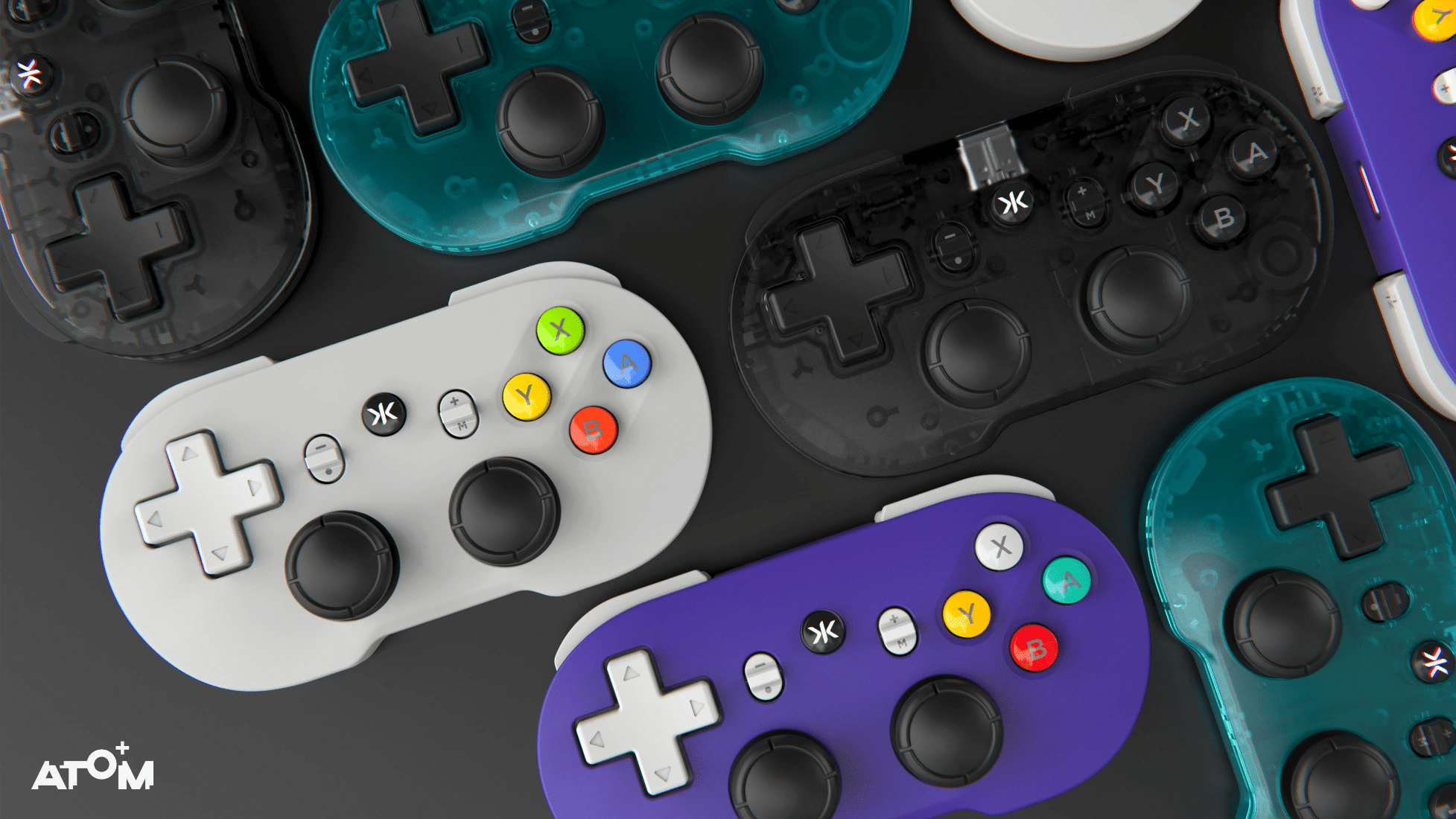
CRKD, the boutique gaming hardware brand behind the acclaimed Nitro Deck, today announced the ATOM+, a significant evolution of its signature micro-controller line. Engineered to bridge the gap between extreme portability and high-performance gaming, the ATOM+ introduces advanced sensor technology to the ultra-compact segment.
Precision Engineering in Miniature
The ATOM+ distinguishes itself from its predecessor by integrating Tunneling Magnetor-esistance (TMR) technology. This next-generation magnetic sensor system is designed to provide superior accuracy and a longer lifespan than traditional Hall Effect or mechanical sensors, effectively eliminating the stick drift that often plagues mobile gaming peripherals.
Despite its keychain-ready dimensions, the unit features a comprehensive control suite, including:
Dual high-precision thumbsticks
Digital triggers and shoulder buttons
A full array of action buttons
Four-way toggle controls for system navigation
Universal Connectivity and Customization
The controller utilizes Bluetooth for seamless pairing across an expansive ecosystem, including the Nintendo Switch (1 & 2), PC, mobile platforms, tablets, and Smart TVs. For players seeking a tailored experience, the CRKD Companion App provides a centralized CTRL dashboard for remapping inputs, adjusting vibration intensity, and performing firmware updates.
Furthermore, the ATOM+ remains a cornerstone of the True Collection System. By registering the device via the app, users can authenticate their hardware to reveal a unique product number and rarity rank, cataloging their purchase within a secure digital collection.
Executive Perspective
“The ATOM+ represents a milestone in our mission to prove that premium gaming performance isn’t tethered to traditional form factors,” said Jack Guinchard, Co Creator & Global Brand Manager at CRKD. “By incorporating TMR sensors into such a diminutive footprint, we are offering enthusiasts a portable solution that refuses to compromise on precision or durability. It is quite literally a full-featured gamepad that fits on your keyring.”
Key Specifications and Availability
Feature
Details
Sensor Tech
TMR (Tunnelling Magnetoresistance) for zero drift
Charging
USB-C Rechargeable Battery
Compatibility
Switch 1 & 2, PC, iOS, Android, Smart TVs
Added Features
Motion controls, Turbo Mode, and Vibration Feedback
Portability
Included wrist strap; keychain compatible
The device will debut in four distinct aesthetic finishes: Smoke Black, Glacier Blue, Retro Purple, and Pal Grey. Scheduled to begin global shipping in late June 2026, the device is priced at $29.99 / €34.99 / £29.99. To pre-order ATOM+, please visit CRKD official online store.
The midrange smartphone category has quietly shifted over the last few years. Instead of trying to match flagship devices across the board, many brands are choosing to specialize. The TECNO CAMON 50 Pro (~$350 USD) is a clear example of that mindset, focusing on photography, durability, and long-term usability rather than chasing top-tier performance numbers.
After spending time digging into its design and feature set, the CAMON 50 Pro comes across as a device built with intent. Is that intention to be the best of everything? Hardly. What about an everyman device that’s designed for all users? Not quite. As it turns out, the CAMON 50 Pro leans into a few key, if not interesting, strengths and builds a well-rounded experience around them.
Design and Durability
The CAMON 50 Pro feels more refined than what many people might expect from a midrange device. The curved AMOLED display gives it a modern, slightly premium look, while the slim profile helps it sit comfortably in the hand. The gentle curvature along the edges is not just cosmetic, either. It makes the phone easier to grip and reduces the chances of accidental touches when navigating the interface.
Durability is where this phone quietly stands apart, offering a level of ruggedness that’s rare in the midrange without looking the part.
Around back, the camera module is styled in a way that gives the phone some visual identity without becoming overly aggressive. It strikes a balance between standing out and staying practical, which is not always easy to do in this category. When it comes to devices with multiple cameras, there’s only so many ways to go about, it right?
Where the design really stands apart is durability. The CAMON 50 Pro carries IP68, IP69, and IP69K ratings, along with MIL-STD-810 certification. That combination is rare in midrange phones and suggests this device is built to handle more than just everyday wear and tear. Whether it is exposure to water, dust, or more rugged conditions, this is a phone that feels ready for environments where most devices would need a bit more caution. But don’t be fooled into thinking the phone looks at all rugged as it certainly does not.
For users who spend time outdoors, travel frequently, or simply want something that can take a few knocks without worry, that added toughness is a meaningful part of the appeal.
Display Experience
The display is a curved AMOLED panel that delivers the kind of visual experience most users expect in 2026. Colors are vibrant without feeling overly saturated, blacks are deep, and contrast is strong enough to make content look sharp and engaging. Curved edges are a polarizing feature as some worry about accidental touching by grabbing along the sides. Me? I don’t mind it provided the right case wraps the device.
The high refresh rate helps everything feel smooth, whether scrolling through social feeds, navigating menus, or playing games. It is one of those features that quickly becomes noticeable when it is absent, and here it works as expected.
Brightness is also a strong point. The panel holds up well outdoors, making it easier to read messages or use navigation apps in direct sunlight. At lower brightness levels, eye comfort features help reduce strain, which is especially useful during late-night use.
Overall, the display does not try to reinvent anything, but it delivers a reliable, well-balanced viewing experience that fits the device’s positioning.
Performance and Day-to-day Use
The CAMON 50 Pro is powered by a MediaTek Helio G200 Ultimate chipset, paired with generous RAM and storage configurations. In day-to-day use, the phone feels responsive and capable. Apps open quickly, multitasking is handled without much friction, and general navigation remains smooth.
This is not a device built for heavy gaming or pushing maximum graphics settings in demanding titles. Instead, it is tuned for consistency. Casual and moderate gaming runs well, and the system holds up during longer sessions without noticeable slowdowns. It’s more than enough for my needs, and I suspect the same goes for a lot of people in my life.
The inclusion of virtual RAM expansion adds a bit of flexibility for users who tend to keep multiple apps open. While it is not a replacement for physical memory, it does help maintain a smoother experience when switching between tasks.
Thermal management is another area where TECNO has clearly put in some effort. The phone stays relatively cool during extended use, which contributes to that sense of stability. It may not be the fastest device in its class, but it feels dependable, and that goes a long way in everyday use.
Camera System and AI Features
Photography is one of the key highlights of the CAMON 50 Pro, and it shows. The main camera is built around a high-resolution Sony sensor with optical image stabilization, delivering detailed shots with solid dynamic range in a variety of conditions.
One of the more interesting additions is the dedicated telephoto lens. This is not something that always appears in this segment, and it makes a noticeable difference. Portrait shots benefit from more natural compression, and the ability to zoom optically adds flexibility that many competing devices lack.
The ultra-wide camera rounds things out, making it easier to capture landscapes, group shots, or tighter indoor spaces without stepping back.
On the software side, TECNO leans heavily into AI. Features like automatic subject detection, motion capture modes, and AI-assisted editing tools are designed to simplify the process of getting a good shot. Instead of requiring manual adjustments, the phone handles much of the work behind the scenes.
For users who want strong results without spending time tweaking settings, this approach makes a lot of sense. It is less about control and more about convenience, and for many people, that is exactly what they are looking for.
Software and Ecosystem
The CAMON 50 Pro runs HiOS 16 on top of Android 16, with a focus on fluidity and smart features. The interface feels clean and responsive, with animations that help everything move smoothly without slowing things down.
The Ella AI assistant is positioned as a central part of the experience and it starts from the moment you first power the phone on. It can help with tasks like organizing notes, capturing information, and managing day-to-day activities. The dedicated AI shortcut key adds a layer of convenience, giving users quick access to these tools without digging through menus. If you’re not stuck on one particular AI tool or ecosystem yet, this one might feel pretty intuitive and helpful.
HiOS has a ton of extras under the hood but you don’t have to necessarily utilize them. It largely depends on how many layers of the onion you’d like to peel back. I suggest spending some of your downtime in the early days just poking around and seeing what can be integrated, tuned, or customized to suit.
On the other end of the spectrum we’ll find users who don’t love all the extras, let alone the preinstalled apps and games. A lot of that can be removed, but the point remains that it’s not quite like what you get with a Pixel or Motorola.
More importantly, TECNO is committing to multiple Android updates and several years of security support. That kind of longevity is becoming more important in the midrange space, and it adds real value for users who plan to keep their device for more than a year or two.
Battery Life and Charging
Battery performance is another area where the CAMON 50 Pro feels well-considered. The large 6150mAh battery capacity is designed to comfortably get through a full day, and in many cases, it can stretch well into a second day with moderate use.
That kind of endurance changes how the device fits into daily life. Instead of constantly thinking about charging, users can focus on using the phone without interruption.
Charging speeds are respectable, even if they are not the fastest available. TECNO appears to be prioritizing long-term battery health, aiming for consistent performance over time rather than pushing maximum charging speeds at the expense of longevity. Our review unit came with a 45W charger, but that may vary based on market.
For users who value reliability over quick top-ups, the trade-off makes sense. And let’s be honest here, 45W is pretty damn fast in the big scheme of things. I’m old enough to remember 15W being a selling point.
Who It Is For
The CAMON 50 Pro is best suited for users who want a dependable smartphone with a strong focus on photography and durability. It is a good fit for creators who rely on their phone for capturing content, as well as for professionals and students who need something that can keep up with daily demands.
It also makes sense for anyone who spends time in environments where a bit of extra durability is appreciated. Whether that is travel, outdoor work, or just everyday unpredictability, the added protection gives the device a practical edge.
On the other hand, users looking for top-tier gaming performance or flagship-level processing power may want to look elsewhere. This is not that kind of device, and it does not try to be.
TECNO does a great job of staying in its lane. Specifically, it has a pretty solid idea who its target audience is and its portfolio makes sense to that types.
Final Take
The TECNO CAMON 50 Pro feels like a device with a clear sense of purpose. By focusing on photography, durability, and long-term usability, it offers something distinct in a crowded midrange market. A lot of times we find phones in this price range are strictly centered on things like display size or battery life. It’s a bit refreshing to see this one positioned with other things in the forefront.
It may not check every box, but it checks the right ones for a specific type of user. And in a space where differentiation is becoming harder to find, that focused approach works in its favor.
Given its price, I find it fairly difficult to ask for much more out of the phone. I sort of envy the younger demographic that TECNO targets with its handsets. Perhaps more so, as someone in the United States, I also envy those who live where devices like this are easier to come by. I’m more than happy to recommend it to others, but it’s hard to get average people to take the risk on an unfamiliar brand.
If you live in the U.S. or a market where TECNO is not readily available, you’ll want to make sure there’s network compatibility with your carrier. If things line up, and you’re in the market, I think it’s worth the leg work.